Discover Vermont, One Story at a Time 🏔️

Local culture, season adventures, small towns,
and the honest side of life in the Green Mountains


Category: Things to Do

  • Why Vermont is the Maple Syrup Capital

    Why Vermont is the Maple Syrup Capital

    Every spring, Vermont does something the rest of the country watches from a distance. The snow is still deep in the woods. The mud is doing its worst to every dirt road in the state. And somewhere on a hillside, a sugar maker has been awake since before sunrise, feeding a fire and watching a pan of pale sap slowly transform into something amber, sweet, and unmistakably Vermont.

    Maple season is one of those things that sounds simple until you start paying attention to it. Then you realize it is actually a precise, weather-dependent, biologically fascinating process that has been refined over centuries right here in the Green Mountain State. Whether you are visiting Vermont for the first time or you have lived through a few dozen sugaring seasons yourself, here is how it actually works.

    Why Vermont Is the Center of the Maple World

    Vermont produces more maple syrup than any other state in the country, and it is not particularly close. The combination of climate, tree density, and generational knowledge makes the state uniquely suited for it. Sugar maples thrive in the northeast, and Vermont’s terrain and temperature swings create near-ideal conditions for sap production season after season.

    The practice of tapping maple trees for sap goes back long before European settlement. Indigenous peoples across the northeast had developed methods for collecting and concentrating maple sap centuries before colonists arrived and adapted those techniques into what eventually became the commercial industry Vermont is known for today. What you see at a Vermont sugarhouse in March is the current chapter of a very long story.

    It All Starts With the Trees

    Sugar Maples and Why They Matter

    Not all maple trees are created equal when it comes to syrup. The sugar maple (Acer saccharum) produces sap with a significantly higher sugar content than other maple species, which means less boiling time and a better-tasting finished product. Vermont’s forests are full of them, and that is a large part of why the industry is centered here.

    A tree needs to reach a certain size before it can be tapped responsibly. Most sugar makers wait until a maple is at least 10 to 12 inches in diameter at chest height, which typically takes 40 or more years of growth. A single healthy tree can be tapped for generations if the work is done carefully. Many of the trees being tapped in Vermont today were already mature when the great-grandparents of the current sugar makers were learning the trade.

    How the Sap Actually Forms

    During the winter, sugar maple trees store starch in their wood and root systems. As temperatures begin to rise in late winter, that starch converts into sugar and dissolves into water within the tree’s cells. The result is sap, a liquid that is roughly 98 percent water and about 2 percent sugar (though this varies by tree and by the conditions of the season).

    What moves the sap is pressure. When temperatures drop below freezing at night and then rise above freezing during the day, it creates alternating positive and negative pressure inside the tree. That pressure differential is what pushes sap toward any opening in the bark, including a tap. No freeze and thaw cycle, no sap flow. It is that direct.

    The Freeze and Thaw Cycle: Vermont’s Most Important Weather Pattern

    Ask any Vermont sugar maker what they are watching during the season and the answer is always the forecast. Specifically, they are looking for nights that dip below 32 degrees Fahrenheit and days that climb into the low 40s. That range, cold nights and cool-to-mild days, is the sweet spot for a good sap run.

    If the overnight temperature stays above freezing, the pressure cycle does not complete and sap movement slows or stops. If the days warm up too much and stay warm, the season heads toward its end faster than anyone wants. A late winter cold snap after a warm stretch can sometimes restart things briefly, but the window is always narrower than it looks on the calendar.

    This is why sugar makers are some of the most weather-literate people in Vermont. They are not checking the forecast for convenience. They are making decisions about when to fire up the evaporator, when to pull a crew together, and when the season is telling them something important.

    When Does Vermont Maple Season Start and End?

    Typical Timing by Region

    Vermont maple season does not start on the same date everywhere. It moves from south to north as temperatures warm across the state. Operations in southern Vermont and the lower valleys often see their first runs in late February. The Northeast Kingdom, up near the Canadian border, may not hit its stride until mid-March or later, and in a good year runs well into April.

    Across the whole state, a strong season might span six to eight weeks from the first trickle in the south to the last boil in the north. A warm or erratic winter can compress that to two or three weeks. There is no way to know in advance exactly what you are going to get, and that unpredictability is something every producer has made peace with.

    What Ends the Season

    The season ends when the trees say it does. The most reliable signal is bud break, the moment the sugar maple begins pushing new growth from its buds. Once that happens, the sap chemistry changes. It develops a bitter, off flavor that sugar makers describe bluntly and that no amount of boiling improves. The syrup made just before bud break tends to be darker and more robust, which is part of why the Very Dark grade exists.

    A sustained warm stretch with no overnight freeze will also end a season before bud break. The pressure cycle stops, the sap slows, and the evaporator goes cold. Experienced producers can often taste the shift coming in the last runs of the season. They know when the trees are done.

    How Sap Becomes Syrup: The Boiling Process Explained

    Collection Methods: Buckets vs. Tubing

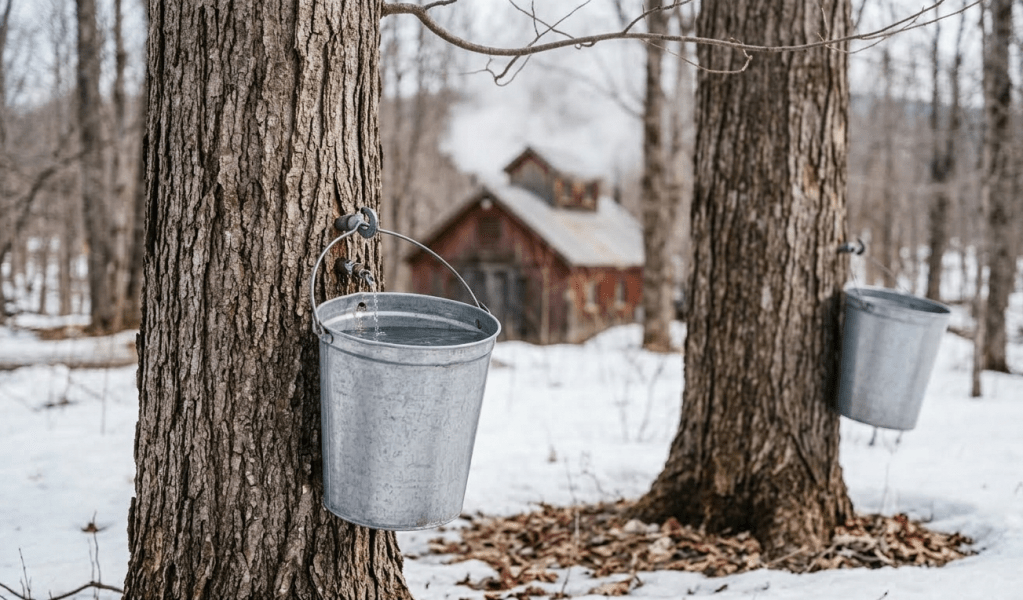
    There are two main ways to collect sap from a tapped maple tree. The traditional method uses metal buckets hung directly below the tap. You have seen them on the sides of trees along Vermont back roads in late winter, and they are exactly what they look like. Smaller farms and hobby operations still use buckets widely, and there is something genuinely satisfying about walking a sugarbush with a collection tank and gathering runs by hand.

    Larger commercial operations more commonly use a system of plastic tubing that runs from tree to tree and eventually down the hillside to a collection tank at the sugarhouse. Many of these systems use vacuum pumps to increase sap yield per tree. Both methods are legitimate and both are still common across Vermont. The tubing systems are efficient; the buckets are beautiful.

    The Evaporator and the Boil-Down

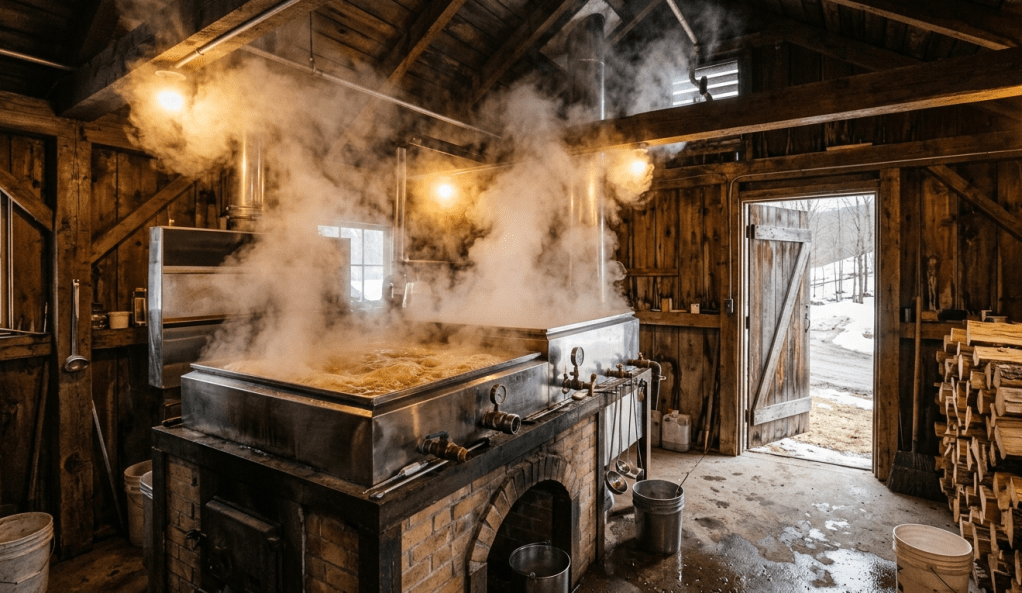
    Once sap reaches the sugarhouse, it goes into the evaporator. This is the long, divided pan set over a firebox that is the heart of every sugarhouse operation. Sap enters at one end, thin and pale as water with a faint sweetness. It moves through a series of channels as it concentrates, and by the time it reaches the draw-off point at the far end, it has become maple syrup.

    The ratio that every Vermont sugar maker quotes from memory is roughly 40 gallons of raw sap to produce one gallon of finished syrup. In a low-sugar year, that number climbs closer to 50 gallons or more. This is why boiling takes so long and why a working evaporator runs for hours at a stretch. The fire has to stay hot, the pan has to stay at the right level, and the sugar maker has to monitor the temperature at the draw-off point closely, targeting around 219 degrees Fahrenheit at sea level (adjusted slightly for elevation).

    Many Vermont sugarhouses still use wood-fired evaporators. The wood contributes to the atmosphere of the place, the smell, the sound, the visual of a fire roaring beneath a pan of boiling sap, and some producers believe it contributes subtly to the flavor profile as well. Oil and propane-fired systems are also used, particularly in larger operations where consistency and efficiency matter most.

    Understanding Vermont Maple Syrup Grades

    Since 2015, Vermont has used the same grading system as the USDA, which simplified things considerably. There are now four grades, and all of them are Grade A, meaning all four are pure, table-quality maple syrup. The grade describes color and flavor intensity, not quality ranking.

    • Grade A Golden, Delicate Taste: Light in color, mild and subtle flavor. Often comes from the earliest runs of the season when sugar content is high and the sap is very fresh.
    • Grade A Amber, Rich Taste: The classic Vermont maple flavor most people picture. A good all-purpose syrup for table use, baking, and cooking.
    • Grade A Dark, Robust Taste: Deeper color and more intense maple flavor. Excellent for cooking, glazing, and anywhere you want the maple to stand up to other strong flavors.
    • Grade A Very Dark, Strong Taste: The boldest grade, typically produced near the end of the season. Used heavily in commercial food production and by home cooks who want maximum maple impact in savory dishes.

    When you buy syrup directly from a Vermont producer, you will often have the chance to taste before you buy. Take them up on it. The difference between grades is real and noticeable, and what you prefer on your pancakes may be completely different from what you want in a marinade.

    What a Good Season Looks Like (And What Can Go Wrong)

    A strong maple season in Vermont means multiple distinct sap runs spread across several weeks, with reliable freeze and thaw patterns that give producers time to collect, boil, and prepare between runs. In a year like that, sugarhouses run nearly continuously for stretches, and the yield per tap is high. Those are the years producers talk about for a long time afterward.

    Climate change is making the season harder to predict and, in some years, harder to execute. Warmer winters mean fewer overnight freezes, inconsistent pressure cycles, and seasons that start earlier and end sooner than historical averages. Some producers in southern Vermont have seen their window compress noticeably over the past two decades. The industry is adapting, but the underlying biology of the trees cannot be rushed or rescheduled.

    Sugar makers also talk about vintage years the way winemakers do. The 2023 season in Vermont was notably strong across much of the state. Other years are remembered for specific challenges, a brutal cold snap in March, a warm week that ended things too fast, a late freeze that gave everyone one unexpected last run. Every season has its own character, and every jug of syrup carries a little of that.

    How to Experience Maple Season If You’re Visiting Vermont

    Sugarhouse Visits and Open Farm Week

    Vermont Maple Open Farm Week typically runs during the last week of March and into early April, with farms across the state formally opening their doors for tours, tastings, and demonstrations. It is organized, well-attended, and a genuinely good way to see multiple operations in a single trip. The Vermont Maple Sugar Makers Association maintains a current list of participating farms each year.

    Outside of Open Farm Week, the best signal that a sugarhouse is welcoming visitors is visible steam from the stack. If smoke is rising and cars are in the lot, it is usually fine to walk up and knock. Most sugar makers doing an active boil are happy to have curious people come through. Just be respectful of the work happening around you and dress for the conditions.

    What to Buy and Where

    Buying directly from the farm gets you the freshest product, the full range of grades, and often a conversation about the season that no grocery store shelf can offer. Farmers markets and food co-ops around Vermont also carry local syrup year-round from multiple producers.

    Beyond syrup, most sugarhouses sell a few products worth knowing:

    • Maple cream (also called maple butter or maple spread): A smooth, spreadable product made by cooling and stirring syrup until it reaches a creamy consistency. No dairy involved. Extraordinary on a biscuit.
    • Maple candy: Made by heating syrup and pouring it into molds as it cools. Dissolves slowly and tastes like the concentrated heart of the season.
    • Maple sugar: Granulated maple, used in baking and as a substitute for cane sugar with a distinct flavor advantage.

    Buy more than you think you will use. Everyone who has ever left a Vermont sugarhouse with one small jug has regretted it by July.

    Maple season is brief, specific, and rooted in a combination of biology, weather, and deep Vermont know-how that took generations to develop. Coming here during those few weeks in March and April and seeing it in person is one of the better decisions you can make about how to spend a spring day in the Green Mountains.

    Shop Green Mountain Peaks on Etsy

    Bring a little piece of Vermont into your home with our curated collection of gifts, apparel, and seasonal favorites. From cozy hoodies and crewnecks to Vermont-themed gift boxes and cookbooks, each item is designed to celebrate the Green Mountain spirit.

    • Vermont-inspired designs and gift sets
    • Printed and packaged with care
    • Ships directly to your door
    Visit Our Etsy Shop

    Discover gifts, apparel, and Vermont treasures made to share and enjoy year-round.
  • What to Know About Visiting Vermont’s Maple Sugaring Season

    What to Know About Visiting Vermont’s Maple Sugaring Season

    There is a particular moment every March when something in Vermont shifts. The cold is still real, the snowpack is still deep in the woods, and the roads are doing that thing they do where the frost heaves turn your commute into an obstacle course. But something is moving. You can feel it before you can see it, and if you know where to go, you can smell it too.

    That smell is maple. Specifically, it is wood smoke and boiling sap rolling out of a sugarhouse stack somewhere on a hillside, drifting down across a field that is still half-covered in tired March snow. It is one of the most distinctly Vermont things there is, and if you have never walked into a working sugarhouse during sugaring season, you are missing one of the state’s quietest and best experiences.

    What Maple Season in Vermont Actually Looks Like

    Vermont maple season is not a single event on the calendar. It is a weather pattern. Sugar makers are watching for a specific combination: nights that drop below freezing and days that nudge above it. That freeze and thaw cycle is what creates pressure in the maple trees and gets the sap moving. Too cold for too long and nothing happens. Too warm too fast and the season ends early. It is a narrow window, and it is different every year.

    In a typical year, the season runs from late February into early April, moving northward as temperatures warm. The southern part of the state tends to go first, and the Northeast Kingdom often finishes last. But weather does not follow a schedule, and every sugar maker will tell you that some of their best runs came when they least expected them.

    What makes mid-March feel so alive here is the contrast. The landscape still looks like winter in most directions. The trees are bare. The fields are white or gray. But inside those trees, sap is rising, and somewhere up that dirt road, someone has been awake since before sunrise feeding a fire and watching the evaporator.

    Arriving at the Sugarhouse

    The Smell Hits You Before You Even Open the Car Door

    You will know you are close before you see anything. There is a sweetness in the cold air that is hard to describe to someone who has not encountered it before. It is not candy-sweet or artificial. It is more like warm wood and something faintly caramel, carried on smoke and steam. It settles into your coat and your hair, and you will notice it again hours later.

    Then you see the steam. On a good run, a sugarhouse stack pumps a steady white column that catches the low March light. It is visible from a distance, which is part of how people have always known to come closer. Pull into the lot and you will likely find it muddy, rutted, and full of trucks. That is a good sign.

    What the Sugarhouse Looks Like Up Close

    Vermont sugarhouses come in all kinds. Some are old weathered board-and-batten structures that look like they have been standing since the Civil War. Others are newer metal buildings, practical and efficient. Neither one looks like a tourist attraction, and that is exactly the point.

    What they share is the steam venting from the cupola or the peak of the roof, the smell, and the light glowing from inside. There is usually a stack of cordwood nearby, sometimes enormous, that tells you how many weeks this operation has been running. Sugar making takes a tremendous amount of wood to boil down sap, roughly 40 gallons of sap for every gallon of finished syrup, and the woodpile reflects that math.

    Inside the Sugarhouse: What You Will See, Smell, and Hear

    The Evaporator and the Boiling Process

    Walk through the door and the warmth catches you immediately. After the cold outside, the air inside feels almost tropical. The evaporator sits at the center of the room, a long, stainless steel pan set over a firebox, divided into channels that move sap from one end to the other as it concentrates and thickens.

    The sap that goes in looks like water with a slight haze. By the time it reaches the draw-off point at the far end, it has become maple syrup, amber and sweet and thick enough to coat a spoon. The sugar maker watches the temperature and the density closely, drawing off syrup when it hits the right point and filtering it before it goes into jugs or cans.

    The sound of a working evaporator is its own thing. There is a low roar from the fire below, a bubbling from the pan above, and the occasional clank and hiss of adjustments being made. It is a working sound. It sounds like something is being made.

    The People Who Make It Happen

    Sugar makers are a specific kind of Vermont character. They have usually been doing this for a long time, and many of them learned it from someone who learned it from someone else. Ask a question and you will get a real answer. Ask a follow-up question and you may end up staying an hour longer than you planned.

    There is a quiet pride that runs through these operations. Nobody is performing for you. They are doing their work, and you are welcome to watch, and if you are curious and respectful, most sugar makers genuinely enjoy the company during a long boil. The conversation tends to be easy. Vermont hospitality does not announce itself. It just shows up.

    Sugar on Snow: The Treat You Have to Try

    If you visit a sugarhouse during an open house or at a farm that welcomes visitors during the season, there is a good chance you will be offered sugar on snow. It is exactly what it sounds like: hot maple syrup poured in a thin stream over a trough or pan of clean packed snow, where it cools almost instantly into a soft, chewy ribbon of maple taffy.

    You pick it up on a wooden stick or a fork, roll it slightly, and eat it. It is sweet in a way that feels earned rather than manufactured. The cold snow and the hot syrup meet somewhere in the middle, and the result is something you cannot replicate at home with ice from your freezer. The texture is different. The flavor is different. The context is different.

    Tradition pairs sugar on snow with a dill pickle and a plain cake donut. If you have not tried it, do not skip it. The pickle cuts the sweetness and resets your palate. The donut soaks up the syrup that drips. It is a combination that sounds strange and tastes exactly right.

    What Mud Season Has to Do With All of This

    Sugaring season and mud season are the same season. They overlap almost completely, and that is not a coincidence. The same thaw that softens the ground and turns dirt roads into a test of patience is the same thaw that gets the sap running. Vermont’s fifth season is not just about inconvenience. It is about transition.

    Driving to a sugarhouse in March usually means navigating some soft shoulders, a few muddy pull-offs, and roads that have seen better days since October. Slow down, stay on the harder surface where you can, and give yourself extra time. The mud is part of the experience, not a problem to be solved.

    There is something honest about mud season that Vermonters tend to appreciate even while complaining about it. The ground is thawing. The trees are waking up. The landscape is in the middle of becoming something new, and it is not trying to look good while it does it. The sugarhouse feels like the right place to be during all of that.

    How to Visit a Vermont Sugarhouse This Season

    What to Look for When Choosing a Sugarhouse to Visit

    Not every sugarhouse is open to visitors, and not every operation runs on the same schedule. The best way to find one is to check local listings, the Vermont Maple Sugar Makers Association website, or simply follow a small farm on social media. Many producers post when they are boiling, which is your signal that the door is open.

    Vermont Maple Open Farm Week typically happens in late March and into April, when farms across the state formally welcome visitors for tours, tastings, and demonstrations. It is a great entry point if you are not sure where to start. That said, showing up at a small sugarhouse on a Tuesday afternoon when the steam is rising from the stack is often its own kind of perfect.

    What to Bring and How to Dress

    • Mud boots or waterproof footwear. This is not optional. The parking area and surrounding ground will be soft at best.
    • Warm layers. The sugarhouse itself is warm, but walking to it and standing outside is still March in Vermont.
    • Cash or card for syrup. Most farms sell directly and some smaller operations prefer cash.
    • An appetite. Sugar on snow is filling, but in the best way.

    What to Buy Before You Leave

    Vermont syrup comes in four grades, all of which are pure maple syrup. The grades refer to color and flavor intensity rather than quality. Golden is delicate and mild. Amber is the classic Vermont flavor that most people picture. Dark is robust and works well for cooking and baking. Very Dark is the boldest and is often used in savory applications.

    Beyond syrup, most sugarhouses sell a few other products worth knowing about.

    • Maple cream is a spreadable, smooth maple product with an almost frosting-like texture. It belongs on a biscuit.
    • Maple candy is made by cooling and stirring syrup until it sets. It dissolves slowly and tastes exactly like the best part of the season.
    • Maple butter (also called maple spread) is similar to maple cream and excellent on toast or stirred into oatmeal.

    Buy more than you think you need. You will use it, and you will wish you had grabbed an extra jar before the drive home.

    Why This Is One of Vermont’s Best Kept Seasonal Secrets

    Most people who plan a Vermont trip think about fall foliage or ski season. Those are both real and worth experiencing. But sugaring season occupies a different category. It is quieter, more intimate, and rooted in something that has been happening here for centuries. The sugarhouse is not a performance. It is a place where work is being done, and visitors are welcomed into that work in a way that feels genuinely special.

    There are no lift lines. There are no leaf-peeper traffic jams. There is just a warm building in the middle of a muddy March landscape, steam rising into cold air, and someone inside who has been awake since before dawn doing something they know how to do very well. That is Vermont. And if you time it right, that is yours.

    The season does not last long. A few good weeks, maybe six if the weather cooperates, and then it is over until next year. That is part of what makes it worth showing up for.

    Shop Green Mountain Peaks on Etsy

    Bring a little piece of Vermont into your home with our curated collection of gifts, apparel, and seasonal favorites. From cozy hoodies and crewnecks to Vermont-themed gift boxes and cookbooks, each item is designed to celebrate the Green Mountain spirit.

    • Vermont-inspired designs and gift sets
    • Printed and packaged with care
    • Ships directly to your door
    Visit Our Etsy Shop

    Discover gifts, apparel, and Vermont treasures made to share and enjoy year-round.
  • Explore Cozy Winter Activities in Vermont

    Explore Cozy Winter Activities in Vermont

    There is something quietly magical about winter in Vermont. The snow-covered trees, crisp mountain air, and glow of small towns make this season feel alive in its own way. While skiing often gets all the attention, Vermont offers countless cozy experiences for anyone who wants to enjoy winter without stepping into ski boots.

    Why Vermont’s winter delights go far beyond the slopes

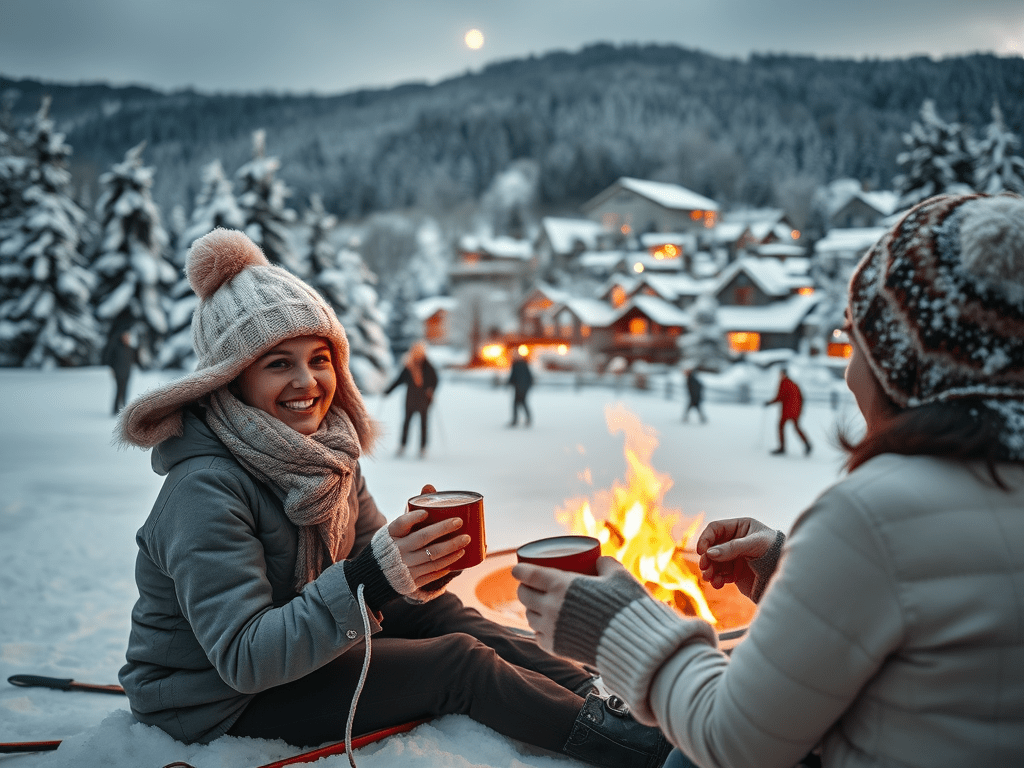
    When people think of Vermont in winter, they often picture busy ski resorts. Yet the true beauty of this season is found in the calm between the mountains. You can wander quiet trails, explore snow-dusted towns, or sip something warm by a fire as snowflakes fall outside. The season invites stillness and appreciation for the little things that make life here special.

    Winter in Vermont is about connection. It encourages slower mornings, long talks by the fireplace, and walks that remind you how peaceful the world can be. Visitors find themselves drawn in by the charm of the season, and locals often say it’s their favorite time of year.

    Embrace the outdoors in soft footprints and fresh air

    Snowshoeing and winter hiking

    Snowshoeing is one of Vermont’s simplest pleasures. You do not need to be an athlete or own fancy equipment. Most outdoor shops rent snowshoes, and trails throughout the state are ready for exploring. All it takes is warm clothing, a sense of curiosity, and a little time to wander.

    • Choose trails in state parks or town forests for easy, scenic walks.
    • Bring a thermos of tea or cocoa to enjoy when you stop to rest.
    • Keep your pace slow and notice the sound of snow beneath your feet.

    Winter hiking and snowshoeing offer peace that is hard to find anywhere else. The forest feels hushed, and the air seems sharper and cleaner with every breath.

    Fat biking, cross-country skiing, and snow-trail adventures

    If you like to stay active but want a quieter experience than downhill skiing, try fat biking or cross-country skiing. These outdoor sports are gentle but energizing, letting you move through fields, forests, and frozen meadows at your own pace. Rentals are available at many local outdoor centers.

    • Beginner trails in Stowe, Craftsbury, and Woodstock are ideal starting points.
    • Wear layered clothing to stay warm without overheating.
    • Take time to pause and enjoy the snowy views.

    Both activities allow you to explore the landscape closely and quietly, making you feel like part of the winter scene rather than a spectator.

    Ice skating, tubing, sleigh rides, and playful snow fun

    Sometimes the best winter days are the ones spent playing outside. Vermont towns offer community skating rinks, tubing hills, and sleigh rides that make you feel like a kid again. These small joys are easy to find and full of laughter.

    • Head to a tubing hill with a lift for easy rides back to the top.
    • Book a horse-drawn sleigh ride through open fields and quiet woods.
    • End the day with hot cider or cocoa at a nearby café.

    These simple moments create lasting memories and remind you how fun winter can be.

    Cozy indoor and in-between experiences

    Ice fishing, spa afternoons, hot tubs, and fire-side lounges

    Winter comfort often means balance. After a morning outdoors, try something slower. Ice fishing brings a peaceful stillness to Vermont’s frozen lakes, and even beginners can join in. Once the chill sets in, spend the afternoon at a spa, soak in a hot tub, or curl up by a fire with a warm drink.

    • Find lodging with outdoor hot tubs that overlook the snowy woods.
    • Schedule a massage or spa visit in towns like Stowe or Manchester.
    • End your day by a crackling fireplace with a craft beer or a glass of mulled cider.

    This blend of fresh air and cozy rest captures the best of Vermont’s winter spirit.

    Maple syrup visits, craft breweries, and local food

    Vermont’s winter is full of flavor. Maple syrup producers, breweries, and distilleries welcome visitors throughout the season, and many restaurants offer menus built around local ingredients. These are perfect ways to warm up and get a taste of Vermont’s hospitality.

    • Visit a sugarhouse to learn how maple syrup is made and sample it fresh.
    • Try a brewery or distillery tour in a nearby town for a laid-back afternoon.
    • Look for cozy restaurants with fire-lit dining rooms and hearty dishes like roasted root vegetables and Vermont cheddar soup.

    Every stop is a reminder that Vermont’s comfort comes from both its food and its people.

    Small-town festivals and winter markets

    Even in the coldest months, Vermont’s communities are full of life. Winter festivals, craft fairs, and markets fill town greens and barns with light, color, and conversation. These gatherings are a highlight for both locals and visitors.

    • Shop at artisan markets for handmade scarves, wooden toys, and maple treats.
    • Join a lantern-lit snowshoe walk or community bonfire event.
    • Check local listings for winter carnivals in towns like Stowe, Woodstock, and Burlington.

    These small events bring warmth to the long season and celebrate the heart of Vermont life.

    Why visiting or living here in winter feels special

    Visiting Vermont in winter gives you something rare: space to slow down. Without the crowds of summer, towns feel more intimate, and nature feels untouched. For those who live here, winter is a time of gathering, whether that means helping a neighbor shovel, sharing soup, or meeting friends after a long day.

    The season has a rhythm of its own. Quiet mornings, golden sunsets, and the soft crunch of snow underfoot make everyday life feel richer. You begin to see why people choose to stay year after year.

    Planning your Vermont winter visit

    • Best months: December through early March offer the most reliable snow and winter atmosphere.
    • What to pack: Dress in layers, wear waterproof boots, and bring gloves, hats, and a warm jacket.
    • Where to stay: Choose a small inn, lodge, or bed and breakfast for a personal, cozy experience.
    • Safety tips: Always check the weather forecast and trail conditions before heading out.
    • Saving money: Travel midweek for lower lodging prices and quieter attractions.

    With a little planning, Vermont’s winter can be both peaceful and comfortable.

    Final thoughts: the comfort of Vermont’s cold season

    Winter in Vermont is more than cold weather. It is a season filled with meaning, stillness, and warmth in the simplest forms. Whether you spend the day on snowshoes, browse a winter market, or sit beside a glowing fire, the beauty of the moment will stay with you.

    For visitors, Vermont offers the perfect mix of calm and adventure. For locals, it is a reminder of why this state feels like home. However you choose to enjoy it, Vermont’s winter will wrap you in its quiet charm and leave you wishing for one more snow day.

    Shop Green Mountain Peaks on Etsy

    Bring a little piece of Vermont into your home with our curated collection of gifts, apparel, and seasonal favorites. From cozy hoodies and crewnecks to Vermont-themed gift boxes and cookbooks, each item is designed to celebrate the Green Mountain spirit.

    • Vermont-inspired designs and gift sets
    • Printed and packaged with care
    • Ships directly to your door
    Visit Our Etsy Shop

    Discover gifts, apparel, and Vermont treasures made to share and enjoy year-round.

  • The Ultimate Guide to Cutting Your Own Christmas Tree in Vermont

    The Ultimate Guide to Cutting Your Own Christmas Tree in Vermont

    There is something magical about finding that perfect evergreen and bringing it home for the holidays in Vermont. You walk the field, breathe in the balsam scent, pick a tree with your own hands, and drive home with more than just a decoration. Whether you are visiting for the season, living here year-round, or thinking about moving to Vermont, cutting your own Christmas tree is one of the most genuine winter traditions you can experience.

    Why Choose a Cut-Your-Own Tree in Vermont

    Few holiday activities feel as personal as loading your own tree into the car after a morning in the cold Vermont air. It is about connection, tradition, and a sense of place.

    • Authenticity and connection: Walking among rows of evergreens, hearing the crunch of snow, and seeing the hills rise in the distance creates a moment that feels timeless.
    • Freshness and sustainability: Cutting your own tree means it goes from field to living room in a matter of hours. Vermont farms replant regularly and care for their land, keeping the process environmentally sound.
    • Tradition and memory: For families, friends, or newcomers, this outing is more than just a purchase. It is a shared experience that becomes part of your story each winter.
    • Supporting local farms: Many of Vermont’s tree farms are family-run. Buying directly helps rural businesses thrive while giving you a true taste of local life.

    What to Know Before You Go

    Timing and Availability

    Most Vermont tree farms open around the weekend before Thanksgiving and stay open through early December, or until trees sell out. The earlier you go, the better your selection will be. Some farms close by mid-December once demand picks up, so plan ahead and check their websites or social media for updates.

    Tree Varieties You Will Find in Vermont

    Vermont’s most popular Christmas trees are balsam and Fraser firs, known for their fragrance and sturdy branches. Some farms also offer Canaan fir, white spruce, and blue spruce. Each has a slightly different look, scent, and needle shape.

    • Balsam Fir: Classic Vermont tree with soft needles and that signature Christmas smell.
    • Fraser Fir: Known for strong branches and slower needle drop, perfect for heavier ornaments.
    • Blue Spruce: Silvery-blue color that stands out in photos, though sharper needles.
    • Canaan Fir: A hybrid option with the scent of balsam and durability of Fraser.

    Think about ceiling height and room size before choosing. A seven-foot tree looks different in a high-ceiling farmhouse than in a cozy apartment.

    Costs, Tools, and Logistics

    Prices vary by size and type. Many farms charge a flat rate for trees up to a certain height, then add a small fee per foot above that. Expect to pay anywhere from $50 to $90 for a well-shaped tree. Most farms provide saws and sleds for hauling, and many will shake, wrap, or net your tree for transport. Bring rope or straps if you plan to tie the tree to your car roof.

    Etiquette and Safety

    Dress warmly, wear boots with traction, and bring gloves. Respect the farm’s signs and boundaries, and avoid cutting trees outside the marked area. If snow is deep, use caution when walking between rows. When transporting your tree, tie it securely and protect your car’s roof from scratches. Once home, give the trunk a fresh cut and place it in water immediately to keep it hydrated.

    Top Vermont Farms for a Cut-Your-Own Tree Outing

    Across Vermont, small farms open their gates each holiday season for families and visitors looking to start a tradition. Here are a few standouts to explore:

    Upper Valley Tree Farm, Jeffersonville

    Located right in Jeffersonville, Upper Valley Tree Farm offers a true Lamoille County holiday experience. They specialize in balsam firs, which are grown on-site from seedlings to full-size trees, and are known for their fresh scent and classic shape. Families can choose and cut their own tree, then pick up handmade wreaths or maple syrup before heading home. The setting along Upper Pleasant Valley Road offers peaceful mountain views that make the outing even more special. Visit Upper Valley Tree Farm.

    Moffatt’s Tree Farm, Craftsbury

    This family-run farm in Craftsbury has been growing Christmas trees for more than 50 years. The scenic setting and quiet northern Vermont backdrop make it worth the drive. Moffatt’s focuses on sustainable growing and replanting practices. They offer both balsam and Fraser firs along with handmade wreaths and garlands. Visit Moffatt’s Tree Farm.

    Mt. Anthony Tree Farms, North Pownal

    Located in southern Vermont near the Massachusetts border, Mt. Anthony Tree Farms offers a wide selection of balsam and Fraser firs. The fields are open and easy to navigate, making this a great spot for families with young children. They provide saws, netting, and hot chocolate on weekends. Visit Mt. Anthony Tree Farms.

    Sharp Farm, Milton

    Just north of Burlington, Sharp Farm is known for its choose-and-cut trees and peaceful views. They grow several varieties including blue spruce, white pine, and Fraser fir. You can also buy handmade wreaths and maple products from their farm store. Visit Sharp Farm.

    Tip: Always call ahead before visiting. Weather, snow, or early sell-outs can change hours without much notice.

    How to Pick and Cut Your Tree Like a Local

    Step 1: Survey the Field

    Start by walking slowly through the rows. Look at the trees from different angles, paying attention to shape, fullness, and gaps in branches. Imagine how it will look in your living room. If you are cutting your first tree, take your time before committing to one.

    Step 2: Choose the Right Size

    Measure your ceiling height and subtract at least six inches for the tree topper and stand. Trees often look smaller outside than they do once indoors. If in doubt, choose slightly shorter rather than taller. Remember to leave enough space around the tree for ornaments and presents.

    Step 3: Make the Cut

    Position your saw close to the ground and cut slowly but firmly. Try to keep the cut level. If someone is with you, have them hold the tree steady. Once the tree begins to lean, finish the cut cleanly and pull the tree away from the stump. Shake off loose needles and snow before carrying it to the car.

    Step 4: Transport and Set Up

    Wrap or net your tree if possible. This keeps branches protected and makes it easier to load. Use rope or straps to tie the tree securely on your roof rack or in your trunk. When you arrive home, saw a fresh half-inch slice off the trunk to open up the pores, then place the tree in water immediately. Keep it well-watered and away from direct heat to help it stay green and fragrant through the holidays.

    Tips to Make It a True Vermont Outing

    • Turn it into a day trip. Pair your visit with lunch at a small-town café or stop at a local sugarhouse for maple syrup.
    • Dress in warm layers and waterproof boots. Early snow is common in late November and December.
    • Bring a thermos of hot cocoa or cider for the drive home. Some farms even sell their own cider and cookies on-site.
    • Take a family photo beside the freshly cut tree. Over the years, these snapshots become part of your Vermont holiday story.
    • For visitors or new residents, this tradition is a wonderful way to feel part of the community.

    What Newcomers Should Know

    If you are moving to Vermont or have recently settled here, cutting your own Christmas tree can help you feel connected to local life. It is a tradition that many Vermonters look forward to every year. Some even return to the same farm annually to see familiar faces and watch the trees grow over time.

    • Cutting your own tree supports local farmers and the state’s agricultural economy.
    • If you own land, you can plant your own evergreens in future years. Just check local guidelines for tree cutting on private property.
    • Tree farms are typically small, family-run businesses that value community and conservation. Visiting them is both festive and meaningful.

    After the Holidays: Tree Recycling and Care for the Land

    When the holiday season ends, your tree can continue to serve a purpose. Vermont communities often offer tree recycling or chipping programs. Many towns collect trees curbside and turn them into mulch for local parks. You can also bring your tree to designated drop-off areas if you prefer to handle it yourself.

    • Remove all decorations and tinsel before recycling.
    • Check your town’s website for collection dates and locations.
    • If you have a large property, you can leave the tree outdoors as shelter for birds or chip it for garden mulch.

    Choosing a real tree each year also supports sustainable land use. Artificial trees may last longer, but they are often made from plastics that cannot be recycled. Real Vermont trees decompose naturally and are grown as renewable crops, not harvested from wild forests.

    Closing Thoughts

    Cutting your own Christmas tree in Vermont captures the heart of the season. The crisp air, the scent of pine, and the satisfaction of choosing your own tree make it an experience that stays with you long after the holidays. Whether you are visiting for the first time or continuing a family tradition, it is one of those simple Vermont joys that remind you what the holidays are really about. May your tree be fresh, your home be warm, and your winter filled with quiet Vermont beauty.

    Shop Green Mountain Peaks on Etsy

    Bring a little piece of Vermont into your home with our curated collection of gifts, apparel, and seasonal favorites. From cozy hoodies and crewnecks to Vermont-themed gift boxes and cookbooks, each item is designed to celebrate the Green Mountain spirit.

    • Vermont-inspired designs and gift sets
    • Printed and packaged with care
    • Ships directly to your door
    Visit Our Etsy Shop

    Discover gifts, apparel, and Vermont treasures made to share and enjoy year-round.

  • Experience Vermont’s Unique Holiday Charm

    Experience Vermont’s Unique Holiday Charm

    There is something quietly magical about the holiday season in Vermont. From snow-covered village streets and twinkling lights to the sweet ritual of maple syrup on fresh snow, the traditions here feel both timeless and deeply rooted in place. Whether you are a visitor passing through, a local settling in, or someone thinking about making Vermont home, these holiday moments add warmth, meaning, and memory to the winter months.

    Why Vermont’s Holidays Feel So Special

    In Vermont, the holidays are shaped by the landscape and the pace. The forests are still, snow muffles the world outside, and even a stroll through a village feels like stepping into a storybook. That slower tempo gives space for traditions to breathe, for communities to gather, and for visitors and locals alike to feel connected to something enduring.

    There is also a genuine sense of craft and local pride. From small-town lights to maple syrup farms, each tradition has roots in daily life. That makes the holidays here feel less like a spectacle and more like a shared moment.

    Classic Small-Town Holiday Events Across Vermont

    Lanterns, Candlelight, and Horse-Drawn Carriages

    Imagine a crisp evening in a village like Woodstock, Vermont, where the town green is bathed in soft light, carolers arrive in period dress, and horse-drawn sleighs glide through the snow. During the well-loved Wassail Weekend, the entire town turns into a living Victorian postcard filled with community spirit and old-fashioned cheer.

    These events often start as small gatherings and evolve into something everyone anticipates. The lanterns reflect off fresh snow, the air smells of fir and cider, and for a moment you slow down. As a visitor you get to walk through the scene. As a local you feel at home in it.

    Tree Lightings, Parades, and Cozy Downtown Walks

    Another hallmark of Vermont’s holiday rhythm is the community gathering in the town center: the tree lighting, the parade, the shop windows glowing, the bundled-up families sipping cocoa. In towns large and small, December brings calendars full of festive events that invite both locals and visitors to join in. You can find wonderful guides to current events on Vermont Explored and other local resources.

    If you are traveling here, keep an eye on local event calendars for these moments. Plan to arrive a bit early, pick a spot along the parade route or near the tree, dress warmly, and arrive with a sense of wonder. Support the local shops afterward, they are part of the tradition too.

    The Sweet Ritual of Sugar on Snow

    If you are searching for a tradition that is uniquely Vermont, look no further than the beloved “sugar on snow.” In its simplest form, it is hot maple syrup poured directly onto clean snow or shaved ice so that it cools into a sweet, soft taffy-like candy. Food Republic explains how this winter treat captures the heart of Vermont’s maple culture.

    But it is more than a treat. It is a ritual tied to sugaring season, when sap flows, trees await spring, and communities gather at sugarhouses for tours, samples, and warm gatherings. Audubon Vermont describes sugar on snow as a “sweet sign of the season” that brings families together across generations.

    What to expect? You will see a long trough or table filled with snow or ice, someone carefully pouring boiled maple syrup at just the right temperature, and a line of eager people waiting to roll the maple into sticky ribbons. You take a fork or stick, roll the syrup, and eat. Often, you will find a dill pickle spear nearby to offset the sweetness and maybe a plain donut or cup of coffee. It is joyful, simple, and deeply rooted in place. You can find more about it on Dig In Vermont.

    For visitors, it is one of those holiday moments you will never forget. For locals, it is part of the seasonal rhythm. And if you are thinking about living here, participating in one of these events can feel like stepping into the community itself.

    Holiday Traditions for Locals and Those Moving to Vermont

    For people who call Vermont home, holiday traditions offer rhythm and connection. Maybe you help hang lights in your village, attend the tree lighting, volunteer at a sugarhouse open house, or shop local for handmade gifts. These moments create a sense of belonging and community warmth.

    If you are considering moving to Vermont or are new here, embracing these traditions helps you feel grounded more quickly. It is not just about enjoying the beauty—it is about participating. Supporting a local bakery, joining a parade, sharing syrup taffy with neighbors, or simply walking through town under the lights can all become part of your Vermont story.

    From a real estate and lifestyle perspective, the holidays reveal a town’s character—the care in its storefronts, the friendliness of its businesses, and the sense of community that ties it all together. That is what makes Vermont living feel so special.

    Planning Your Vermont Holiday Visit: Tips and Timing

    • When to go: Early December offers quiet charm and local gatherings. Later in the month, expect larger crowds and big weekend celebrations. If you hope to stay at a cozy inn or historic bed-and-breakfast, make reservations early.
    • What to bring: Dress in layers, wear waterproof boots, and pack a warm hat and gloves. The evenings are crisp and clear, and the snow can sparkle like glass under streetlights.
    • Choosing a town: Decide what kind of holiday you want. Larger resort towns like Stowe or Manchester have packed calendars and ski-town buzz, while smaller villages like Grafton, Woodstock, or Middlebury offer peaceful charm and candlelit streets.
    • Support local: Stay at an independent inn, eat at a café that sources local ingredients, and buy gifts from Vermont artisans. Your choices help these beloved traditions continue year after year.
    • Respect tradition: Arrive early for parades, follow parking rules, and stay on designated walkways. Many events rely on volunteers, and small courtesies keep things running smoothly for everyone.

    Reflecting on the Season: More Than Just Lights and Snow

    As you walk a Vermont village street with snow crunching underfoot, lights twinkling above, and the scent of wood smoke in the air, it is easy to feel like you are inside a holiday postcard. But these traditions are more than scenery. They are living expressions of community, family, and place.

    The holidays in Vermont invite you to slow down. You notice the quiet, taste the syrup, hear the bells, and breathe in the cold. If you are visiting, you discover. If you already live here, you remember. If you are moving here, you become part of it.

    In traditions like sugar on snow or a candlelit carriage ride, you find the true heart of Vermont during the holidays: the meeting of nature, community, and comfort.

    Conclusion

    Whether you are strolling a snow-dusted Main Street under lantern light, listening to carolers, or rolling maple syrup onto fresh snow at a sugarhouse, Vermont’s holiday traditions invite you in. They offer warmth, charm, and a sense of place that lingers long after the season ends.

    As you plan your visit or your future here, remember that the holidays in Vermont are about more than lights and parades. They are about belonging. You might just find your own favorite Vermont tradition waiting for you beneath the falling snow.

    Shop Green Mountain Peaks on Etsy

    Bring a little piece of Vermont into your home with our curated collection of gifts, apparel, and seasonal favorites. From cozy hoodies and crewnecks to Vermont-themed gift boxes and cookbooks, each item is designed to celebrate the Green Mountain spirit.

    • Vermont-inspired designs and gift sets
    • Printed and packaged with care
    • Ships directly to your door
    Visit Our Etsy Shop

    Discover gifts, apparel, and Vermont treasures made to share and enjoy year-round.

  • Winter Magic: Discover December in Vermont

    Winter Magic: Discover December in Vermont

    December in Vermont feels like a storybook brought to life. The first snow settles quietly on the mountains, lights twinkle across village greens, and woodsmoke curls through the cold evening air. It is a month that captures everything people imagine when they picture life in the Green Mountains: cozy, peaceful, and full of heart.

    The Magic of December in Vermont

    As November fades into December, Vermont transforms into a winter wonderland. The last leaves are gone, the air turns crisp, and every corner of the state begins to glow with the spirit of the season. From the snowy peaks of Stowe and Smugglers’ Notch to the quiet valleys along Route 100, there is a feeling of stillness that sets in. It is the kind that makes you want to slow down, bundle up, and appreciate life’s simple moments.

    In small towns, holiday lights reflect off frozen ponds and shop windows display handmade gifts from local artisans. It is the perfect mix of beauty and comfort, where the days may be short but the spirit of Vermont shines bright.

    What to Expect in Vermont During December

    Winter arrives early here, especially in northern Vermont. By December, the mountains are often blanketed in snow, and temperatures can range from the low teens to the upper twenties. The air feels crisp and clean, and the quiet of a snowy morning is something you have to experience to believe.

    If you are planning a visit, pack warmly. You will need layers, waterproof boots, gloves, a hat, and a thick coat. Snow can arrive suddenly, and road conditions may vary, but that is part of what makes a Vermont winter special. It feels alive, unpredictable, and wild in the best way.

    While some rural areas quiet down after fall foliage season, ski towns such as Stowe, Ludlow, and Warren start to buzz again as early-season skiers arrive. It is a beautiful balance of peace and energy with calm mornings, busy afternoons, and cozy nights by the fire.

    The Best Things to Do in Vermont in December

    Hit the Slopes at Vermont’s Iconic Ski Resorts

    December marks the start of Vermont’s beloved ski season. Whether you are carving down the slopes at Killington or soaking in mountain views from Smugglers’ Notch, this is when the state truly comes alive with winter sports. Early snow means the lifts start spinning, trails open, and local ski towns fill with excitement.

    Beyond alpine skiing, you will find plenty of cross-country trails, snowshoeing routes, and even backcountry experiences for those who love adventure. Resorts such as Trapp Family Lodge and Craftsbury Outdoor Center offer miles of groomed trails that wind through quiet forests. If you are not a skier, you can still enjoy après-ski culture filled with hot drinks, fireplaces, and live music after a day outside.

    Explore Vermont’s Holiday Traditions and Events

    Vermont’s small towns come alive in December with traditions that feel straight out of a holiday movie. You will find Christmas markets, horse-drawn sleigh rides, and candlelit caroling across the state. Woodstock’s famous Wassail Weekend brings festive charm with its parade, historic homes, and local food vendors. In Stowe, the Traditional Christmas celebration turns Main Street into a winter postcard complete with lights, music, and sweet treats.

    Many towns host craft fairs and local maker markets, perfect for picking up handmade gifts and supporting Vermont artisans. Whether it is a jar of local honey, a handwoven scarf, or a bottle of small-batch maple syrup, these small touches capture the spirit of the season.

    Cozy Up Indoors: Cabins, Fireplaces, and Comfort Food

    When the snow starts falling, there is no better place to be than in a warm Vermont cabin. Imagine curling up by the fire with a mug of hot chocolate or looking out at snow-covered pines from a window seat. Inns and lodges across the state, from rustic log cabins to elegant mountain retreats, offer comfort and charm for winter travelers.

    Food in December leans hearty and warm. You will find soups simmering on stoves, maple-glazed roasts, and baked goods that smell like cinnamon and butter. Many restaurants highlight Vermont ingredients, from Cabot cheese to local maple syrup, giving every meal a sense of place. Do not miss the seasonal beers and ciders from local breweries, or a visit to a distillery for a sip of bourbon or maple cream liqueur.

    Take Scenic Drives and Enjoy the Quiet Beauty

    While some roads may be snowy, December drives through Vermont are unforgettable. Route 100 remains one of the most scenic in the country, winding through mountain valleys and charming towns. Covered bridges, frozen rivers, and snow-dusted barns create scenes you will want to photograph around every turn.

    On clear days, drives through Stowe, Jeffersonville, and up toward Jay Peak showcase Vermont’s northern beauty at its finest. Even short routes feel magical when the trees are covered in frost and the sunlight glints off untouched snow.

    Experience Local Life and Community Spirit

    What makes December in Vermont truly special is not just the scenery. It is the people. Step into a local general store and you will be greeted with a smile. Visit a winter farmers market and you will meet the folks who make the cheese, bake the bread, and tap the trees that define Vermont life.

    Life slows down in winter, and communities lean on each other. You will see neighbors helping dig out driveways, sharing stories over coffee, and volunteering at holiday events. For visitors, it is a chance to see what small-town living really looks like when the holidays roll around.

    Real Estate and Life in Vermont During Winter

    Living in Vermont in December means embracing both beauty and practicality. Woodstoves and plows are part of daily life, but so are mountain views and peaceful evenings. It is a season that reminds you to appreciate home, and that feeling is what draws so many people here year after year.

    While real estate activity slows in winter, those who buy during this season often find special opportunities. Winter listings tend to show the true character of a property, from how well it is insulated to how cozy it feels on a snowy night. Buyers searching for a mountain home or ski-in and ski-out property often look this time of year, and many sellers are motivated before the spring rush.

    For anyone thinking about making Vermont home, December offers a real look at what life here means. It is honest, hardworking, and rewarding, just like the people who live here.

    Why You Will Fall in Love with December in Vermont

    It is easy to fall in love with Vermont any time of year, but December holds a special kind of magic. The beauty of a snowfall, the glow of lights in small-town windows, and the way the mountains seem to stand guard over the valleys all create a sense of peace that is hard to find anywhere else.

    For visitors, December in Vermont is an invitation to slow down. For locals, it is a time to gather, reflect, and enjoy the simple comforts that make this state feel like home. Whether you are sipping hot cider by the fire or walking through a quiet village under falling snow, you will understand why so many people find a piece of their heart here.

    Winter may be cold, but Vermont’s warmth shines brightest when the snow begins to fall.

    Shop Green Mountain Peaks on Etsy

    Bring a little piece of Vermont into your home with our curated collection of gifts, apparel, and seasonal favorites. From cozy hoodies and crewnecks to Vermont-themed gift boxes and cookbooks, each item is designed to celebrate the Green Mountain spirit.

    • Vermont-inspired designs and gift sets
    • Printed and packaged with care
    • Ships directly to your door
    Visit Our Etsy Shop

    Discover gifts, apparel, and Vermont treasures made to share and enjoy year-round.
  • Ultimate Vermont Snow Day Bucket List

    Ultimate Vermont Snow Day Bucket List

    When Vermont Turns Into a Snow Globe

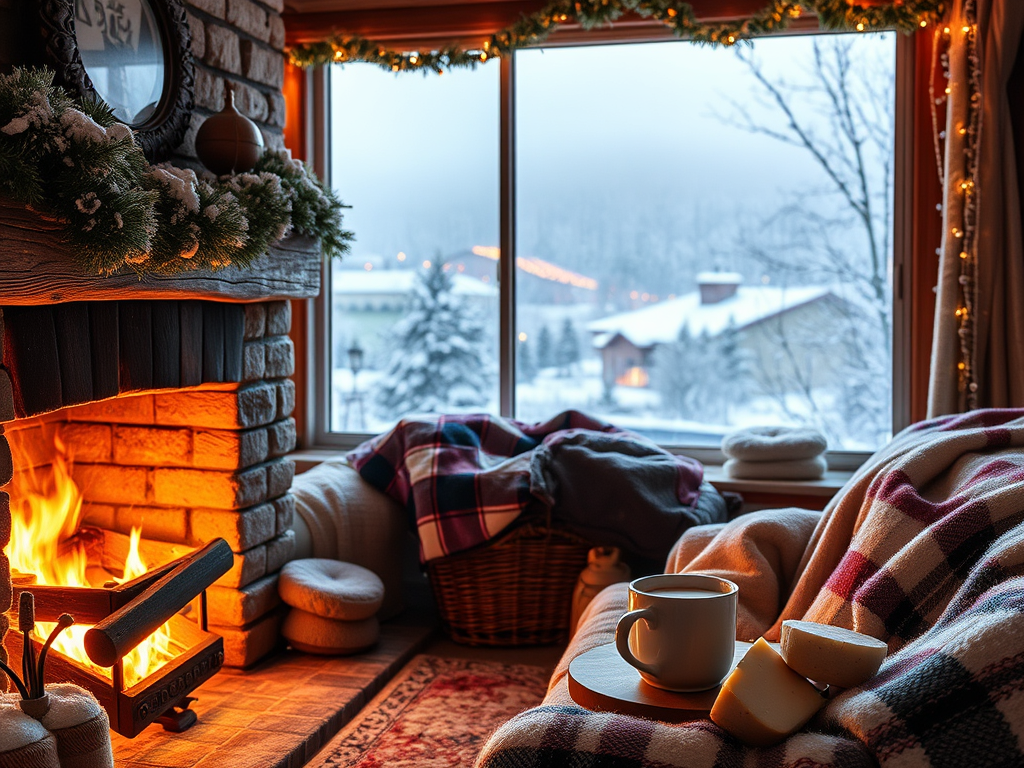
    There’s something magical about a snow day in Vermont. The air feels softer, the world slows down, and suddenly life takes on that storybook calm that only winter can bring. Whether you’re visiting from out of state or lucky enough to call Vermont home, a snow day isn’t just a break from routine. It’s an invitation to savor the season.

    From cozy fireside mornings to fresh powder adventures, Vermont knows how to make the most of a winter storm. This snow day bucket list brings together classic outdoor fun, warm indoor comforts, and a few creative ideas that remind you why winter here is something special.

    Classic Vermont Snow Day Adventures

    Hit the Slopes at a Local Ski Hill

    Vermont and skiing go hand in hand. You don’t need to chase the biggest mountains to find joy in the snow. Places like Smugglers’ Notch, Bolton Valley, and Cochran’s Ski Area offer that perfect mix of challenge and charm. There’s something refreshing about a day on the slopes where families, locals, and travelers all share the same lift line and the same smiles.

    Even if you’re not a skier, grab a warm drink at the base lodge and watch the snow fall across the trails. It’s one of the simplest ways to feel connected to Vermont’s winter rhythm.

    Go Sledding Like a Kid Again

    Nothing beats the feeling of flying down a snowy hill with the wind in your face. Sledding is as timeless as winter itself, and Vermont’s rolling hills make for the perfect playground. Every town has that go-to sledding spot, sometimes behind a school, sometimes just down the road. Grab a toboggan or even a plastic dish and head out to make new memories in the snow.

    Try Snowshoeing Through the Woods

    Snowshoeing might be the most peaceful way to explore Vermont’s winter landscape. Trails like the Lamoille Valley Rail Trail or the networks around Trapp Family Lodge in Stowe make it easy to find your rhythm in the quiet. You’ll hear the crunch of snow underfoot, maybe the sound of a distant chickadee, and the hush of the forest all around. It’s exercise, but it’s also meditation.

    Cozy Ways to Spend a Snow Day Indoors

    Cook or Bake with Vermont Ingredients

    Snowy days are made for warm kitchens. Pull out the maple syrup, Cabot cheese, or King Arthur Flour and whip up something comforting. Maple pancakes, cheddar biscuits, or a bubbling soup on the stove all taste better when the snow is falling outside. If you’re visiting, stop by a local farm stand or co-op to bring home a few Vermont-made ingredients for your next cozy day in.

    Light a Fire and Enjoy a Slow Morning

    There’s a certain kind of peace that comes with a quiet winter morning in Vermont. The coffee’s hot, the flannel’s soft, and the world outside feels hushed. Let the fire crackle and the snow pile up while you stay tucked under a blanket with a good book. It’s the kind of day that reminds you to slow down and simply enjoy being home.

    Visit a Local General Store or Café

    If cabin fever starts to set in, Vermont’s general stores and cafés are the perfect cure. The Warren Store, Stowe’s Butler’s Pantry, or Jericho Café and Tavern all serve up that perfect mix of comfort food and local charm. Walk in with snow on your boots and walk out warmed by good coffee, good conversation, and that familiar small-town friendliness that never goes out of season.

    Embrace Vermont’s Creative Side

    Visit a Local Artist Studio or Gallery

    Vermont has a thriving community of artists and makers who find inspiration in the changing seasons. On a snow day, step into a small-town gallery or studio. Burlington City Arts, Frog Hollow in Middlebury, and many others across the state showcase everything from pottery and paintings to handwoven textiles. It’s a lovely reminder of how deeply creativity runs through Vermont life.

    Start a Snow Day Project

    Snow days are perfect for small projects that bring a sense of calm and purpose. Try journaling, organizing a closet, or experimenting with a new recipe. If you’re more hands-on, maybe start a puzzle, knit a scarf, or photograph the snowfall from your window. These quiet moments become their own kind of Vermont tradition, rooted in the joy of slowing down.

    Snow Day Adventures for the Whole Family

    Build a Snowman or Try a Snow Sculpture

    Sometimes the best snow day activities are the simplest. Grab a carrot, a hat, and a pair of mittens, and build a snowman that’ll make the neighbors smile. If you’re feeling creative, turn it into a snow sculpture contest. Kids, adults, and even pets can get in on the fun. There’s something wonderfully silly about shaping snow into something that lasts just long enough to remind you how fleeting and fun winter can be.

    Take a Winter Drive

    When the roads are safe and clear, Vermont’s backroads offer postcard-worthy views after a snowfall. Route 100 is a favorite for its sweeping mountain scenery, while a drive through Smugglers’ Notch feels like traveling through a frozen fairytale when the road is open. Bring your camera, stop for photos, and take your time. Half the beauty of a Vermont winter is found along the way.

    End the Day with Hot Cocoa and a Vermont Treat

    Every perfect snow day deserves a sweet ending. Warm up with a mug of hot cocoa made with local milk or add a splash of maple syrup for a Vermont twist. Pair it with cider donuts, maple cookies, or even a small pour of maple bourbon cream for the adults. Gather around the fire and let the day wind down slowly, the snow still falling outside the window.

    Snow Days the Vermont Way

    In Vermont, snow days aren’t just about what gets canceled. They’re about what gets created. These are the days when neighbors shovel each other’s driveways, when kids build forts until the sun goes down, and when the whole world seems to pause just long enough for you to notice how beautiful it all is.

    So the next time the flakes start falling, don’t rush through it. Lean into the quiet, the cold, and the comfort. Because in Vermont, a snow day isn’t a disruption. It’s a gift.

    Shop Green Mountain Peaks on Etsy

    Bring a little piece of Vermont into your home with our curated collection of gifts, apparel, and seasonal favorites. From cozy hoodies and crewnecks to Vermont-themed gift boxes and cookbooks, each item is designed to celebrate the Green Mountain spirit.

    • Vermont-inspired designs and gift sets
    • Printed and packaged with care
    • Ships directly to your door
    Visit Our Etsy Shop

    Discover gifts, apparel, and Vermont treasures made to share and enjoy year-round.
  • Discover Vermont’s Spookiest Halloween Activities

    Discover Vermont’s Spookiest Halloween Activities

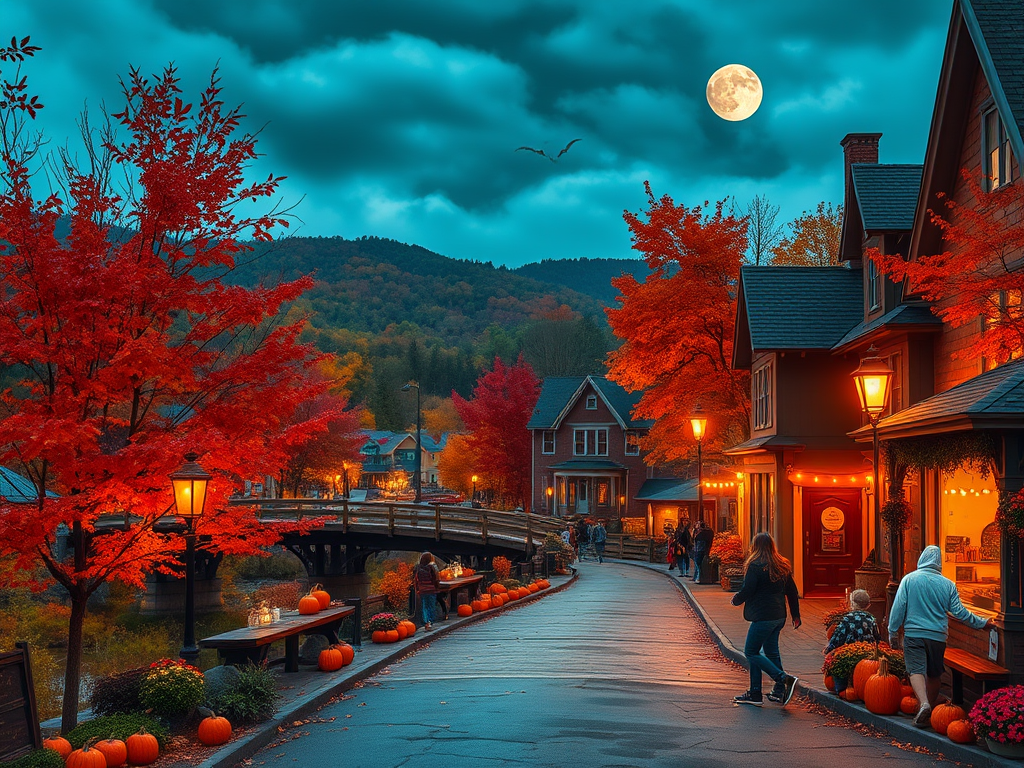
    When the leaves turn fiery red and golden yellow, Vermont transforms into the perfect Halloween backdrop. From historic ghost stories to pumpkin festivals and lively parades, the Green Mountain State offers a wide range of ways to celebrate the spooky season. Whether you are a family with kids, a couple looking for something eerie, or a traveler seeking out Vermont’s haunted legends, there is something here for everyone.

    Why Vermont is Perfect for Halloween

    Vermont’s fall foliage sets the stage for unforgettable Halloween adventures. The crisp air, covered bridges, and historic towns lend themselves naturally to ghost stories and haunted happenings. The state balances spooky thrills with family-friendly traditions, making October one of the best times to visit.

    Haunted Attractions and Ghost Tours

    Emily’s Bridge in Stowe

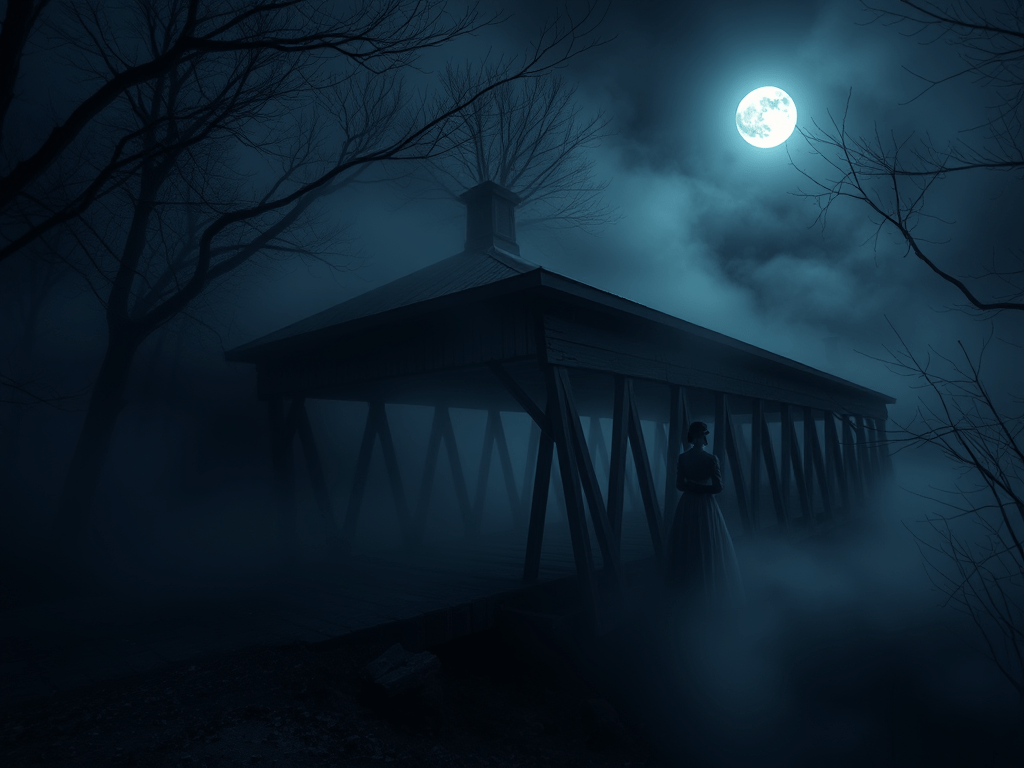
    One of Vermont’s most famous haunted sites is Emily’s Bridge, a covered bridge in Stowe with a chilling legend. Visitors have reported strange noises, ghostly figures, and eerie feelings when crossing the bridge at night. It is a favorite stop for those seeking a classic Vermont ghost story during Halloween.

    Wilson Castle Haunted Tours in Proctor

    Wilson Castle in Proctor is a 19th-century mansion known for its elaborate architecture and paranormal activity. During October, the castle often hosts haunted tours that bring its ghostly reputation to life. The atmosphere of this historic landmark makes it a must-visit for Halloween enthusiasts.

    Norwich Inn Ghost Tours

    The Norwich Inn, dating back to the late 1700s, is known for its resident spirits. Guided tours during Halloween highlight tales of mysterious happenings, unexplained sounds, and chilling encounters. It is a great choice if you want a blend of history and haunted storytelling.

    Family-Friendly Halloween Festivals and Events

    Pumpkin Festivals

    Vermont takes pumpkins seriously in October. Local farms and towns host festivals with carving contests, pumpkin displays, and activities for kids. While the Keene Pumpkin Festival across the border in New Hampshire often draws attention, Vermont has its own smaller but equally festive celebrations worth checking out.

    Trick-or-Treat in Downtowns

    Many Vermont towns host safe trick-or-treat events where local businesses hand out candy. Montpelier and Burlington both offer popular downtown trick-or-treat walks, making it easy for families to enjoy Halloween in a fun and welcoming atmosphere.

    Corn Mazes and Hayrides

    The Great Vermont Corn Maze in Danville is a seasonal favorite, offering both family-friendly daytime adventures and haunted nighttime experiences. Around the state, farms add haunted hayrides to their fall attractions, with spooky stops and costumed actors to keep visitors on edge.

    Spooky Seasonal Performances and Parades

    Middlebury Halloween Parade

    Middlebury comes alive each Halloween with a festive parade featuring costumes, music, and community spirit. It is a great way for families and visitors to experience Vermont’s small-town charm while celebrating the holiday.

    Rutland Halloween Parade

    Rutland’s Halloween Parade is legendary. First held in 1960, it has grown into one of the oldest and most popular Halloween parades in the country. Thousands of people line the streets every year to watch floats, bands, and creative costumes. It is one of the highlights of Halloween in Vermont.

    Theatrical Shows and Haunted Plays

    Vermont’s theaters and colleges often stage spooky performances in October. From haunted plays to gothic storytelling, these shows provide a cultural twist on the Halloween season. Burlington, Middlebury, and Montpelier are good places to look for seasonal performances.

    Halloween in the Champlain Valley

    The Champlain Valley offers a mix of farm attractions and city nightlife. In South Hero and Shelburne, farms turn into haunted attractions with hayrides and pumpkin picking. Burlington brings the energy with Halloween parties, bar crawls, and live music events that last well into the night.

    Halloween in the Green Mountains and Northeast Kingdom

    Vermont’s mountain towns and rural Northeast Kingdom lean into the haunted atmosphere of October. Stowe offers ghost walks that highlight its spooky history. Danville’s Great Vermont Corn Maze hosts haunted nights for thrill-seekers. Smaller communities host storytelling nights and haunted trails, offering a more intimate Halloween experience.

    Tips for Planning Your Vermont Halloween Adventure

    • Dress warmly: Vermont nights in October can get chilly, especially if you are attending outdoor events.
    • Book ahead: Haunted tours and popular parades can fill up quickly, so make reservations early.
    • Combine foliage and Halloween: Plan a scenic drive through Vermont’s countryside to enjoy peak foliage alongside spooky stops.

    Final Thoughts: Vermont’s Halloween Magic

    Halloween in Vermont is unlike anywhere else. The state’s natural beauty blends seamlessly with its historic charm to create an atmosphere that is both spooky and welcoming. Whether you are wandering through a haunted corn maze, watching a parade, or exploring ghostly legends, Vermont offers the perfect mix of fright and fun.

    Leaf Peeping Crew, 30% Off

    Cozy up for foliage season with our Leaf Peeping Crew hoodies and crewnecks. Soft fleece, easy fit, perfect for ridge walks and lakeside sunsets.

    • Unisex fit and multiple colors
    • Printed to order in the USA
    • Ships directly to you
    Shop the 30% Off Sale

    Limited time offer. Discount applied at checkout while the sale lasts.

  • Top Haunted Locations in Vermont for Brave Souls

    Top Haunted Locations in Vermont for Brave Souls

    Vermont is known for its rolling green mountains, stunning foliage, and small-town charm. But beneath that beauty lies another side of the state—one filled with eerie legends, restless spirits, and stories that have been told for generations. For those who enjoy a good scare, Vermont has no shortage of haunted places worth exploring.

    From covered bridges and historic inns to old cemeteries and college campuses, the Green Mountain State is home to some of the most spine-tingling ghost stories in New England. Whether you are a tourist passing through or a local with an interest in the paranormal, this guide will take you to Vermont’s most haunted spots—if you dare.

    Emily’s Bridge – Stowe’s Infamous Haunted Covered Bridge

    No list of haunted places in Vermont is complete without Emily’s Bridge, officially known as Gold Brook Bridge, in Stowe. Built in the 1840s, this covered bridge looks picturesque by day, but after nightfall it is said to transform into one of the scariest locations in the state.

    The legend tells of a young woman named Emily who met a tragic fate here. Some versions claim she was jilted by a lover and took her own life at the bridge. Others say she died in a horse accident on her way to meet her beloved. Regardless of the details, her spirit is said to remain.

    Visitors have reported hearing disembodied footsteps, ghostly screams, and even scratches appearing on their cars after parking near the bridge. Many locals avoid driving through at night, while thrill-seekers head there hoping for an encounter. If you visit, respect the area and remember it is still an active roadway.

    Norwich University – Hauntings at America’s Oldest Military College

    Norwich University in Northfield holds the distinction of being the oldest private military college in the United States. With a history dating back to 1819, it has plenty of stories about ghostly cadets who never quite left.

    Students often share tales of strange footsteps echoing in empty hallways, doors opening on their own, and shadowy figures in dormitories. Some claim to have seen soldiers from another century still standing guard. The campus’ long history, combined with the stresses of military training, makes Norwich fertile ground for ghost stories.

    The Equinox Hotel – Manchester’s Elegant but Haunted Inn

    In Manchester, the grand Equinox Hotel has welcomed guests since the 19th century. Among its most famous visitors was Mary Todd Lincoln, wife of President Abraham Lincoln, who vacationed there with her children.

    Guests and staff have reported seeing a woman resembling Mary Todd Lincoln walking the halls, along with other figures in period dress. Unexplained noises and cold drafts add to the atmosphere. Despite its haunted reputation, the Equinox remains a beloved Vermont resort where history and luxury meet the paranormal.

    Wilson Castle – Rutland’s Gothic Mystery

    With its turrets, stained glass windows, and sprawling grounds, Wilson Castle in Rutland looks like it belongs in Europe rather than New England. Built in the 1860s, the castle has a dramatic history filled with both grandeur and tragedy.

    Today, it is a well-known site for paranormal investigations. Visitors often describe hearing footsteps when no one is there, feeling sudden cold spots, and seeing flickering shadows in the hallways. The castle embraces its haunted reputation by hosting ghost tours and events, making it a must-visit for anyone curious about Vermont’s spookier side.

    The Eddy House – Chittenden’s Spirit Capital of Vermont

    In the small town of Chittenden, the Eddy House earned fame in the 19th century thanks to the Eddy brothers, who were renowned mediums. People traveled from all over the country to attend séances at the house, where mysterious figures and unexplained voices were said to appear.

    Even today, the Eddy House is considered one of Vermont’s most haunted locations. Paranormal enthusiasts believe the brothers’ work left a permanent mark on the property, with spirits continuing to linger. The combination of history, legend, and the brothers’ notoriety ensures that Chittenden still holds a reputation as Vermont’s “spirit capital.”

    Shelburne Museum – Ghostly Encounters Among Historic Buildings

    The Shelburne Museum is famous for its collection of historic buildings relocated from across New England. With more than 39 structures on site, it is no surprise that a few of them come with ghost stories of their own.

    The Dutton House, a colonial-era building moved to the museum grounds, is said to be especially active. Visitors report hearing whispers, footsteps, and sudden chills. Staff members have also shared their own strange experiences. For those who love both history and the paranormal, the Shelburne Museum offers a fascinating mix of both.

    Vermont Inns with Paranormal Guests

    Green Mountain Inn – Stowe

    Stowe makes the list again with the Green Mountain Inn. This historic inn is home to one of Vermont’s most famous ghost stories—that of Boots Berry. A local character and former inn employee, Boots was known for his tap dancing. Guests today claim to hear the sound of tap shoes clicking on the roof during storms, as if Boots has returned to relive his glory days.

    White House Inn – Wilmington

    Another inn with a haunted reputation is the White House Inn in Wilmington. Built in the early 20th century, it has been the site of repeated ghost sightings. Guests report seeing a woman in white and hearing mysterious noises in the halls. For those brave enough, staying overnight here is like sleeping alongside Vermont’s history and its restless spirits.

    Cemeteries and Forgotten Resting Places

    Hope Cemetery – Barre

    Hope Cemetery is well-known for its impressive granite sculptures, created by master stonecutters from Barre’s immigrant communities. But alongside the artistry are stories of shadowy figures moving among the monuments at dusk. Whether it is the atmosphere of the cemetery or something more, many visitors leave with a sense of unease.

    Evergreen Cemetery – New Haven

    Evergreen Cemetery in New Haven is home to the infamous “Black Agnes” statue. Legend has it that anyone who sits on the statue’s lap at midnight will meet misfortune—or worse. While most people enjoy telling the tale as a bit of local folklore, others insist strange things really do happen near the statue.

    Why Vermont is So Haunted

    Vermont’s haunted reputation comes from a combination of history, geography, and culture. The state’s long past includes Native American stories, colonial struggles, and the hardships of rural life. Small towns often passed down ghost stories through generations, embedding them into local culture.

    The isolation of Vermont’s mountains and valleys adds to the atmosphere. Winters are long and dark, which may have fueled imaginations in earlier centuries. Today, those same tales continue to thrive as part of the state’s folklore and appeal to visitors.

    Tips for Visiting Haunted Places in Vermont

    • Respect private property: Many haunted sites are still in use, so always be courteous.
    • Visit in daylight when possible: Haunted places can be dangerous after dark due to uneven terrain.
    • Join a ghost tour: Guided tours often provide rich history along with spooky tales.
    • Bring the right gear: A flashlight, warm clothing, and a camera are all handy on haunted adventures.

    Final Thoughts – Do You Dare Explore Vermont’s Haunted Side?

    From covered bridges and castles to cemeteries and historic inns, Vermont is filled with stories of spirits who never left. Whether you believe in ghosts or just enjoy a good local legend, these destinations offer a glimpse into the state’s mysterious past. If you decide to visit, keep your eyes open and your mind ready—Vermont’s haunted side may reveal itself when you least expect it.

    Leaf Peeping Crew, 30% Off

    Cozy up for foliage season with our Leaf Peeping Crew hoodies and crewnecks. Soft fleece, easy fit, perfect for ridge walks and lakeside sunsets.

    • Unisex fit and multiple colors
    • Printed to order in the USA
    • Ships directly to you
    Shop the 30% Off Sale

    Limited time offer. Discount applied at checkout while the sale lasts.

  • Ultimate Vermont Fall Picnic Guide

    Ultimate Vermont Fall Picnic Guide

    Few experiences capture the essence of autumn like a picnic in Vermont during peak foliage season. The rolling mountains glow with red, orange, and gold, the air is crisp, and the charm of the Green Mountain State makes even a simple afternoon outdoors unforgettable. Whether you are a first-time visitor or someone who calls Vermont home, this fall foliage picnic checklist will help you plan a perfect day surrounded by breathtaking scenery and seasonal flavors.

    Why Vermont is Perfect for a Fall Picnic

    Vermont is consistently ranked among the top destinations for fall foliage in the United States. The variety of landscapes—from lakeshores to mountain passes—creates endless picnic backdrops. Crisp autumn air makes outdoor meals comfortable, and the slower pace of fall encourages people to linger, relax, and take in the view. Covered bridges, farmland meadows, and state parks provide plenty of options for scenic picnic spots.

    Choosing the Perfect Picnic Spot

    The right location sets the tone for your picnic. Vermont offers countless places to spread a blanket and enjoy the season.

    State Parks with Scenic Views

    • Smugglers’ Notch State Park: Surrounded by dramatic cliffs and mountain foliage, this is a favorite for fall colors.
    • Camel’s Hump State Park: A classic Vermont peak with nearby meadows and trailheads perfect for a picnic break.
    • Groton State Forest: A vast area with lakes, trails, and overlooks ideal for quieter outings.

    Lakeside Locations

    • Lake Champlain: Picnic along the shoreline for water views framed by the Adirondacks and Green Mountains.
    • Lake Willoughby: This Northeast Kingdom gem offers dramatic cliffs and peaceful surroundings.

    Covered Bridges and Meadows

    • Stowe, Waitsfield, and Woodstock all feature covered bridges that add charm to a picnic setting.
    • Rolling farmland and open meadows provide wide views of foliage without the crowds.

    What to Pack for a Vermont Fall Picnic

    Picnic Basics

    • A large blanket or folding chairs for comfort
    • A picnic basket or cooler to keep items fresh
    • Reusable utensils, plates, and napkins

    Food and Drink Essentials

    • Local cheese, crusty bread, and crackers
    • Vermont maple cookies or maple popcorn
    • Fresh cider or hot cocoa kept warm in a thermos
    • Apples, pears, or other seasonal fruit

    Comfort Items

    • Layered clothing, warm socks, and a hat for cooler days
    • Thermos mugs and hand warmers
    • Plenty of napkins and wet wipes

    Adding a Vermont Twist to Your Picnic Menu

    One of the joys of a Vermont picnic is weaving local flavors into your spread. A fall outing feels incomplete without a maple treat or fresh-from-the-farm snack.

    • Pack maple scones, maple butter cookies, or granola made with syrup.
    • Include Vermont cheddar, goat cheese, or locally made spreads.
    • Bring cider donuts or a slice of apple pie from a local bakery.
    • Pick up farm-fresh produce like roasted pumpkin seeds or squash dishes from a farmers market.

    Timing Your Fall Picnic

    Vermont foliage typically peaks between late September and mid-October, but the best week depends on the region. The Northeast Kingdom often sees color first, followed by central and southern Vermont. Plan your picnic around midday for the most warmth, or aim for golden-hour sunsets if you prefer glowing light for photos. To avoid crowds, choose weekdays or quieter locations off major routes.

    Activities to Pair with Your Picnic

    A picnic is just one part of the Vermont fall experience. Pair your meal with other seasonal adventures.

    • Drive scenic byways like Route 100 or Route 108 for mountain views.
    • Take a short hike to Sterling Pond, Owl’s Head, or Mount Philo before or after eating.
    • Go apple picking at orchards like Hackett’s or Champlain Orchards.
    • Capture photos of foliage reflections in lakes and rivers.
    • Pack a deck of cards, a journal, or a speaker for light background music.

    Practical Tips for a Stress-Free Picnic

    • Bring trash bags and follow “leave no trace” principles.
    • Pack for sudden weather shifts with a rain jacket or umbrella.
    • Carry bug spray and sunscreen, even in cooler weather.
    • Remember that some rural areas have little to no cell service, so plan accordingly.

    Making Memories That Last

    Autumn picnics in Vermont are more than just meals outdoors; they are memory-makers. Take photos of your picnic setup against colorful backdrops, jot down notes in a travel journal, or save mementos like a pressed leaf. Many families and friends turn their fall picnic into an annual tradition, returning each year to favorite spots as a way of celebrating the season together.

    Final Thoughts: Your Vermont Fall Picnic Awaits

    With the right mix of planning, local flavors, and scenic locations, a fall foliage picnic in Vermont becomes an unforgettable experience. Pack your basket, choose your spot, and get ready to enjoy autumn’s most colorful days surrounded by the beauty of the Green Mountains. Vermont’s charm shines brightest in fall, and your picnic is the perfect way to savor it.

    Leaf Peeping Crew, 30% Off

    Cozy up for foliage season with our Leaf Peeping Crew hoodies and crewnecks. Soft fleece, easy fit, perfect for ridge walks and lakeside sunsets.

    • Unisex fit and multiple colors
    • Printed to order in the USA
    • Ships directly to you
    Shop the 30% Off Sale

    Limited time offer. Discount applied at checkout while the sale lasts.