Updated November 2026
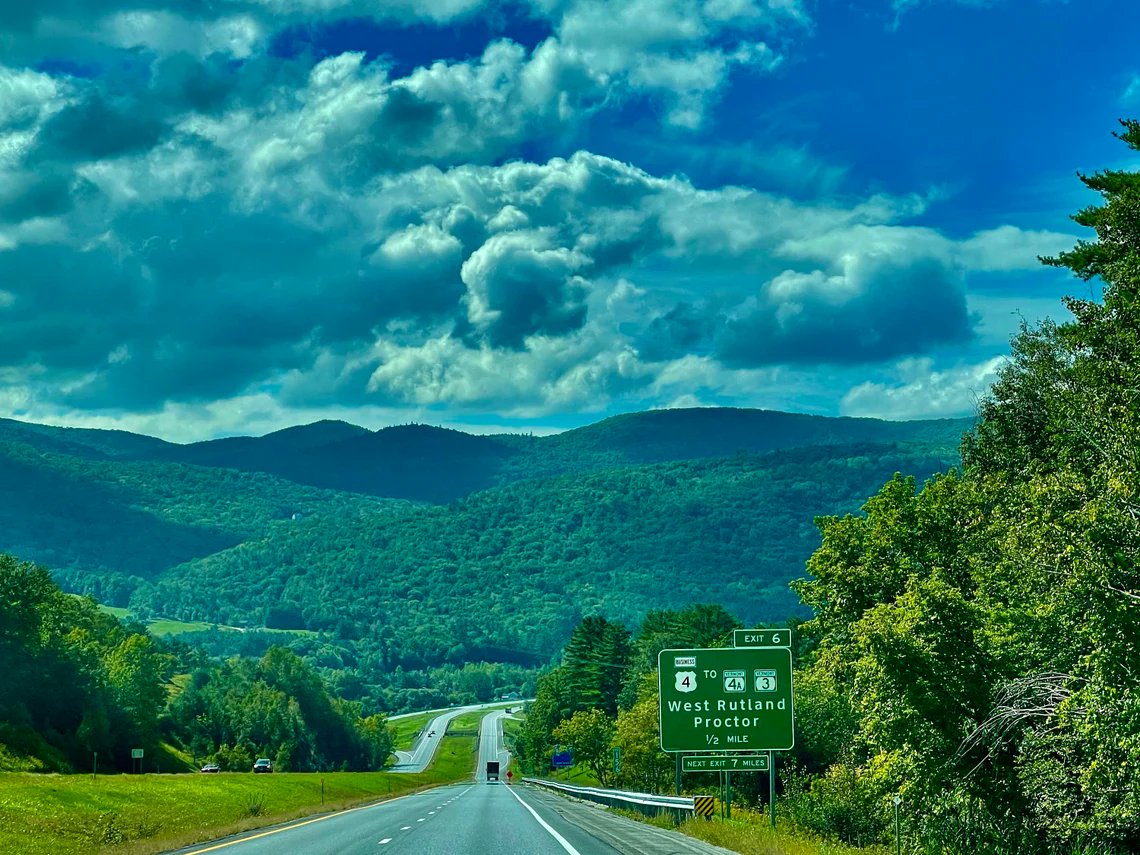
Drive across the border from New York or New Hampshire and something feels different, even if you can’t name it right away. There are no billboards. Not on the interstate, not on Route 100, not anywhere. That’s not an accident. Vermont banned them in 1968, and the law is still enforced today.
Short answer: billboards are illegal in Vermont because of a 1968 law, Act 333, that banned off-premises outdoor advertising statewide. Lawmakers argued the state’s scenery was its biggest economic asset and billboards were wrecking it. Existing signs were given five years to come down.
Vermont Wasn’t Always Billboard Free
As cars took over in the early 1900s, billboards followed. By the 1960s, Vermont had roughly 4,500 roadside billboards, many of them leased on farmland along the main routes.
The pushback started early. In 1937, journalist Dorothy Thompson, who lived part time in Barnard, made the case in the Rutland Herald that Vermont had beauty to sell and that tourists could see billboards anywhere else. A 1939 law put some limits on the signs, but attempts at an outright ban failed through the 1940s, 50s and 60s.
The Man Behind the Ban
The ban finally passed thanks to Ted Riehle, a Republican state representative from South Burlington. Riehle had spent years driving past endless roadside signs on trips south and didn’t want Vermont to look that way.
His bill, H.450, called for removing nearly all billboards and replacing them with a state-run system of standard directional signs for businesses. It faced heavy opposition from the billboard industry, from advertisers and from farmers who earned money leasing their land. Riehle made his case in person across the state, speaking to group after group.
It worked. House Republicans backed the bill, state senator Jim Jeffords helped move it through the Senate, and Democratic Governor Phil Hoff signed it in March 1968. Vermont became the first state in the continental US to ban billboards. Hawaii had already restricted them decades earlier, and Maine and Alaska later followed.
Which States Ban Billboards?
Four states ban billboards statewide: Vermont, Hawaii, Maine and Alaska.
- Hawaii came first, in 1927, while it was still a territory, after a campaign by the Outdoor Circle, a civic group.
- Vermont followed in 1968, the first state in the continental US.
- Maine passed its ban in 1977.
- Alaska voters made the ban permanent with a 1998 ballot measure.
Why doesn’t Maine allow billboards?
For the same reason Vermont doesn’t. Maine decided its coastline, forests and small towns were worth more to tourism than roadside ads, and it followed Vermont’s lead about a decade later.
Source: Scenic America; WCAX.
How the Billboards Came Down
The law didn’t flatten every sign overnight. New billboards were banned right away, and owners of existing ones had five years to take them down. Through the early 1970s they disappeared county by county, and by the mid 1970s the last of them were gone.
Riehle went on to help start Green Up Day, Vermont’s statewide roadside cleanup, which still happens every May.
What’s Still Allowed
The ban covers off-premises advertising: signs promoting a business somewhere other than where the sign stands. What you will still see:
- On-premises signs: a business can put its own sign on its own property, within size and lighting rules.
- Official business directional signs: the small, uniform signs near intersections that point you toward a lodge, restaurant or attraction. These are the state-run system that replaced billboards.
- Small agricultural signs: farm stands and seasonal produce have long had some room under the law.
The edges still get tested. In 2025, a New York tire shop hung ads on hay wagons parked in fields in Chittenden and Addison counties. VTrans, which enforces the ban, told the owner the signs broke the law, and he took them down. Mobile billboards on trucks have drawn complaints too, and in 2026 a House bill, H.867, proposed banning them outright. Source: Seven Days; WCAX; Vermont Legislature.
Why Vermonters Still Love the Ban
More than 50 years later, the billboard ban is one of the things people mention first when they talk about what makes Vermont feel different. Lawmakers commemorated the law’s 50th anniversary in 2018, and the case Riehle made still holds: people come here for the mountains, the farms and the small towns, not for the ads.
Next time you’re on a back road and the view is just fields, a church steeple and a ridgeline, you’re seeing exactly what that 1968 law was meant to protect.
Want more of Vermont’s quirks? Read Weird Laws in Vermont That Are Actually Real.
Thinking about living here, not just visiting? Start with my Moving to Vermont guide, or ask me anything about living in Vermont.
Leave a Reply