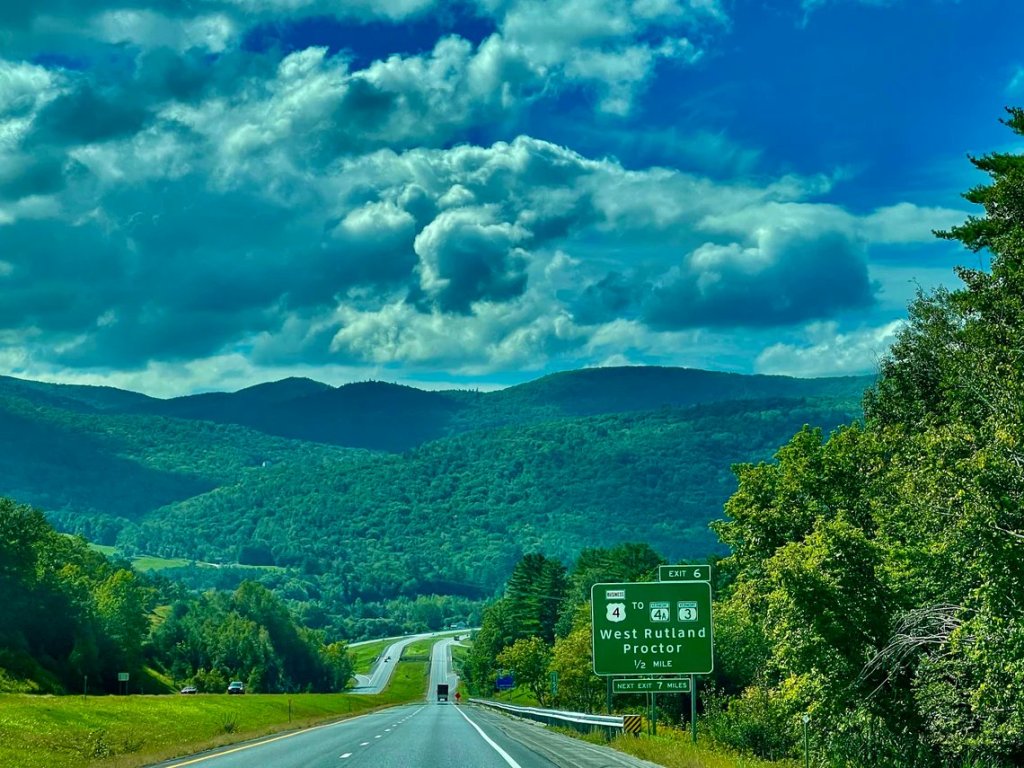
When you drive through Vermont, something immediately feels different. The views are wide open, the forests are dense, and the mountains stretch into the horizon without a single advertisement blocking the scenery. Vermont is one of the only states in the country where billboards are completely banned, and it has been that way for more than fifty years.
The decision to remove billboards was not just about aesthetics. It was about protecting Vermont’s identity, preserving its small-town charm, and putting community values above commercial interests. Here is the story of why Vermont banned billboards, and why the choice still matters today.
The Rise of Billboards Across America
In the early to mid-20th century, billboards exploded in popularity across the United States. As highways expanded and car ownership soared, businesses realized that road signs were a powerful way to grab the attention of drivers. Bright, flashy, and often larger than life, billboards popped up along major highways and rural backroads alike.
By the 1960s, many parts of the country were overwhelmed by a clutter of signs advertising gas stations, motels, cigarettes, and soft drinks. Roads that once offered peaceful views of farmland or mountains became crowded with commercial messaging.
While some states began to regulate billboard size and placement, very few considered removing them altogether. Vermont was about to change that.
Why Vermont Took a Stand
In the 1960s, Vermont was at a crossroads. Tourism had become a growing part of the state’s economy, but many Vermonters worried that the spread of billboards would ruin the very landscapes that drew visitors in the first place.
At the same time, there was a deeper cultural concern. Vermont had always prized its independent spirit, its connection to the land, and its small-town way of life. The idea of letting national corporations plaster their advertisements across the state felt, to many, like a betrayal of those values.
In 1968, Vermont’s legislature passed a law banning billboards completely. The law made Vermont the second state to ban billboards, following Hawaii’s lead just a few years earlier. However, Vermont’s ban was particularly strict. Not only were new billboards prohibited, but existing ones were systematically removed over time.
Governor Deane Davis, who signed the law, put it simply. He believed that the natural beauty of Vermont was more valuable than any potential advertising revenue. In his words, “The scenery is too precious to be marred by advertising signs.”
How the Ban Works
Vermont’s billboard law is straightforward. No new off-premise advertising signs are allowed. An off-premise sign means any sign that advertises a business, service, or product not sold on the property where the sign is located.
On-premise signs are still allowed, but they must meet strict guidelines about size, placement, and lighting. This allows businesses, especially small local ones, to advertise on their own property without creating visual clutter along the roads.
The state also tightly regulates temporary signs, political signs, and directional signs. Everything is designed to keep the focus on the landscape, not on advertisements.
The Impact on Vermont’s Landscape
The result of the billboard ban is visible everywhere you go in Vermont. When you drive along Route 100, often called one of the most scenic highways in America, your eyes are filled with endless views of rolling fields, sparkling rivers, and dense forests. In autumn, the hillsides blaze with the colors of changing leaves. In winter, snow-blanketed farms and mountains create a postcard-perfect scene.
Without billboards, Vermont’s towns and villages have also kept their historic character. Downtowns feel more personal and authentic. Visitors often comment that Vermont looks and feels like stepping back in time, in the best possible way.
The ban has also helped Vermont tourism. Travelers seeking natural beauty, peace, and a break from commercialism find exactly what they are looking for in Vermont. For many, the absence of billboards is not just refreshing. It is part of what makes Vermont unforgettable.
Criticisms and Challenges
Of course, not everyone has agreed with the billboard ban. Some business owners have argued that without billboards, it is harder to attract customers, especially in rural areas where businesses can be spread far apart. Others have pointed out that digital advertising, internet searches, and GPS have replaced much of the need for roadside signs anyway.
Over the years, there have been occasional pushes to loosen the regulations. So far, Vermont has held firm. Most Vermonters continue to support the ban, viewing it as a critical part of the state’s identity and a proud example of putting quality of life ahead of commercial convenience.
A Legacy of Preservation
Today, Vermont’s billboard ban is not just a quirky law. It is a symbol of the state’s values. It represents a commitment to protecting natural beauty, prioritizing community over commerce, and valuing long-term quality over short-term profits.
In a world that often feels increasingly busy, cluttered, and loud, Vermont offers something rare. The freedom to drive, hike, and explore without being constantly sold something. A chance to experience nature without distractions. A reminder that sometimes, the best advertisement for a place is no advertisement at all.
When you cross into Vermont and see the forests stretch uninterrupted to the horizon, you are seeing the result of a bold choice made more than fifty years ago. And for many, it is one of the best reasons to fall in love with the Green Mountain State.

Leave a comment