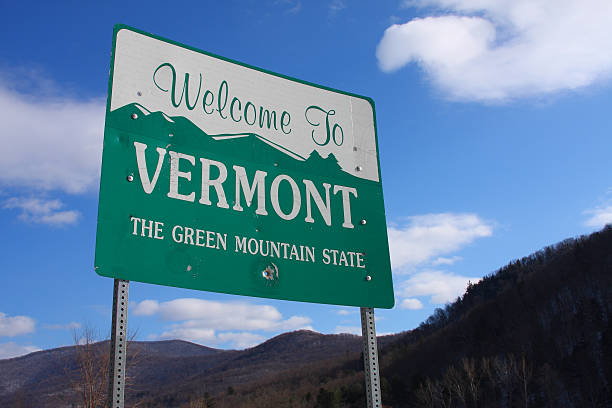
Vermont has a reputation. Maple syrup. Ski towns. Progressive politics. Cozy inns. But look closer and you’ll find a wilder story etched into the signs nailed up along its winding backroads. This is a place where town names don’t just sound odd. They are odd. They beg questions. They pick fights with pronunciation. And they almost always come with a hell of a backstory.
Here are a few of Vermont’s most unusual town names and the stories behind them.
Calais
Locals will tell you fast and without apology: it’s CALL-us, not ka-LAY. You want French elegance? Go to France. This Calais took the name during the Revolution as a nod to liberty, then twisted it into something that sounds more like a throat-clearing. It’s a small town with big opinions, dirt roads, and folks who prefer it that way. Mispronounce it and they’ll correct you with a smile that doesn’t quite reach the eyes.
Belvidere
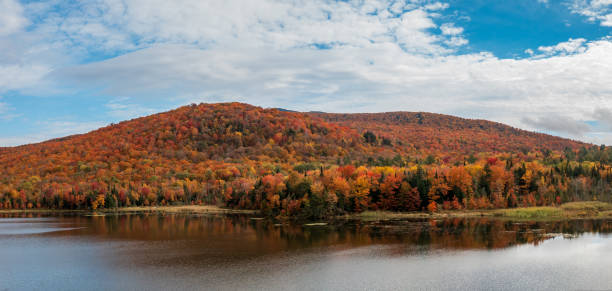
Sounds like it should have golf courses and luxury SUVs. What you’ll find is fewer than 400 people, a mountain that eats cell signals for breakfast, and some of the most staggeringly beautiful views this side of the Alps. The name comes from the Italian belvedere, meaning beautiful view. For once, the name isn’t a lie.
Dummerston
With a name like Dummerston, you might expect a punchline. But this town, founded in 1753, is anything but dull. It was named after William Dummer, an early colonial governor of Massachusetts. The name may raise eyebrows now, but Dummer was a respected political figure of his time.
Dummerston is also famous for being the longtime home of author Rudyard Kipling. He wrote parts of The Jungle Book while living in a house called Naulakha, which still stands today.
Tunbridge
Tunbridge is best known for its historic fairgrounds and the Tunbridge World’s Fair, which has been running since 1867. But the town’s name reflects a much older tradition. It was named after Tunbridge Wells in England, a fashionable spa town in the 1700s.
The Vermont version stuck to its farming roots. Today, Tunbridge is a poster child for rural life, known for covered bridges, heritage breeds, and a tight-knit community that turns out for the fair every September.
Wheelock
Now this one has a perk. Wheelock, located in Caledonia County, was named after Eleazar Wheelock, the founder of Dartmouth College. Thanks to an old land grant arrangement, Dartmouth students who are from Wheelock are eligible for free tuition at the Ivy League school.
It’s a small town with a big-time scholarship attached. And yes, there have been students who moved there just to qualify.
Braintree
Braintree might sound like a tech startup, but it’s actually a sleepy little town in Orange County. It was named after Braintree, Massachusetts, which was named after Braintree, England. The name might evoke images of brains and intellect, but the Vermont version is far more known for hiking trails and maple trees than academics.
Still, it does make a great trivia question: “What Vermont town sounds like it should be full of geniuses but is actually mostly cows and forests?”
Victory
Victory is one of the most remote towns in the state, with only about 70 full-time residents. It didn’t even get electricity until the 1960s, making it the last town in Vermont to be connected to the grid.
Its name is bold and dramatic, but the origin is unclear. Some believe it was named to celebrate a victory in the Revolutionary War, while others say it was just a name chosen to attract settlers. Either way, Victory stands strong — even if it is mostly trees, moose, and dirt roads.
Satan’s Kingdom
Yes, it’s real. No, it’s not a full town, but it’s definitely worth mentioning.
Satan’s Kingdom is a remote area in the northeastern part of Leicester. The name has puzzled and amused travelers for generations. Local legends vary, but one theory is that early settlers gave it the ominous name because of how rugged, rocky, and swampy the land was.
There’s not much there now, but let’s be honest — you kind of want to go visit just to say you’ve been to Satan’s Kingdom, Vermont.
The Northeast Kingdom
It’s not a town, it’s a whole region and the name has stuck for over 75 years.
The term Northeast Kingdom was coined in 1949 by Governor George Aiken to describe the rugged, wild corner of Vermont made up of Essex, Orleans, and Caledonia counties. The name caught on fast, and today it’s used in everything from tourism brochures to high school names.
The Northeast Kingdom has a vibe all its own. Think deep forests, tiny towns, glacial lakes, and some of the most breathtaking fall foliage in the country. The name might sound royal, but life here is more about wood stoves, dirt roads, and star-filled skies.
Vermont’s town names are as unique and unforgettable as its landscapes. Whether it’s a mispronounced French word, a bold declaration like Victory, or a place straight out of a horror novel, these names all come with a story — and a little bit of Vermont attitude.
So next time you’re driving through the Green Mountains and see a quirky name on a sign, take a second to wonder what tale might be behind it.

Leave a comment