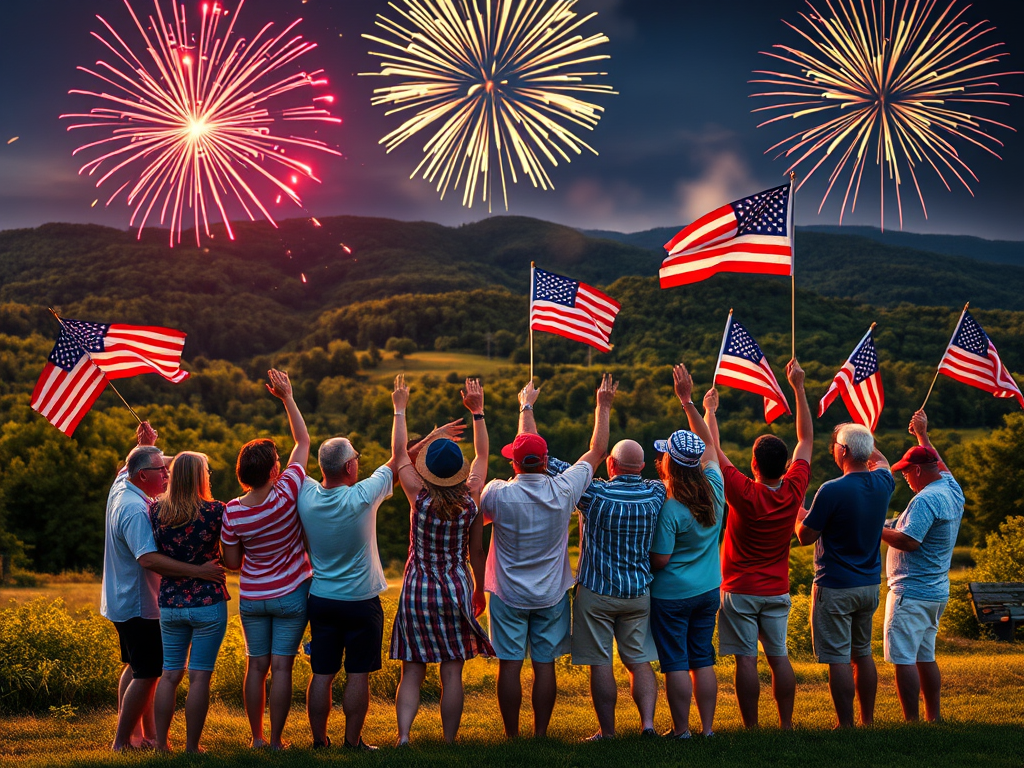
Independence Day in Vermont is more than fireworks and grilled hot dogs. It is a deeply rooted celebration of what it means to stand up, push back, and do things your own way. From the state’s early days as a self-declared republic to the modern-day town meetings that still shape its political character, Vermont has always taken independence seriously. And on the Fourth of July, Vermonters do not just wave flags. They celebrate the bold, revolutionary spirit that made their state what it is.
Here’s why:
Vermont Was Born From Revolution
Before Vermont was a state, it was a battleground. Not just in the war against British rule, but also in a fierce political struggle with neighboring colonies. In the 1760s and 1770s, the land that is now Vermont was hotly contested by both New York and New Hampshire. Settlers under conflicting land claims often found themselves at odds, and it was out of this chaos that Vermont’s revolutionary identity was born.
At the center of this fight were the Green Mountain Boys, a militia formed to defend the rights of New Hampshire land grantees. Led by Ethan Allen, they gained fame not only for defending Vermont’s territory but also for capturing Fort Ticonderoga in 1775. Their boldness and independence earned them a permanent place in early American history.
In 1777, Vermont declared itself an independent republic. It was not part of New York, not part of New Hampshire, and not yet part of the United States. For 14 years, it functioned as its own country, issuing its own currency, operating its own postal service, and negotiating with foreign powers.
This revolutionary origin story is not just state trivia. It shapes how Vermonters see themselves: independent, self-reliant, and unafraid to challenge the status quo.
July 4, 1777: Vermont’s First Constitution Signed
While the rest of the nation was celebrating the first anniversary of American independence, Vermonters were making history of their own.
On July 4, 1777, in the small town of Windsor, Vermont ratified its first constitution. This was not just symbolic. It was a bold and forward-thinking document that made Vermont the first territory in North America to:
- Prohibit adult slavery
- Allow universal male suffrage, including non-landowners
- Guarantee public education
It was no coincidence that the constitution was signed on the Fourth of July. The date was chosen to align Vermont’s bold experiment in democracy with that of the newly declared United States. Even though Vermont was not admitted to the Union until 1791, it celebrated American ideals from the beginning and often went further than the original states.
This moment is part of why the Fourth of July means something deeper in Vermont. It marks both American independence and Vermont’s own political birth.
Independence as a Way of Life in Vermont
For Vermonters, independence is not just historical. It is cultural.
Here are some ways that value shows up in daily life:
1. Town Meeting Day
Held each March, Town Meeting Day is a living example of grassroots democracy. In school gyms, firehouses, and town halls, residents gather to vote on local issues. These meetings are often intense, personal, and fiercely debated. They reflect a culture where every voice matters.
2. Local Control Over Big Government
Vermont has a long tradition of resisting federal or corporate overreach. This includes:
- Being the first state to recognize same-sex civil unions in 2000
- Pioneering GMO labeling laws
- Refusing to adopt certain standardized testing models in schools
3. Supporting Local Over Chain Stores
Many Vermont towns have actively resisted big-box development in favor of local businesses. The result is a state full of independent bookstores, family-run general stores, and small producers who thrive on community support.
This deep-rooted commitment to self-governance and community control echoes the ideals that sparked the Revolution in the first place.
Celebrating with Purpose: How Vermonters Honor the 4th
Fourth of July in Vermont is vibrant, but it is also intentional. Towns big and small embrace the day not just with festivities but with reflection.
Some notable traditions include:
1. Montpelier’s Independence Day Celebration
Includes a classic parade, live music, a farmers market, and fireworks. Often features readings of the Declaration of Independence and performances by local historical reenactors.
2. Brandon’s Parade and Street Dance
Known for quirky floats and strong community involvement. Followed by a lively street party with local food and drink.
3. Fireworks Over Lake Champlain
Burlington hosts a waterfront celebration that draws families, history lovers, and tourists alike. You will find educational tents alongside food trucks and live music.
4. Historic Reenactments
Locations like Hubbardton Battlefield and the Old Constitution House often hold Revolutionary War reenactments, flag-raising ceremonies, and educational programs.
In many Vermont towns, you are just as likely to find a small museum exhibit about 1777 as you are to find a BBQ cookout. The past is never far away.
Revolutionary Figures Who Still Inspire
When you grow up in Vermont, you learn names that do not always show up in the average history book. These figures are still celebrated and honored across the state.
1. Ethan Allen
Leader of the Green Mountain Boys and hero of Fort Ticonderoga. Known for his brashness, wit, and fierce devotion to liberty.
2. Thomas Chittenden
Vermont’s first governor, both during the republic and after statehood. A stabilizing force in turbulent times who guided Vermont into the Union.
3. Ann Story
A Revolutionary War heroine who supported the Green Mountain Boys from the frontier. A symbol of the strength and resilience of Vermont’s women.
These names are etched into Vermont’s geography: on schools, roads, mountains, and historic plaques. They are not just historical figures. They are cultural icons.
Why It Still Matters Today
Vermonters do not take Independence Day seriously just because of the past. They see it as a reminder of what still matters—freedom, equality, civic engagement, and community.
1. Teaching the Next Generation
Vermont classrooms often incorporate local Revolutionary history into lesson plans. Students take field trips to places like Fort Ticonderoga and the Constitution House.
2. Civic Pride and Activism
From climate change protests to small-scale political campaigns, Vermonters continue to show up and speak out. The Revolutionary spirit lives on in a culture that values participation over apathy.
3. Balancing Celebration with Reflection
Independence Day events often include solemn moments for veterans, readings of the Declaration, and reflections on progress. It is not uncommon for communities to acknowledge where the country has fallen short, even as they celebrate what has been achieved.
For many, it is not just about what happened in 1776 or 1777. It is about what those years started and how that momentum continues today.
Visiting Vermont for the 4th: A History Buff’s Dream
If you are a history lover, there is no better place to spend the Fourth of July than Vermont. Here are some top destinations that combine celebration with context:
1. Bennington Battle Monument
The tallest structure in Vermont, commemorating the Battle of Bennington in 1777. Features tours and panoramic views of the surrounding countryside.
2. Old Constitution House in Windsor
The site where Vermont’s first constitution was signed. Hosts reenactments and educational events over the holiday weekend.
3. Hubbardton Battlefield
The only Revolutionary War battle fought entirely on Vermont soil. Offers walking trails, interpretive signs, and living history programs.
4. Mount Independence
A Revolutionary fortification with trails and preserved earthworks. Guided tours are often available during July.
5. St. Albans and Swanton Parades
These events blend local flavor with historical flair and often highlight early settler heritage.
Pair any of these with a small-town parade or lakeside picnic and you have a well-rounded celebration that blends past and present beautifully.
Conclusion: The Spirit of ’77 Lives On
Vermont’s commitment to independence is not just a story in a textbook. It is lived every day in its towns, schools, celebrations, and political culture. That is why the Fourth of July is not just a national holiday here. It is a personal one.
Whether you are watching fireworks over Lake Champlain, visiting the site where Vermont’s first constitution was signed, or sitting at a town meeting voicing your opinion, you are participating in a tradition that dates back to 1777.
This July, as Americans mark their independence, Vermonters are marking theirs too. Proudly, loudly, and with a deep sense of purpose.

Leave a comment