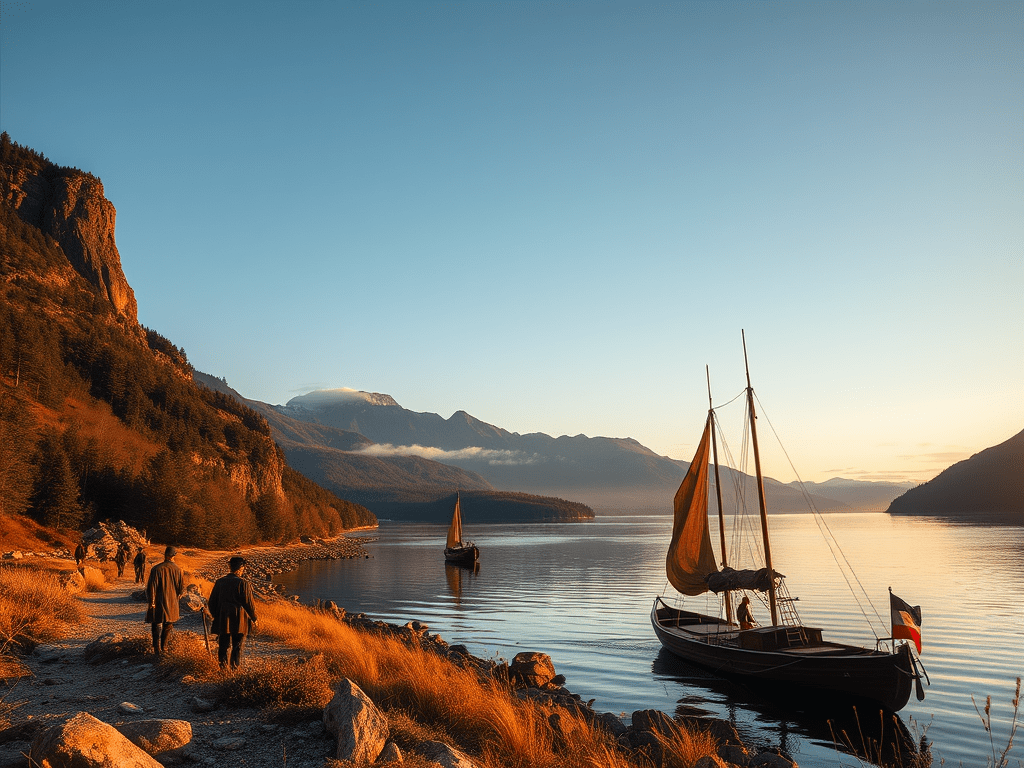
The War of 1812 is often remembered for iconic events like the burning of Washington, the defense of Fort McHenry, and the Battle of New Orleans. Yet on the northern frontier, Vermont played a quieter but crucial role in shaping the outcome of the conflict. From its shipyards on Otter Creek to its strategic location along Lake Champlain, the state’s contributions were vital to securing the border and supporting the American war effort.
This is the story of Vermont’s place in America’s second fight for independence.
Vermont Before the War: A State on the Edge
In the years before 1812, Vermont sat in a complex position. Officially part of the United States, it shared a long and often porous border with British-controlled Canada.
- Trade across the border was common, both legal and illicit
- Smuggling became an established way of life for some communities
- Political divisions ran deep, with Federalists opposing the war and War Hawks calling for it
The Embargo Act of 1807, intended to pressure Britain and France by restricting American trade, hit Vermont’s merchants and farmers hard. Border communities relied on Canadian markets, and many saw the federal restrictions as an attack on their livelihoods.
Smugglers took to the back roads and mountain passes to move goods north. One of the most famous routes was Smugglers’ Notch, a narrow mountain pass near Stowe. During the embargo years, locals drove cattle through the notch at night, supplying beef to Canada in defiance of federal law. These covert operations not only sustained cross-border trade but also cemented the notch’s reputation as a lifeline for illicit commerce.
Lake Champlain: The Northern Key
Lake Champlain was the most important geographic feature for Vermont during the War of 1812. Stretching from the Canadian border into New York and Vermont, it was a vital waterway for moving troops and supplies.
For the British, control of the lake meant an open route into New York’s Hudson Valley. For the Americans, holding it was essential to protecting the northern frontier. Vermont’s western edge, with towns like Burlington and Vergennes, became a strategic line of defense.
Local militia units kept watch along the shoreline, while the U.S. military improved fortifications and prepared for possible invasions. Ferries, bridges, and roads on the Vermont side allowed rapid troop movements in case of attack.
Life in Wartime Vermont
While major battles often took place across the lake or at the Canadian border, Vermont still felt the effects of war.
- British raids and the threat of invasion kept communities on alert
- Shortages of goods due to trade restrictions impacted daily life
- Smuggling persisted, with some Vermonters quietly trading with Canada despite the war
- Women played a vital role in sustaining farms and businesses while men served in the militia
The northern counties bore the brunt of these pressures. Farmers and merchants faced both economic hardship and the constant worry that fighting could spill into their towns.
Key Engagements and Skirmishes
Although Vermont was not the site of large-scale battles like those in New York or along the Great Lakes, it still saw military action.
- Cross-border skirmishes took place between Vermont militia and British or Canadian forces
- Roads and trails in Vermont became essential for moving troops to the front lines in New York
- Small incidents, such as the capture of supply boats or clashes between patrols, were frequent
These smaller engagements rarely made headlines, but they played a role in keeping the British off balance and maintaining American control of key areas.
The Vergennes Shipyard and Naval Power
Perhaps Vermont’s most significant direct contribution to the War of 1812 came from the small city of Vergennes. Located on Otter Creek, about seven miles from Lake Champlain, Vergennes became the site of a major shipbuilding effort for the American navy.
- The location was ideal because Otter Creek’s narrow entrance could be easily defended
- Timber from Vermont’s forests was plentiful for ship construction
- Skilled laborers from the region contributed to the rapid building of vessels
In 1814, Commodore Thomas Macdonough oversaw the creation of several warships here, including the brig USS Saratoga. These ships would go on to play a central role in the decisive Battle of Plattsburgh later that year.
The Battle of Plattsburgh
Fought in September 1814, the Battle of Plattsburgh was the turning point for the northern theater of the war. While the battle took place across the lake in New York, Vermont’s contributions were essential.
- Vermont militia units provided manpower to support American defenses
- Supplies and reinforcements were funneled through Vermont roads and towns
- The ships built in Vergennes formed the backbone of the American naval fleet
Macdonough’s victory on the water, combined with the land forces’ success, forced the British to retreat and helped bring about favorable terms in the Treaty of Ghent, which ended the war.
Aftermath of the War in Vermont
When peace returned in 1815, Vermont began to recover from the war’s disruptions.
- Trade with Canada resumed, restoring economic stability to border towns
- Veterans returned home, bringing with them stories of service and hardship
- Political divisions began to soften, though debates over federal authority continued
- The shipbuilding skills developed during the war continued to benefit Vermont’s economy
The war also left behind a stronger sense of identity as a northern border state, with pride in having contributed to the nation’s defense.
Sites to Visit Today
For those interested in experiencing Vermont’s War of 1812 history, several locations still preserve its memory.
- Lake Champlain Maritime Museum – Offers exhibits on naval history, including the War of 1812
- Vergennes Falls Park – Near the historic Otter Creek shipyard location
- Historic markers in Burlington and along the Champlain Valley – Highlight military movements and key events
- Smugglers’ Notch – While best known today for its scenic beauty, it was a vital smuggling route during the embargo years that set the stage for Vermont’s role in the war
- Plattsburgh, NY – Just across the lake, with annual reenactments and museums that also tell Vermont’s side of the story
Walking these sites offers a tangible connection to a period when the future of the United States was far from certain and Vermont stood watch on the northern frontier.
Why Vermont’s Role Matters
The War of 1812 is sometimes overshadowed by the Revolutionary War and the Civil War in American memory. However, Vermont’s involvement shows how even a small state can have an outsized impact during times of conflict.
- Its shipyards produced vessels that changed the course of battle
- Its militia guarded a key section of the northern border
- Its communities endured economic hardship while contributing to the war effort
- Its mountain passes, like Smugglers’ Notch, supported clandestine trade that helped shape prewar tensions
By remembering these contributions, the story of Vermont in the War of 1812 becomes more than a footnote. It becomes a testament to resilience, resourcefulness, and strategic importance.
Conclusion
Vermont’s role in the War of 1812 was not marked by famous battles fought on its soil, but by the quiet strength of its people, the ingenuity of its shipbuilders, and the strategic value of its location. From the shipyards of Vergennes to the waters of Lake Champlain, and from the smuggling trails of Smugglers’ Notch to the militia outposts along the border, the state played a key part in securing the northern frontier.
Today, visiting these sites and learning these stories offers not just a history lesson, but a deeper appreciation for how Vermont helped shape the outcome of America’s second war for independence.

Leave a comment