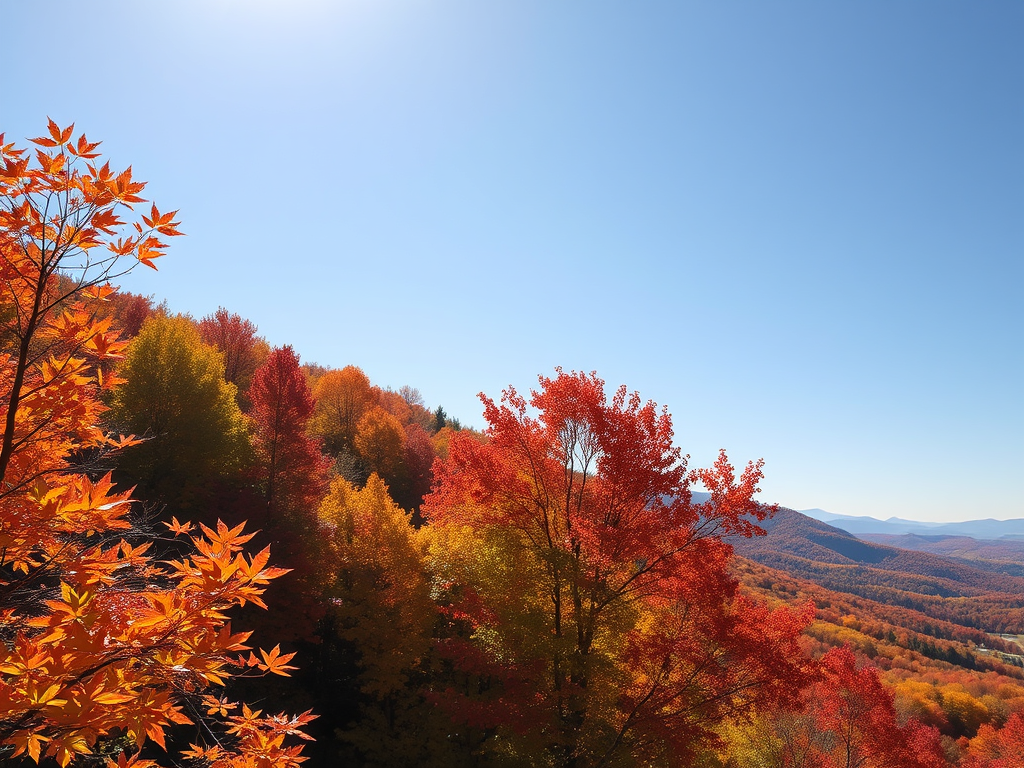
Vermont’s fall foliage looks like an artist’s palette spilled across the Green Mountains. The colors here feel extra saturated for good reasons that start inside each leaf and continue with local weather, elevation, and the state’s maple-rich forests. Understanding the science makes every overlook, covered bridge stop, and ridge hike more rewarding.
Leaf Color 101, how leaves change color in Vermont
Leaves look green in summer because of chlorophyll, the pigment that powers photosynthesis. As days shorten in September and October, trees wind down for winter, chlorophyll breaks down, and hidden pigments step forward.
- Chlorophyll, creates summer’s green, fades first in fall.
- Carotenoids, present all season, reveal yellows and oranges once chlorophyll recedes.
- Anthocyanins, produced mainly in autumn, add reds and purples when sunny days and cool nights allow sugars to build in the leaf.
Why Vermont’s fall foliage is so vibrant
Several Vermont advantages stack together to intensify color:
- Maple mix, sugar maple and red maple are natural red and orange powerhouses.
- Weather pattern, bright days and cool, not freezing, nights trap sugars in leaves and stimulate anthocyanins.
- Topography, mountains and valleys create layers and contrast that make color read bolder to the eye and camera.
The chemistry of color, chlorophyll, carotenoids, and anthocyanins
A quick way to “read” a hillside in October:
- Greens fading signal chlorophyll breakdown and the start of the show.
- Golds and ambers come from carotenoids in birch, aspen, and sugar maple.
- Scarlets and crimsons come from anthocyanins, most dramatic in maples and some oaks when days are sunny and nights are cool.
Anthocyanins also act like natural sunscreen for the leaf, protecting tissues as the tree reclaims nutrients before leaf drop.
Weather’s fingerprint, why some years look different
The same hillside can look different year to year because weather rewrites the pigment recipe. Strong color tends to follow:
- Sunny early fall days for sugar production in leaves.
- Cool nights above freezing to slow sugar export and encourage anthocyanins.
- Even moisture through late summer to prevent early browning.
Color can look muted when there is persistent cloud cover, hot nights, heavy rain right before peak, drought stress, or an early hard frost that shortens the show.
Why Vermont’s maples make legendary reds
Maples headline Vermont’s scarlet season. Sugar maples and red maples produce anthocyanins when sugars build in the leaf under bright light and cool nights.
- Best case for reds, sunny days plus nights in the 30s or low 40s without a freeze.
- Softer palettes happen with cloudy, rainy stretches that reduce sugar production, shifting the scene toward golds and russets.
Timing the trip with science, north to south and high to low
Vermont usually turns in waves, not all at once. A simple pattern helps you plan:
- Early to mid September, earliest hints at higher elevations in northern mountains.
- Late September to early October, widespread change across central highlands.
- Early to mid October, valleys and southern Vermont hit peak or near peak.
- Late October, lingering color in warm pockets, many leaves down by early November.
For week-by-week strategy, pair this article with your timing guide: When and Where to See the Best Fall Foliage in Vermont (2025 Guide).
Local cues anyone can use
Shortlist to “read” the season without a forecast:
- Nighttime lows in the upper 30s to low 40s without a hard freeze.
- A string of bright days that follow moderate rain.
- Elevation checks, compare a valley, a gap road, and a ridge on the same day.
Where to see the science in action
Choose places that create natural contrast between species, light, and elevation:
- High ridgelines, the Mt. Mansfield and Smugglers Notch area, where layered views reveal gradients.
- Lakes and rivers, Lake Champlain overlooks and broad river bends, where reflections amplify reds and golds.
- Open farm valleys, Champlain Valley meadows with solitary sugar maples framed against fields and distant hills.
Pair these stops with other helpful guides like Family Friendly Day Trips in Vermont and How to Spot a Tourist in Vermont.
Myths vs facts about fall foliage
- Myth, frost is required for red leaves. Fact, frost can damage leaves. The best reds come from sunny days and cool, not freezing, nights.
- Myth, timing is the same every year. Fact, elevation, slope aspect, rainfall, and temperature shift the calendar by days or weeks.
- Myth, stress makes better color. Fact, drought and insect damage often dull colors or cause early brown drop.
- Myth, red is just one pigment. Fact, anthocyanin shades vary with species, leaf pH, and the balance with carotenoids.
Climate signals, what changing weather means for foliage
Foliage reflects broader climate patterns. More extremes, such as droughts and intense rain, can stress trees and shorten the show. Warmer nights in early fall can delay the chlorophyll shutdown, push peak later, and sometimes reduce the intensity of reds. Expect variation within short drives, and build flexibility into your plans.
How to use the science when planning your Vermont foliage trip
Turn pigment chemistry and local cues into a simple plan:
- Before you go, watch the 5 to 7 day forecast. Look for a sunny stretch with nights in the upper 30s to low 40s.
- On the road, start high and finish low. Begin at a gap or ridge in the morning, then drop to a valley or lakeshore for reflections.
- With your camera, shoot golden hour for richer reds, backlight leaves to make pigments glow, and photograph after rain when leaves are wet and saturated.
For hiking ideas that pair well with color chasing, see Best Vermont Summer Hikes for Beginners. Many of those routes shine in October too.
A quick species guide
- Sugar maple, oranges and reds, often blended with gold.
- Red maple, scarlet to crimson with occasional burgundy.
- Birch, clear gold, fluttery texture against conifers.
- Beech, bronzy gold that can hang late.
- Red oak, red to russet, sometimes wine toned.
- Aspen and poplar, bright yellow that shimmers in wind.
Build a perfect foliage day, a sample plan that follows the science
- Morning, head for elevation while temperatures are coolest. Compare north and south facing slopes from a single overlook.
- Late morning to early afternoon, visit a lake or broad river bend for mirrored color when forest light can be harsh.
- Afternoon, explore a valley or village green one stage behind the ridge, often with different species and palettes.
- Sunset, choose a west-facing overlook. Backlight deepens reds and warms golds for a natural glow.
Frequently asked questions
Why do nearby hillsides peak at different times?
Microclimates, species mix, elevation, and slope aspect can shift timing by days or more.
Did smoke, heat waves, or storms change this year’s color?
Yes, stress can alter timing or reduce intensity. Check recent local reports before choosing a region.
Is there a single perfect weekend?
No. Vermont peaks in waves from north to south and high to low. Flexible plans find the best color.
Read the companion guide: When and Where to See the Best Fall Foliage in Vermont (2025 Guide).
Leaf Peeping Crew, 30% Off
Cozy up for foliage season with our Leaf Peeping Crew hoodies and crewnecks. Soft fleece, easy fit, perfect for ridge walks and lakeside sunsets.
- Unisex fit and multiple colors
- Printed to order in the USA
- Ships directly to you
Limited time offer. Discount applied at checkout while the sale lasts.

Leave a comment