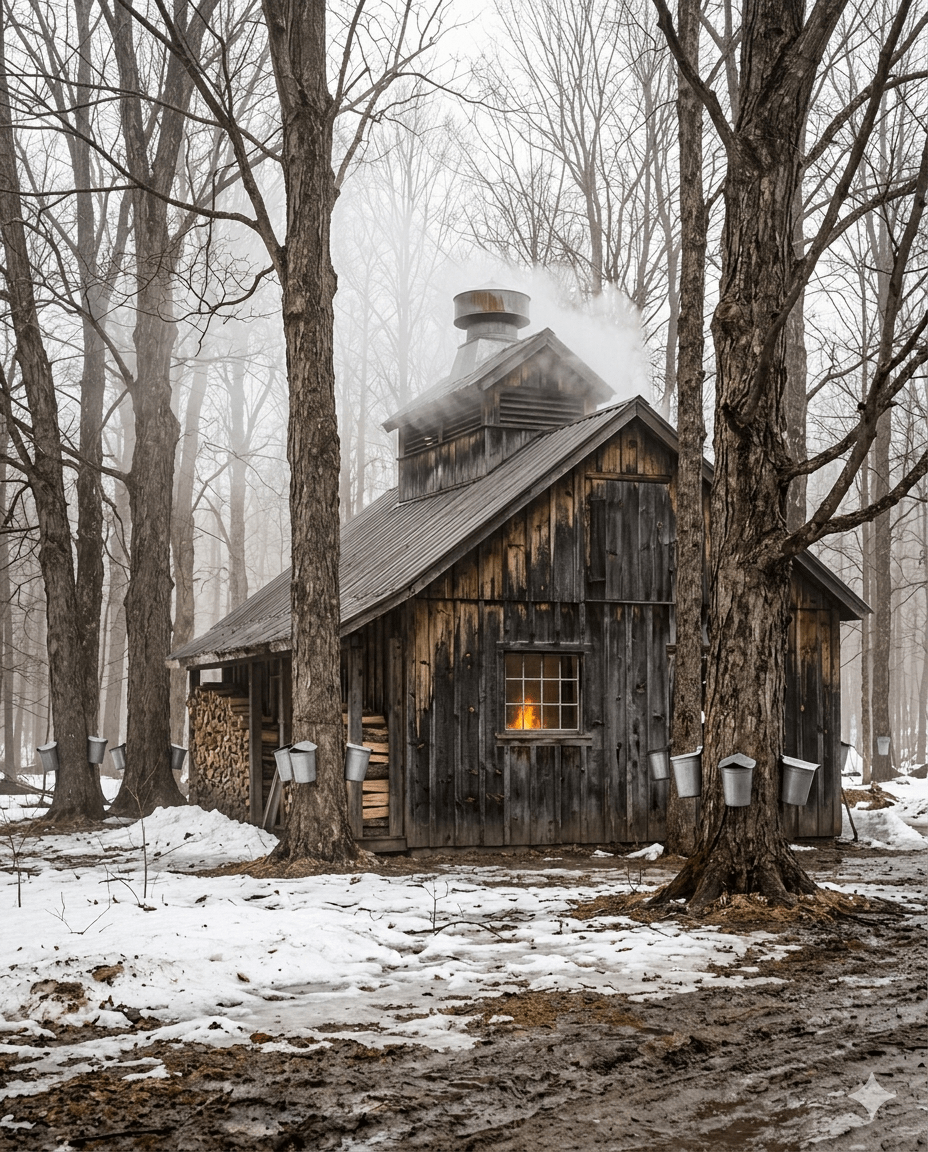
Every year it happens the same way. You look up from whatever you have been doing, notice the mud on your boots, and realize that maple season is nearly over. The sugarhouses that have been running full steam since late February are slowing down. The nights are not cold enough anymore. The sap has started to taste off. And just like that, one of the most quietly magical times of year in Vermont is almost gone.
If you have been meaning to get out there and experience it, now is the time. Not next weekend. Now.
Why Maple Season Feels Different When You Know It’s Almost Over
Maple sugaring in Vermont depends on a very specific kind of weather. Freezing nights and warm days create the pressure changes that get the sap moving through the trees. Once the nights stop dropping below freezing consistently, that’s it. The season ends not on a calendar date but on nature’s terms, and it rarely gives much warning.
Most years, peak sugaring happens somewhere between late February and early April. But a warm stretch can close things down faster than anyone expects. Sugarhouses that were boiling day and night just a couple of weeks ago might already be cleaning up their equipment and calling the season done.
There is something bittersweet about that. Maple season has this quality of feeling both eternal and fleeting at the same time. When you are in it, steam rising from the sugarhouse and the smell of boiling sap hanging in the cold air, it feels like it will always be there. Then one morning it is just over.
Visit a Vermont Sugarhouse Before They Close for the Season
This is the one thing worth making a real effort to do. A lot of sugarhouses in Vermont welcome visitors during the sugaring season, and many of them are not open to the public at any other time of year. Once the season wraps up, the doors close and they go back to being quiet corners of someone’s family farm.
Visiting a sugarhouse is not like visiting a brewery or a winery. It is louder, steamier, and a lot more honest. You walk in and the heat hits you immediately. The evaporator is running. Sap is boiling down into syrup at a ratio of roughly forty gallons to one. The whole place smells incredible in a way that is almost impossible to describe until you have been there.
Small family operations are where you get the real experience. These are places where the person boiling the sap is the same person who tapped the trees and will be the one handing you a sample on a tiny plastic spoon. They are not performing Vermont for you. This is just what they do every spring.
The Vermont Maple Sugar Makers’ Association maintains a directory of sugarhouses and maple producers across the state. It is the easiest way to find operations near you that are open to visitors. Many towns also have their own local sugarhouse open houses around this time of year, so it is worth checking community boards and local Facebook groups as well.
Discover Vermont’s Maple Creemees
Stock Up on Real Vermont Maple Syrup Now
Here is something that does not get talked about enough. The syrup produced at the end of the season, when the weather is warmer and the sap has been running longer, is darker and more intensely flavored than what comes out at the start. If you love cooking with maple or want something with real depth, end-of-season syrup is worth seeking out.
Vermont grades its maple syrup by color and flavor. Golden and Amber grades are delicate and sweet, great for drizzling on pancakes or yogurt. Dark and Very Dark grades are where things get interesting. They have a robust, almost caramel-like complexity that holds up in braises, marinades, and baked goods in a way the lighter grades cannot.
Buying direct from a sugarhouse or a local producer is the best option whenever possible. The syrup is fresher, the price is usually better than what you will find in a gift shop, and you know exactly where it came from. A lot of producers also sell online through their own sites or through platforms like Etsy, which is worth exploring if you want to continue supporting Vermont makers after the season ends.
Five Scenic Drives to Take This Spring
What Grade Should You Buy?
If you are new to Vermont maple syrup, the grade system can feel a little confusing. Here is the short version.
- Golden (Delicate Taste): Light, mild, and subtle. Great for beverages and anything where you want just a hint of maple flavor.
- Amber (Rich Taste): The classic Vermont maple flavor most people know. Works well on almost everything.
- Dark (Robust Taste): Deeper and more complex. Excellent for baking, glazes, and savory cooking.
- Very Dark (Strong Taste): Intense and earthy. An underrated option for anyone who wants maple to be the loudest thing in a dish.
If you can only grab one bottle before the season ends, go for Dark or Very Dark. It is what late-season Vermont tastes like, and you will not regret it.
Eat and Drink Your Way Through the Last of Maple Season
Vermont does not just produce maple syrup. It eats and drinks it in every form imaginable this time of year. If you want the full experience, here are a few things worth tracking down before the season shifts.
Sugar on snow is the one you hear about most, and for good reason. Hot syrup poured over a tray of clean packed snow hardens into a chewy, candy-like treat that you eat with a fork or on a stick. It is simple, a little ridiculous, and completely delicious. Some sugarhouses offer it during the season. A few maple festivals make it a centerpiece. Do not pass it up if you get the chance.
Maple creemees (Vermont’s soft-serve ice cream, for anyone who needs that explained) start showing up at farm stands and local spots around this time. The maple ones are worth going out of your way for. The season for those is just getting started as maple sugaring winds down, which feels like a very fair trade.
Local cafes and breakfast spots across Vermont lean into maple season with specials that come and go quickly. Maple lattes, maple donuts, maple french toast with fresh local syrup. These are not year-round menu items. Check in with your favorite spots and ask what they are running while they still have it.
Get Outside for the Last Muddy, Magical Days of Early Spring
Late maple season in Vermont is also mud season, and that is not nothing. The snow is mostly gone from the lower elevations. The ground is soft and wet and starting to wake up. The light has changed in that way it does in April, longer and warmer and full of actual promise.
It is not the most glamorous time to hike in Vermont. Some trails are genuinely a mess. But getting outside in this in-between season has its own rewards. The sugar maple stands are quiet and beautiful in a leafless, structural way. You can hear the birds coming back. The woods smell like earth and cold water and the very beginning of something.
Stick to lower-elevation trails and gravel roads if you want to avoid the worst of the mud. The Missisquoi Valley Rail Trail, flatter walking paths through farmland, and many rail trails across the state hold up reasonably well at this time of year. Save the ridge hikes for May when things dry out.
Why Everyone Feels Welcome in Vermont
A Few Things Locals Do to Mark the End of Maple Season
If you want to experience maple season the way people who actually live here do, here are a few things worth knowing about.
- Maple festivals and open houses: Towns across Vermont host maple-focused events every year in late March and early April. Some are big productions with vendors and demos. Others are small and low-key. Either way, they are a good reason to get out and explore a part of Vermont you might not have visited before.
- Making something at home: A lot of locals pick up a jar of fresh maple cream or maple butter at the end of the season and spend a quiet Sunday baking with it. If you are in Vermont right now, grabbing a jar before the supply runs out is a good move.
- One last sugarhouse morning: There is a specific kind of peacefulness to sitting outside a sugarhouse on a cold early morning with a cup of coffee, watching the steam come off the evaporator stack. Locals who have been doing this their whole lives still show up for it every year. It does not require an explanation.
Maple season closing down is also the mental signal for a lot of Vermonters that spring is actually on its way. The mud is proof. The longer days are proof. And the sugarhouses going quiet is the last piece of it. By the time the trees start to bud out, the whole rhythm of the year will have shifted again.
Don’t Wait Too Long
The honest truth about maple season is that it does not wait. A stretch of warm nights can end a season in days. Sugarhouses that planned to stay open another week sometimes close early because the sap just stopped running. The window is real and it is narrow.
If you are in Vermont right now, or if you can get here in the next week or two, go find a sugarhouse. Buy a jar of dark syrup. Get a maple creemee if you can. Stand outside in the mud for a minute and just breathe in the smell of the season.
It only comes around once a year, and there is no catching up once it is gone.
Shop Green Mountain Peaks on Etsy
Bring a little piece of Vermont into your home with our curated collection of gifts, apparel, and seasonal favorites. From cozy hoodies and crewnecks to Vermont-themed gift boxes and cookbooks, each item is designed to celebrate the Green Mountain spirit.
- Vermont-inspired designs and gift sets
- Printed and packaged with care
- Ships directly to your door
Discover gifts, apparel, and Vermont treasures made to share and enjoy year-round.

Leave a comment