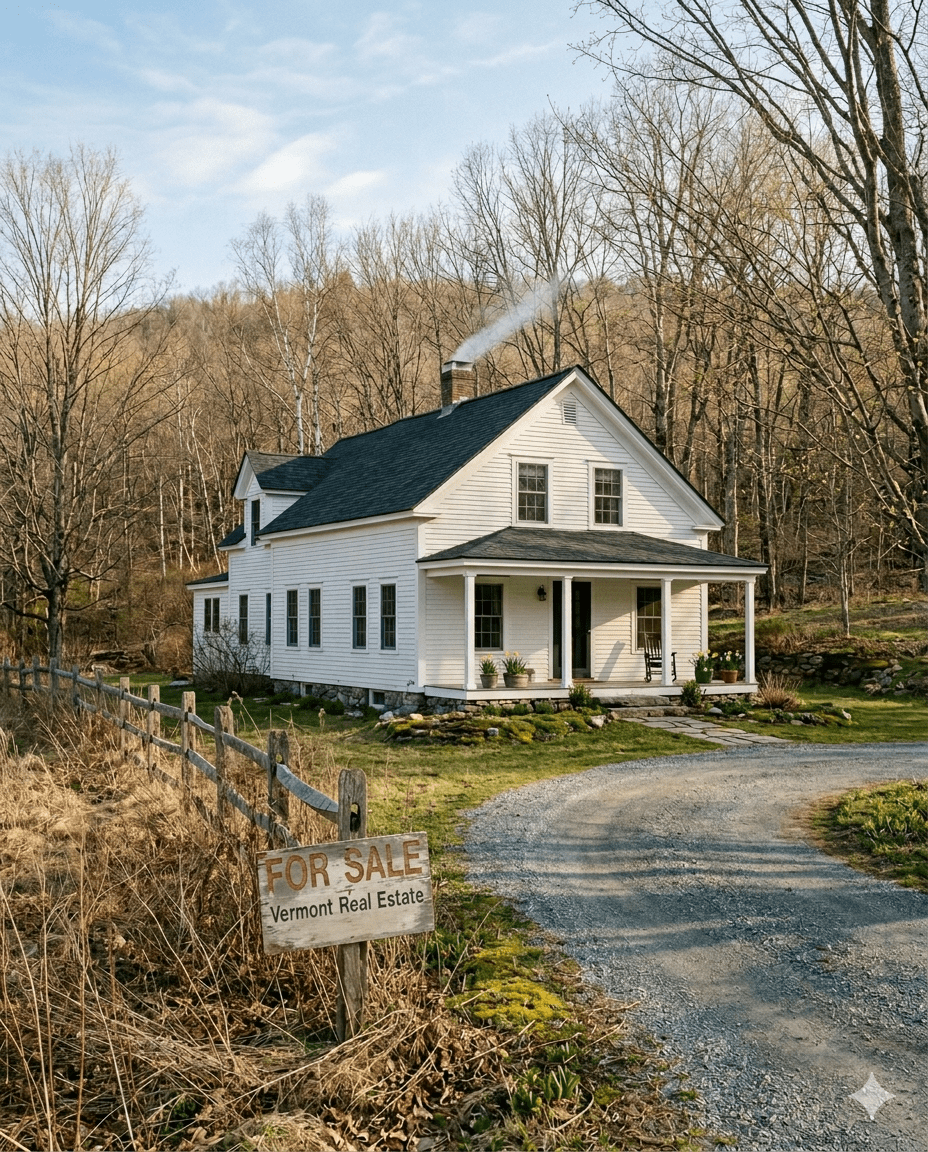
There is a version of buying a home in northern Vermont that looks like a magazine spread. A white farmhouse with green shutters, a barn out back, a sugar maple dropping leaves onto the front walk. And that house exists. People buy it. But the process of getting there is a lot more interesting than the magazine makes it look.
If you are seriously thinking about buying property up here, whether you are relocating from out of state, looking for a weekend place, or finally making the move you have been talking about for years, here is what the experience actually looks like from the inside.
The Northern Vermont Housing Market Is Not Like Anywhere Else
The first thing most buyers figure out quickly is that northern Vermont does not have the kind of inventory they are used to seeing in other markets. There are fewer homes for sale at any given time, and the ones that are good tend to go fast. In desirable areas near Stowe, the Northeast Kingdom, or towns along the Lamoille River corridor, it is not unusual for a well-priced home to have multiple offers within the first week.
That is not always the case. Pricing, condition, and timing all factor in. But if you come into this market thinking you will have weeks to make up your mind, you might be disappointed more than once before you adjust your approach.
Seasonality also plays a bigger role here than in most places. Spring is the traditional peak buying season, and properties that have sat through a Vermont winter sometimes show up in April or May with new listings. Fall can bring motivated sellers before the snow hits. Winter inventory is thin, but so is the competition. Each season has its own logic and it is worth understanding before you start.
What Buyers Need to Know Before They Start Looking
Getting pre-approved before you look at a single house is not optional here. Vermont agents, especially the good local ones, are not going to spend a Saturday driving you around without knowing you are a serious buyer. And in a market where things move fast, showing up without financing lined up means you are already a step behind.
One thing worth knowing: local Vermont lenders often have a real advantage over national banks in this market. They understand rural property quirks, they know the local appraisers, and they are easier to reach when something unexpected comes up at the last minute before closing. It is worth at least getting a quote from a Vermont-based credit union or community bank alongside whatever your existing bank offers.
The Well and Septic Reality
Outside of Burlington, Montpelier, and a handful of small city centers, the majority of Vermont homes run on private wells and septic systems. This is completely normal and nothing to be afraid of, but buyers who are used to municipal water and sewer need to understand what they are getting into.
A well inspection and water quality test should be on your list for any property on private water. Septic systems should be inspected and, if possible, pumped and evaluated before closing. Ask the seller directly when it was last pumped and whether it has ever had issues. A good inspector will walk you through what they find. If a seller resists inspection access to these systems, that is a red flag worth paying attention to.
Budget for the possibility that an older septic system may need updates at some point. It is not always urgent, but knowing the age and condition going in keeps you from being surprised later.
Heating Systems and Winter Costs
Northern Vermont winters are real. Heating your home is a significant line item in the budget and the type of system your house uses will have a meaningful impact on what you spend each year. Oil heat is still common in older homes. Propane is used widely in areas not served by natural gas. Wood stoves and pellet stoves are everywhere and people here genuinely love them. Cold-climate heat pumps are increasingly common and they work surprisingly well even when the temperature drops hard.
When you are looking at homes, ask about average annual heating costs. Most sellers have a rough number. Older homes with minimal insulation and oil heat can run well over three thousand dollars a year in fuel alone. A newer, better-insulated home with a modern heating system will cost you more upfront but less every winter. That math matters over time.
Working With a Vermont Real Estate Agent
A good local real estate agent is not a luxury in Vermont. It is genuinely one of the most valuable parts of the process. Local agents know about properties before they hit the MLS. They know the history of specific neighborhoods, which roads flood in mud season, which town has a new school principal everyone loves, and which listing has been sitting because of a problem the photos do not show.
Zillow and Realtor.com exist and people use them. But in a smaller market like northern Vermont, a lot of the best transactions happen because a buyer’s agent made a call to someone they knew. That kind of relationship takes a little time to build but it is worth it.
Look for an agent who actually lives and works in the area you are targeting. Someone based in Burlington covering a Craftsbury property is not the same as someone who has sold homes in that town for fifteen years. Ask about their recent transactions, ask how they like to communicate, and pay attention to whether they ask good questions about what you actually need.
The Timeline: It Takes Longer Than You Think
Out-of-state buyers especially tend to underestimate how long the process takes here. From the point where you start seriously looking to the day you close, six months is reasonable for a typical buyer. A year or more is not unusual if you are being selective about location, condition, or price.
Vermont’s closing process involves a title search that can surface old easements, right-of-way issues, or deed complications that take time to sort out. Depending on the property and what you plan to do with it, Act 250, Vermont’s land use law, may also be relevant. Your agent and attorney will help you understand if that applies, but it is worth knowing it exists.
Contingencies are your friend here. Do not let anyone talk you out of a proper inspection contingency or a financing contingency. Vermont’s market moves fast sometimes, but the homes that have real problems have them year-round, and an inspection is cheap compared to the alternative.
The Towns That Are Actually Worth Considering in Northern Vermont
Northern Vermont covers a lot of ground and each pocket has its own feel. Here is a rough sketch of some towns that come up often for buyers.
- Stowe is beautiful, well-known, and priced accordingly. If you can afford it, the infrastructure and community are exceptional.
- Morrisville sits just down the road from Stowe with a much more accessible price point. It has a real working-town feel and a genuinely tight-knit community.
- Hyde Park and Johnson offer rural Vermont character with reasonable prices and access to the Lamoille Valley Rail Trail.
- Hardwick has become something of a food and farming hub over the last fifteen years. It punches above its weight for a town its size.
- St. Johnsbury is the commercial center of the Northeast Kingdom. More services, lower prices, and a lot of architectural character in the older housing stock.
- Newport sits right on Lake Memphremagog at the Canadian border. Waterfront property here costs a fraction of what comparable lake property costs almost anywhere else in the northeast.
None of these towns is the right fit for everyone. The best way to know is to spend time in a place before you commit to buying there. Drive around on a Tuesday afternoon in February and see how you feel about it.
What No One Tells You Until You’ve Already Moved Here
Vermont towns have a culture around showing up. Showing up to town meeting, to the school board, to the local volunteer fire department. New residents who engage with their community are welcomed warmly. People who move in and stay behind the property line tend to remain outsiders for a very long time. Neither is wrong, but knowing that dynamic exists helps you understand what kind of neighbor you want to be.
Mud season is not a punchline. It is a genuinely disruptive part of the calendar that affects your driveway, your road access, and sometimes your mood. Homes on Class 4 or private dirt roads can become difficult to access in late March and April. Ask about road conditions before you fall in love with a property that is three miles down an unpaved lane.
The cost of living math here is different from what people expect. Home prices are lower than in coastal markets, but property taxes, heating fuel, and maintenance on older homes can add up. The calculation works out well for a lot of people, especially remote workers who are trading a high cost-of-living city for Vermont on the same income. But it requires honest budgeting upfront.
Is Buying in Northern Vermont Worth It?
That depends on what you are looking for. If you want community, outdoor access, a slower pace, and a place that has real character and history, the answer is often yes. The people who buy here and take the time to understand the place almost universally say they are glad they did.
Vermont real estate is not a get-rich-quick investment. Values tend to be stable and the market rewards patience more than speculation. But for the right buyer, buying a home in northern Vermont is not just a financial decision. It is a lifestyle decision, and one that tends to age well.
If you are still in the research phase, take your time. Come up in different seasons. Talk to people who live here. The more you know about what daily life actually looks like, the better your decision will be.
Vermont has a way of making people feel like they have finally found the place they were looking for. That is worth something that does not show up on any spreadsheet.


Leave a comment