There is a reason people who move to the Northeast Kingdom rarely leave. It is not that they cannot. It is that after a while, they stop wanting to.
The NEK, as locals call it, covers Essex, Orleans, and Caledonia counties in the far northeastern corner of Vermont. It is the largest, least developed, and most sparsely populated region in the state. No major highways cut through it. No big box retail strips line the roads. The closest airport with real options is Burlington, a solid two hours away depending on where you are sitting.
If that sounds like a deterrent, it might not be the right place for you. But if that sounds like a selling point, keep reading. Because what the NEK lacks in convenience, it gives back in something harder to name and even harder to leave behind.
What the Northeast Kingdom Actually Looks and Feels Like
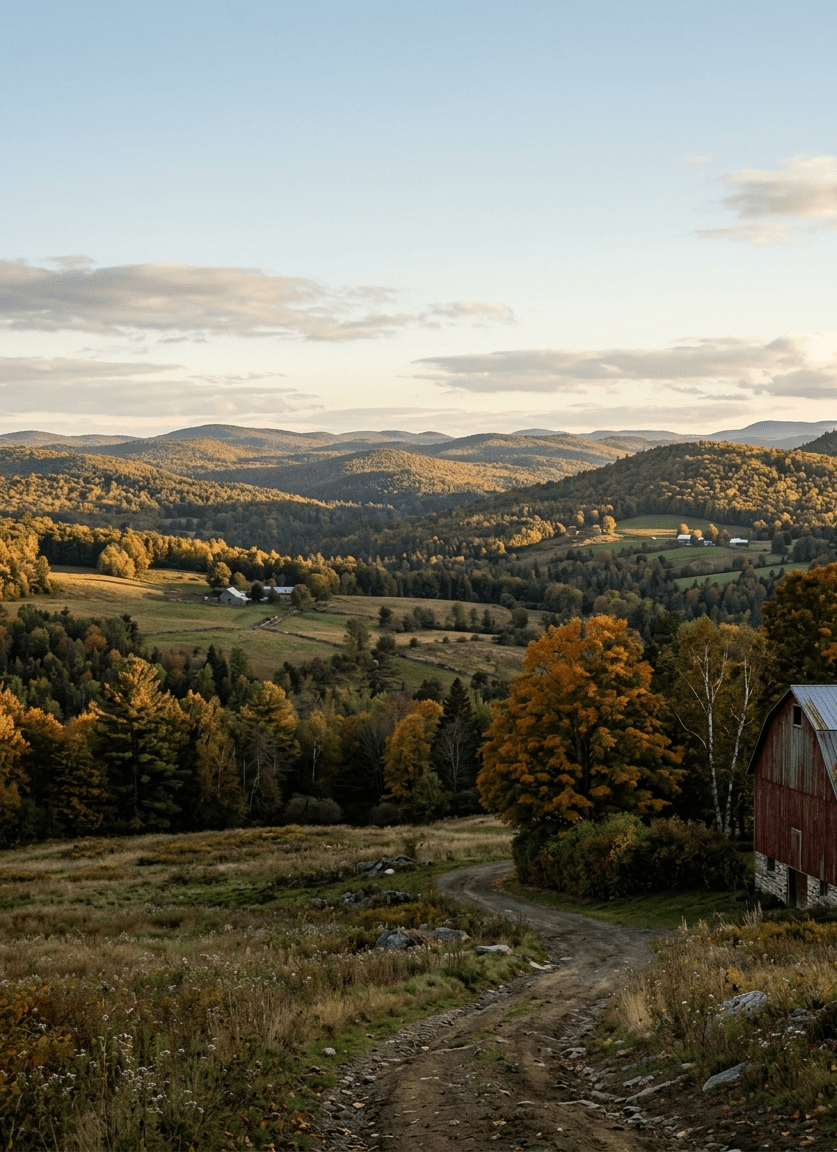
Spend a few days here and you start to understand why artists, writers, and people running from burnout have been quietly moving to the NEK for decades. The landscape is enormous and unhurried. Long stretches of forest open into farms that have been worked by the same families for generations. The light here in late afternoon, especially in fall, is something you will remember.
The largest towns in the region are St. Johnsbury, Newport, and Derby. None of them would qualify as a city by most measures. St. Johnsbury is the regional hub, with a main street that has more going on than people expect. Newport sits right on Lake Memphremagoo (locals drop the formal name and just say “the lake”), a body of water that crosses the border into Canada. Derby straddles Interstate 91 and has the kind of practical amenities that make daily life workable without much drama.
Between and beyond those towns is a landscape of small villages, general stores, and stretches of road where you might go twenty minutes without seeing another car. That is not an exaggeration. It is part of the deal.
The Honest Pros of Living in the NEK
Land and Space at Prices That Still Make Sense
Compared to Chittenden County or even Lamoille County, land in the Northeast Kingdom is still genuinely affordable. You can find acreage here that would cost three times as much an hour south. For people who want room to breathe, to grow food, to keep animals, or just to look out their window and see trees, the value equation is hard to argue with.
The housing market has tightened up over the past few years, as it has everywhere in Vermont, but the NEK still has more inventory and more variety than most of the state. Old farmhouses, small camps on ponds, newer builds tucked into the woods. If you are patient and willing to do some work on a property, you can still find real deals.
A Community That Means Something
People look out for each other here in ways that can feel almost foreign if you are coming from a more populated place. Neighbors show up when something goes wrong. The person at the hardware store actually knows what they are talking about. You see the same faces at the farmers market, at the town meeting, at the diner on a Tuesday morning. After a while, that repetition stops feeling small and starts feeling like exactly what a community is supposed to be.
There is a strong sense of local identity in the NEK. People here are proud of the region without being showy about it. They are also refreshingly direct. If something is not working or someone is not pulling their weight, someone will say so. That candor can catch newcomers off guard, but most people who stick around come to appreciate it.
Outdoor Life That Goes Deep
The recreational access here is real and largely uncrowded. Kingdom Trails in Burke is one of the best mountain biking networks in the entire country, not just Vermont. Jay Peak gets more natural snowfall than almost anywhere in the Northeast. The Connecticut River headwaters, the Clyde River, Echo Lake, Lake Willoughby, the Barton River corridor. It goes on and on.
Hunting and fishing culture runs deep here in a way that is different from the more recreational outdoor scene you see in places like Stowe or Woodstock. This is a region where people have been living off the land for a long time, and that knowledge and tradition is still intact and passed down.
The Honest Challenges of NEK Life
Distance Is Real and It Costs You
Everything takes longer here. The grocery run might be thirty minutes each way. Specialty medical care, certain services, larger shopping trips, they all involve planning in a way that people from more urban areas are not used to. The interstate runs through the southern part of the region and makes St. Johnsbury reasonably accessible, but head north toward Canaan or Island Pond and you are genuinely remote.
Gas prices matter more here because you are driving more. Time in the car becomes a bigger part of your week than you might expect. For some people that is totally fine, even peaceful. For others it grinds on them eventually. It is worth being honest with yourself about which one you are before making a move.
Economic Realities
The local economy has changed a lot over the decades. Manufacturing jobs that used to anchor communities have largely gone. Agriculture is still here but farming has never been an easy living in the NEK. Remote work has genuinely helped in the past several years, bringing in people with income from outside the region who can afford to live well here without depending on local wages.
If you need to find local employment, the options are more limited and the wages reflect that. Healthcare, education, trades, and some public sector roles are the most stable. If you are building a business, there is real opportunity and less competition than in the Champlain Valley, but you are also working with a smaller local customer base.
Winters Are Long and They Are Serious
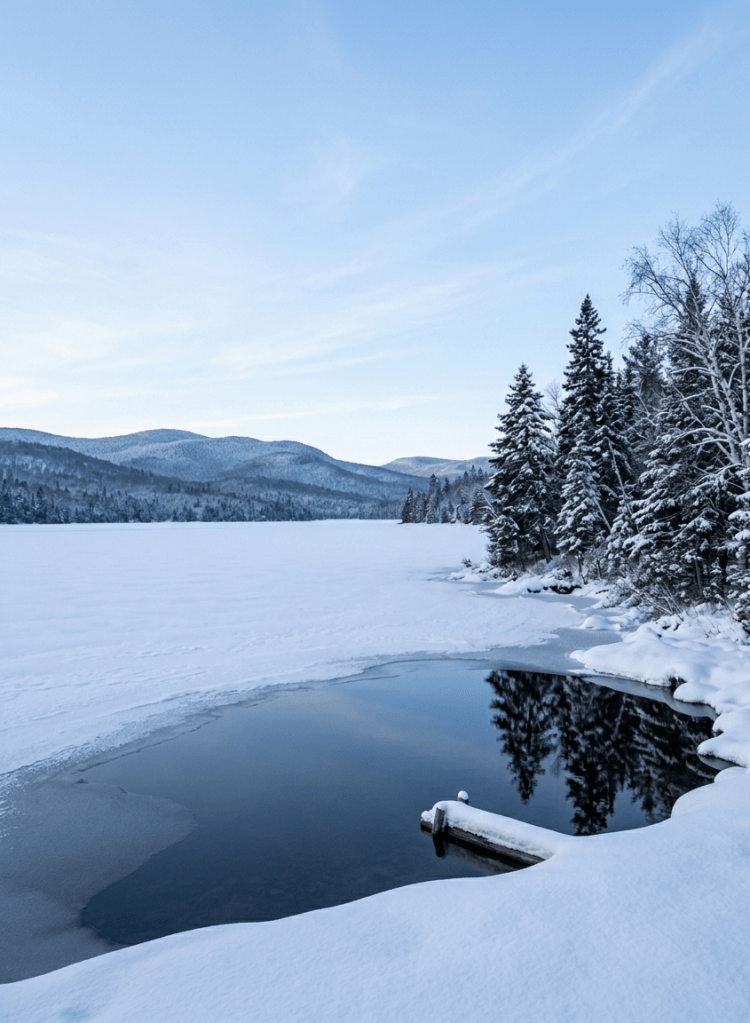
This is not a soft winter region. The NEK sits in a geographic position that collects cold air and snow in ways that even other parts of Vermont do not. Derby and Canaan regularly see temperatures and snowfall totals that would be considered extreme anywhere else. You will need a reliable vehicle with good winter tires. You will need to know how to heat your home efficiently. You will need to like snow, or at least make peace with it.
The flip side is that the winters here are stunningly beautiful if you let them be. Cross-country skiing out your back door. Frozen ponds you can skate on. That particular quiet that only comes when there is deep snow on the ground and not much moving. But those things require a certain orientation to winter that not everyone has naturally.
Towns Worth Knowing Before You Move
St. Johnsbury anchors the southern end of the region and has the most services, the most dining options, and the most cultural infrastructure of anywhere in the NEK. The Athenaeum is a remarkable building with a collection that has no business being in a small Vermont town (which makes it all the more worth visiting). There is a growing food and arts scene here that does not always get the credit it deserves from people who only know the NEK by reputation.
Newport has the lake, a revitalized downtown with some genuinely good restaurants and shops, and a location close to the Canadian border that gives it an interesting cultural mix. Jay Peak is just twenty minutes away, which shapes a lot of what the area offers in winter.
Derby and Derby Line have practical advantages, including access to I-91, a Walmart, and the kind of everyday infrastructure that keeps life running. Derby Line in particular is a fascinating place, a town literally split by the international border in ways that are visible in the architecture and the street names.
If you want quiet and you want it seriously, look at places like Irasburg, Albany, Craftsbury, or Westfield. These are small even by NEK standards, but they have their own gravity and a quality of daily life that you cannot replicate somewhere with more going on.
Is the Northeast Kingdom Right for You?
The people who thrive in the NEK tend to share a few things. They are comfortable with self-reliance. They do not need a lot of options in order to feel free. They find meaning in the physical and seasonal rhythms of life here rather than being worn down by them. They want to know their neighbors and be known themselves.
The people who struggle here often came for the right reasons but underestimated the adjustment. The distance eventually became isolating rather than peaceful. The winters were longer than expected. The local economy did not support the life they imagined. These are not failures of character. The NEK is just a genuinely specific kind of place, and not every life fits it.
If you are thinking seriously about a move, spend real time here before committing. Not a weekend in the fall when everything looks like a postcard. Come in mud season. Come in February. Drive the back roads on a Tuesday. Talk to people who have been here a long time and people who arrived five years ago. You will learn more in a few honest conversations than from anything you read online, including this.
The Northeast Kingdom has a way of making the right people feel like they have been looking for it their whole life. There is nothing quite like the moment you stop passing through and start realizing you are home.

Leave a comment