What Draws People to Buy Their First Home in Vermont
There’s a particular kind of morning in Vermont, somewhere in early October, when the fog is still sitting low in the valley and the maples on the hillside above have gone the color of a struck match. Someone driving through on their way to work stops the car on the shoulder, just for a minute, to look. That moment happens more often than you’d think, and it’s the same moment that quietly starts a lot of people thinking about buying their first home in Vermont.
It rarely shows up as a single decision. It’s more like a slow accumulation of small pulls, a farmhouse glimpsed off Route 100, a farmers market in a town square, the sound of a wood stove ticking as it heats up on a cold night. Understanding what actually draws people here, and what they’re looking for once they start seriously considering it, says a lot about what makes Vermont different from other places people might land their first home.
Why do people want to buy their first home in Vermont?
For a lot of first-time buyers, it comes down to scale. Vermont towns are small enough that you can know your neighbors, recognize the person behind the counter at the general store, and still be within a couple hours of a city if you need one. That balance, quiet without being isolated, is hard to find in a lot of the country.
There’s also the landscape itself. The Green Mountains run like a spine down the middle of the state, and no matter where you land, you’re rarely more than a short drive from a hiking trail, a swimming hole, or a dirt road that turns into a tunnel of trees in summer. People who grew up visiting Vermont on ski trips or fall foliage weekends often describe wanting to buy a first home here as wanting to stop visiting and start living inside that feeling year-round.
And then there’s pace. Vermont life still runs on seasons in a way that feels increasingly rare. Mud season slows everything down in March and April. Sugaring season fills the air with sweet steam in late winter. Summer means farm stands and swimming holes, fall means foliage and cider, and winter means wood stacked by the door. Buying a first home here often means buying into that rhythm, not fighting against it.
What kind of homes do first-time buyers in Vermont look for?
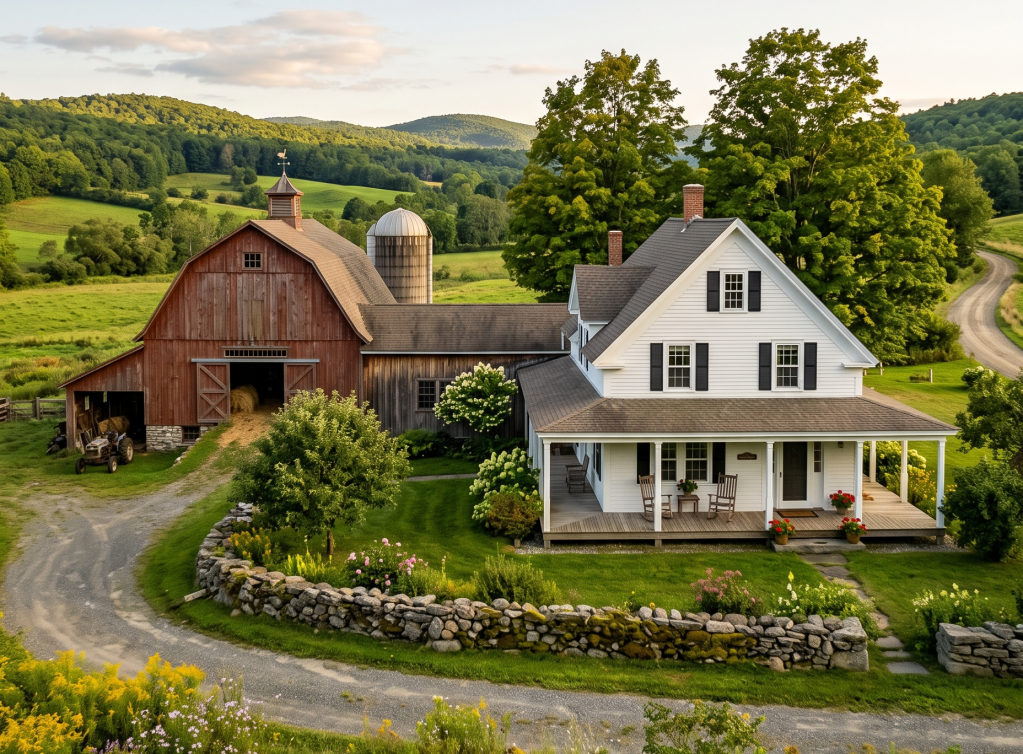
The classic Vermont farmhouse, white clapboard, a front porch, maybe an attached barn or woodshed, still tops a lot of wish lists. There’s something about that shape on the landscape that feels like the platonic ideal of a Vermont home, and plenty of first-time buyers arrive with exactly that image in mind.
Capes and colonials are common too, especially in the smaller towns scattered through the Mad River Valley, the Champlain Valley, and up toward the Northeast Kingdom. These homes tend to have low ceilings, wide floorboards, and a wood stove or fireplace as a central gathering point, details that feel distinctly Vermont even in a home built two hundred years ago.
A lot of first-time buyers also want land, even if it’s just an acre or two. A garden plot, room for a few chickens, a stretch of woods to walk in. That desire for a little breathing room around the house is one of the clearer threads running through what people are looking for when they buy their first Vermont home, whether they’re settling in a small village or somewhere more rural.
- Farmhouses with mudrooms and wood stoves
- Capes and colonials in walkable village centers
- Homes with a few acres for gardens or animals
- Properties within an easy drive of a downtown or ski area
Which Vermont towns attract first-time home buyers?
Towns like Richmond, Waitsfield, and Hardwick draw people who want a real Main Street, a general store, and a strong sense of community, without needing to be in Burlington itself. They’re close enough to a city for groceries and errands, far enough to feel genuinely rural.
Montpelier and Middlebury pull in buyers who want a bit more density, cafes, bookstores, a college town energy, paired with quick access to open countryside. Morrisville and towns along the Lamoille Valley attract people drawn to the ski culture around Stowe and Smugglers’ Notch without the price tag that comes with being right in those towns.
Further south, Woodstock, Manchester, and the towns along Route 7 pull a different kind of first-time buyer, often someone who’s spent years vacationing in southern Vermont and finally decided to make the leap to owning something there instead of just visiting.
What ties all of these towns together isn’t size or proximity to a ski hill. It’s that each one still has a working center, a store, a school, a place people gather, rather than being just a collection of houses along a road.
How does Vermont’s lifestyle shape the decision to buy?
Once someone starts picturing life in a specific Vermont town, the lifestyle details tend to move from abstract to specific fast. They start imagining hauling their own firewood, tapping a few maple trees in late February, or walking to a farmers market on a Saturday morning instead of driving to a grocery store parking lot.
Remote work has changed this calculation for a lot of people too. Being able to work from a home office with a view of a hayfield, then step outside for a hike or a ski run on lunch break, has turned Vermont from a weekend destination into a realistic place to actually live and build a career from. That shift alone has brought a wave of first-time buyers who might never have considered a rural home purchase a decade ago.
There’s also a cultural pull that’s harder to quantify. Vermont has a strong identity around independence, craftsmanship, and doing things a little differently, small breweries, cideries, farm-to-table restaurants, artists working out of converted barns. Buying a first home here often means buying into that identity as much as into the physical house.
What should someone weigh before buying their first home in Vermont?
Winter is the honest answer here, and most people who’ve spent any real time in Vermont will tell you the same thing. A home that feels perfect in October needs to also work in January, with a driveway that can be plowed, a heating system that can keep up, and enough insulation to make the cold months comfortable rather than something to survive.
Land comes with its own considerations too. A few acres sound wonderful until someone realizes they’re now responsible for mowing, tree maintenance, and a driveway long enough to need its own snow removal plan. None of this is a reason to avoid rural property, it’s just worth picturing honestly before falling for a listing photo taken in July.
Distance matters in a different way here than it does in a city. Ten miles on a Vermont back road in March can feel longer than it looks on a map. Buyers who spend a little time driving the actual roads to a property, in different seasons if they can manage it, tend to end up happier with their choice than those who fall for a home based on photos alone.
Community matters more than people expect going in. Vermont towns tend to notice new faces, in a good way. Showing up to a town meeting, a school event, or the annual town cleanup day tends to matter more here than it might somewhere larger, and people who lean into that tend to feel settled a lot faster.
It also helps to think honestly about upkeep. Older homes have character, but character often comes with an aging roof, a well that needs monitoring, or a foundation that has settled in its own particular way over a century or more. None of that should scare a buyer off, plenty of first-time owners learn these skills as they go, but it helps to walk in with open eyes rather than only falling for the wide pine floors and the view out the kitchen window.
What does a first Vermont home actually mean to the people who buy one?
Talk to enough first-time Vermont buyers and a pattern starts to show up. It’s rarely about square footage or resale value. It’s about the porch they picture themselves sitting on in July, the wood stove they imagine lighting on the first cold night in October, the dirt road they’ll learn to recognize every rut and pothole of after a few winters.
It’s a home that asks something of the people who live in it, a little more attention to the seasons, a little more involvement in a small community, and in exchange it gives back a kind of rootedness that’s genuinely hard to find elsewhere. That trade feels worth it to more people every year, and it’s exactly why so many first Vermont homes end up meaning a great deal more than the deed alone would suggest.
Every first home in Vermont carries its own version of that October morning on the shoulder of the road, the moment someone decided this particular corner of the state was worth staying for.
I’m Conner, a Realtor with Igor Real Estate, working buyers and sellers across Northern Vermont. I keep my real estate work over at soldoutvermont.com, if you’re ever curious what’s on the market.

Leave a comment