Discover Vermont, One Story at a Time 🏔️

Local culture, season adventures, small towns,
and the honest side of life in the Green Mountains


Author: connerellsworthvt

  • Why September Is a Great Time to Look at Vermont Real Estate

    Why September Is a Great Time to Look at Vermont Real Estate

    The first cool morning always sneaks up on you. One day you’re still leaving the porch door open all night, and the next you’re pulling a flannel out of the closet because the air coming off the mountains has that unmistakable September bite to it. The tomatoes are winding down, the farm stands are stacking winter squash next to the last of the corn, and somewhere up in the Northeast Kingdom the maples are already starting to blush at the edges. If you’ve been thinking about Vermont real estate, this is the month locals quietly consider the smartest time to start looking.

    September in Vermont has a rhythm all its own. The tourist traffic hasn’t hit its foliage peak yet, the summer renters have cleared out of the lake towns, and the state settles into something closer to its true self. For anyone weighing a move, that shift matters more than people realize.
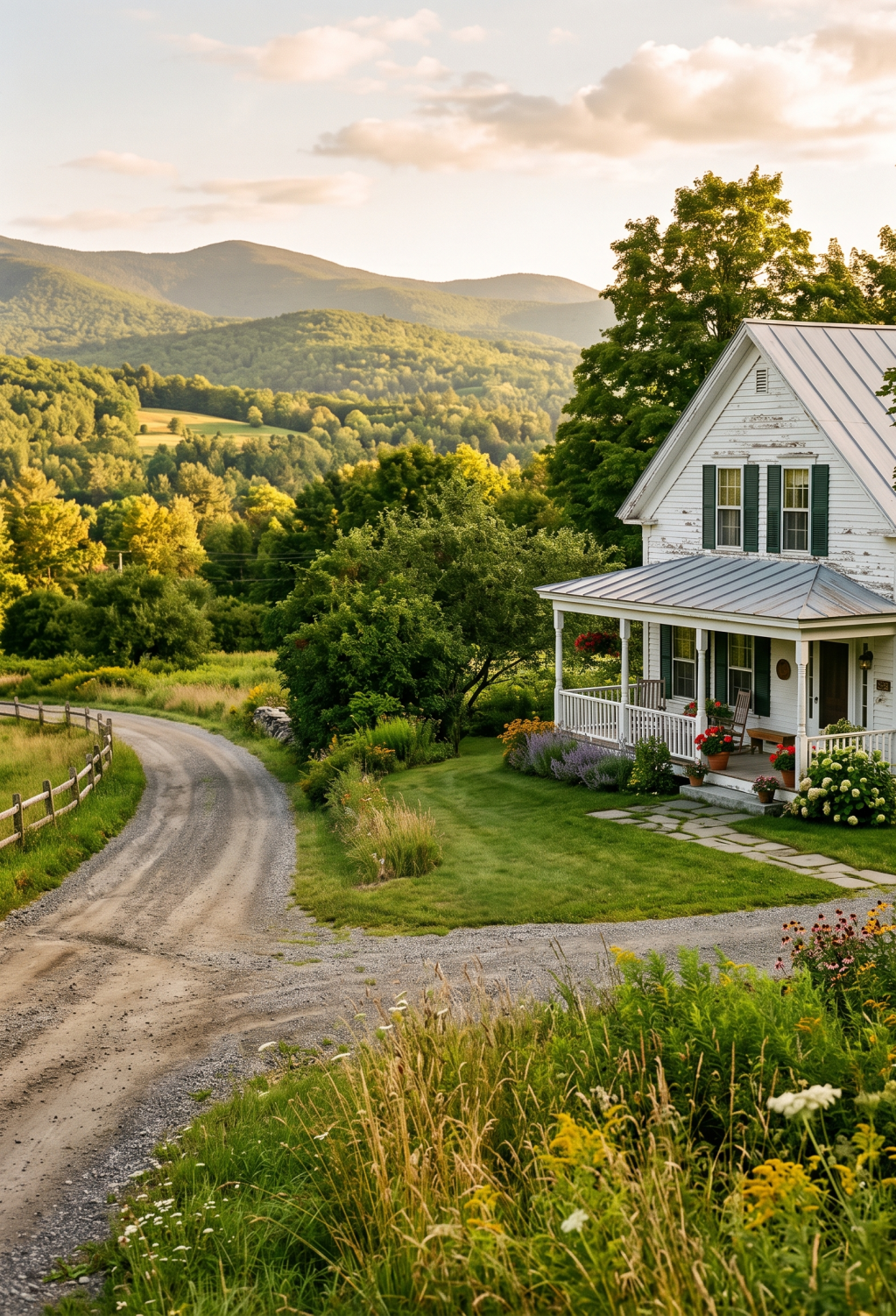
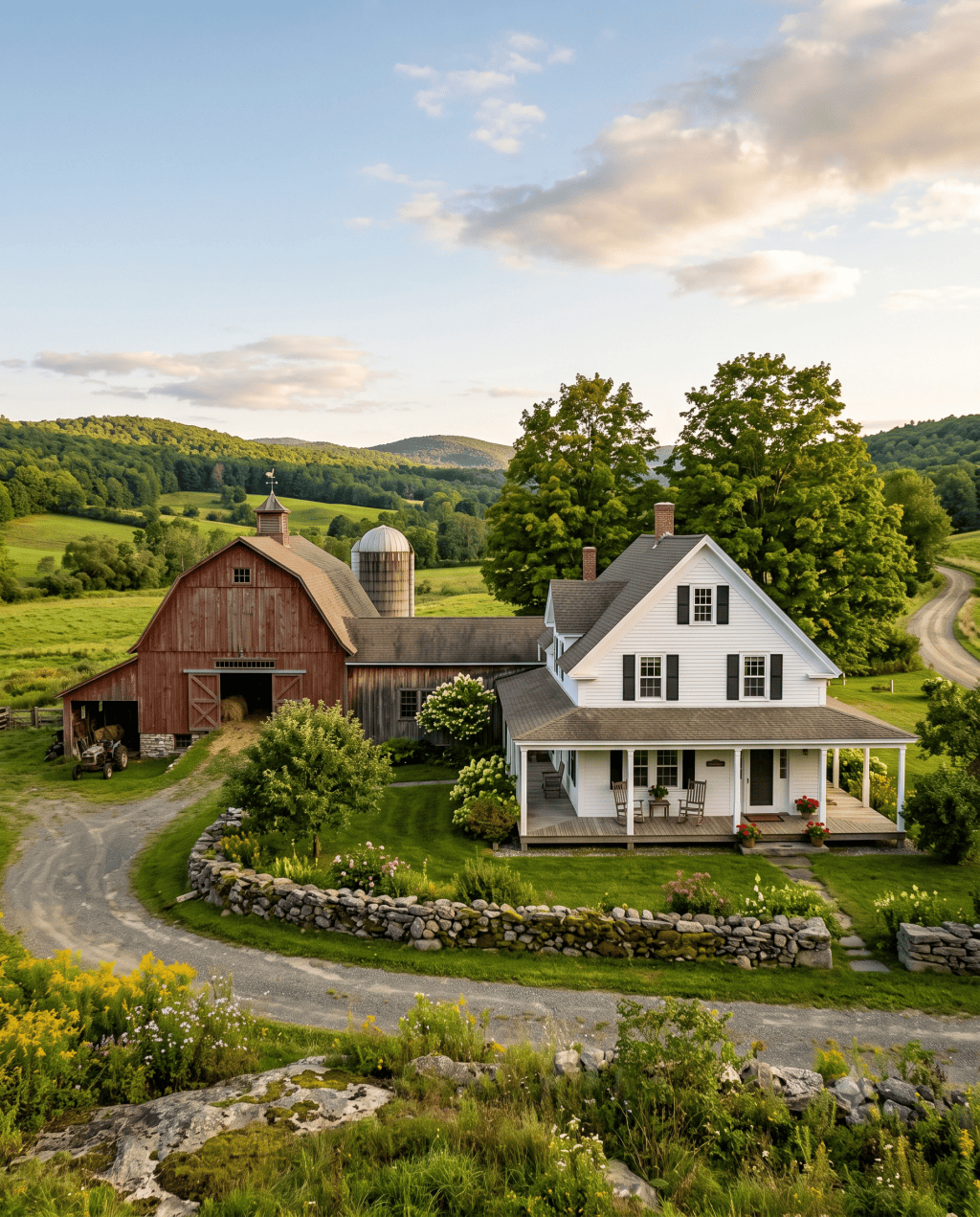
    A scenic country road leading to a charming white house surrounded by lush greenery and mountains in the background.

    Is September a Good Time to Buy a House in Vermont?

    September tends to bring a calmer, more honest version of the Vermont housing market. Summer listings that lingered through July and August because of vacation schedules and lake-house timelines often get repriced or refreshed in early fall, which can open up room for a more grounded conversation about value. Families with school-age kids have usually settled into their fall routines by now, so the buyer pool thins out just enough that showings feel less like a race.

    Sellers who list in September also tend to be motivated by something real, whether that’s a job change, downsizing, or wanting to close before the snow flies. That kind of seller is often more open to a straightforward, unhurried process than one testing the market at the height of summer.

    There’s also a practical rhythm to how the season lines up with daily life here. Kids are back in school, harvest chores are winding down on the properties that keep gardens or small orchards, and the frantic pace of tourist season has eased off in most towns. That collective exhale tends to show up in how relaxed showings feel, and in how much time people are willing to spend actually talking about a property instead of rushing to the next one on the list.

    What Does a Vermont Home Look Like in September Light?

    There’s a reason real estate photographers love this month. The angle of the sun starts to drop just enough to pull long, warm light across a property in the late afternoon, and it does something to old farmhouses and post-and-beam barns that summer light never quite manages. A field that looked flat and green in July suddenly has texture and gold in it by the third week of September.

    Walking a property in this weather also just tells you more. You can hear how the house sounds when the windows are cracked instead of sealed for air conditioning. You can smell woodsmoke starting up two farms over and get a sense of how sound carries in the valley. Vermont homes are lived in outdoors as much as indoors for half the year, and September is when a porch, a mudroom, or a covered woodshed actually proves its worth.

    How Does Foliage Season Affect Looking at Homes in Vermont?

    Color moves south and downhill as the month goes on. The Northeast Kingdom and higher elevations around Stowe, Craftsbury, and the Mad River Valley typically start turning in the first half of September, while the Champlain Valley and southern Vermont hold onto green a few weeks longer. If you’re touring properties across different parts of the state in the same trip, you’ll actually see three or four different stages of the season depending on where you are and how high up you go.

    This matters for more than just pretty photos. Seeing a property as the leaves start to change gives you a preview of what fall actually looks like on that land, not just what a listing photo captured on one lucky afternoon. A ridge line that glows gold in late September is worth knowing about before you commit to a place.

    It’s also worth remembering that harvest season runs on its own calendar up here. Corn that’s still coming in down in the valley in early September might already be done at higher elevations, and apple orchards across the state stagger their picking weeks depending on variety and altitude. None of it happens exactly when a tourist brochure might suggest, and locals plan their weekends around it accordingly.

    What Should You Know About Vermont Towns Before Moving Here?

    Every town in Vermont has its own personality, and September is a good time to feel that out because the towns are running on their normal schedules again, not their tourist-season ones. Farmers markets are still going strong in most towns through the month, town greens host the last outdoor gatherings before the weather turns, and agricultural fairs bring whole communities out at once. The Tunbridge World’s Fair, one of the oldest agricultural fairs in New England, runs in mid-September and gives a genuine window into the working, farming side of the state that a lot of new arrivals don’t expect.

    Spending a weekend in a town during one of these events tells you more about daily life there than a dozen drive-throughs would. You get a feel for whether the town center is walkable, whether neighbors actually know each other, and what kind of pace people move at once the leaves start dropping and the woodpiles start growing.

    • Smaller towns often center around a general store, a school, and a town green, so proximity to those anchors matters more than it might elsewhere
    • Elevation changes the season’s timeline significantly, a property twenty minutes up a valley road can be weeks ahead of one down near the river
    • Access to a plowed road and reliable heat source becomes a real consideration once you’ve felt a Vermont September evening drop into the 40s

    What Should You Ask About a Property’s Winter Readiness?

    September is a good time to start asking the questions that matter once the snow starts flying, because you can still see the bones of a property clearly before everything gets buried. How does the driveway sit relative to the road, and does it hold a plow blade well or does it drift shut in a hard wind? Where does the woodshed sit relative to the house, and is it stocked or empty? Is the water source a drilled well, and how has it performed through past dry spells or hard freezes?

    None of these are dramatic questions, but they’re the ones that end up mattering most by January. A property that looks charming in September light needs to also make sense in a February whiteout, and this is the season to start picturing both versions of the same place at once.

    Why Do Vermont Properties Feel Different in the Fall Than in Summer?

    Summer in Vermont is beautiful, but it’s also busy. Lake properties are full of boats and rental traffic, mountain towns are packed with hikers, and everyone’s schedule bends around long daylight and warm weather. September brings the exhale after that. Land that felt crowded with activity in July suddenly feels spacious and quiet, and it’s easier to picture what everyday life on that property actually feels like once the season settles.

    Wood smoke starts curling from chimneys again. Gardens go from producing to finishing up, and there’s a sense of a place tucking in for the colder months ahead. If you’re trying to imagine yourself actually living somewhere, rather than vacationing there, fall gives you a much more honest picture than peak summer ever could.

    There’s also something to be said for seeing a piece of land in transition. Watching how the light changes, how the property handles the first frost, and how exposed or sheltered it feels once the leaves start thinning out on the trees gives you information that a summer walkthrough simply can’t offer.

    Is Fall the Right Season to Start Planning a Move to Vermont?

    Plenty of people who end up moving to Vermont start the process in September without quite meaning to. A weekend trip to see the foliage turns into a conversation about what it would take to actually live here, and by the time the leaves are down, they’ve got a clearer picture of what they want. There’s no wrong season to start thinking about it, but fall has a way of making the decision feel less abstract.

    Winter is coming either way. Seeing a property, a town, or a stretch of road in September gives you a running start on understanding how that place will feel once the snow arrives, which is a season every Vermont homeowner eventually has to make peace with.

    The maples don’t wait for anyone to make up their minds, and neither does the market. But there’s something fitting about looking at a future home while the world outside is doing its quiet, golden work of changing itself into something new.

    I’m Conner, a Realtor with Igor Real Estate, working buyers and sellers across Northern Vermont. I keep my real estate work over at soldoutvermont.com, if you’re ever curious what’s on the market.
  • Discover Stowe, Vermont: Choosing the Right Neighborhood

    Discover Stowe, Vermont: Choosing the Right Neighborhood

    The frost was still thick on the split rail fences along Mountain Road when I pulled over one January morning just to watch the sun catch Mount Mansfield. A woman was scraping her windshield outside a farmhouse set back from the road, waving like she’d known me for years. Ten minutes later, down in Stowe Village, someone else was doing the exact same thing outside a converted carriage house two blocks from the church steeple. Same town, same morning, two completely different ways of living in it.

    That’s the thing people moving here don’t always expect. Stowe isn’t one neighborhood, it’s a handful of them, each with its own rhythm, and picking the right one shapes daily life far more than picking the right house does. If you’re weighing neighborhoods in Stowe, Vermont, the differences are worth understanding before you fall in love with a listing photo.

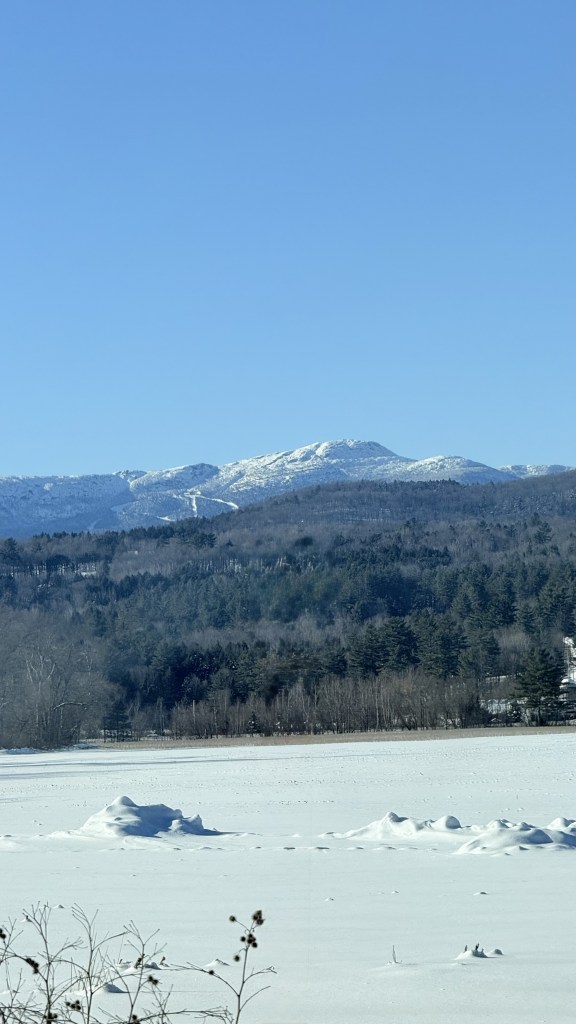
    Snow-covered mountains in the distance under a clear blue sky, with a frozen landscape in the foreground.

    What are the main neighborhoods in Stowe, Vermont?

    Most people sort Stowe into a few recognizable areas. There’s Stowe Village itself, the historic core with the white church steeple and the walkable Main Street. There’s the Mountain Road corridor, which runs about seven miles from the village up toward Stowe Mountain Resort. There’s Moscow, a quieter settlement at the southern gateway to town. And there are the hillside pockets like Edson Hill, tucked into the folds of land on Mount Mansfield’s northern shoulder.

    Each of these areas has a distinct feel, and none of them is universally “better.” It depends entirely on what kind of days you want to have here.

    Is Stowe Village or the Mountain Road better for daily life?

    Stowe Village is where you want to be if walkability matters to you. You can get coffee, pick up groceries, and drop into the library within a few blocks. In winter, when the roads get slick, being able to walk somewhere instead of driving counts for a lot.

    The Mountain Road, by contrast, is built around proximity to the ski resort rather than the village center. Homes here range from small chalets tucked behind stands of birch to larger properties set further off the road with real acreage. You trade a five minute walk to Main Street for a five minute drive to the lifts, and depending on your household, that trade might make all the sense in the world.

    I’ve talked with people who tried the village first, decided they missed having land around them, and moved out toward the Mountain Road within a year or two. I’ve also met the opposite, families who started on the Mountain Road and realized they wanted to walk to the general store on a Tuesday without getting in the car. Neither choice is wrong, but they are genuinely different lives.

    The Village Green in December

    There’s a particular scene that plays out on the village green most December evenings, string lights strung between the trees, someone’s dog trotting past the church in a little coat, the smell of woodsmoke drifting from a dozen chimneys at once. It’s the kind of thing that sells people on the village before they’ve even looked at square footage.

    A colorful hot air balloon with a striped pattern and a large, inflatable purple dragon character are visible at a festival. People are gathered on the grass, enjoying the event under a clear blue sky.

    What’s it like living in Moscow, Vermont?

    Moscow sits at the edge of Stowe, close enough that you’re in town in ten minutes, but it feels like its own small world. The Little River runs through it, and a lot of the land here has been kept open, meadows instead of subdivisions, which gives the whole area a slower, more rural character.

    Families tend to gravitate here for exactly that reason. The lots are often larger, the setting quieter, and there’s a sense of being tucked away without being cut off. You still get Stowe’s schools, Stowe’s services, and a short drive to everything the village and the mountain offer. What you give up is the ability to walk to dinner, at least most nights.

    Moscow has also seen some newer development in recent years, built with an eye toward the surrounding views and the conserved land nearby. If privacy and a bit of breathing room matter more to you than walkability, it’s worth spending real time here before deciding.

    Should you consider the hillside neighborhoods like Edson Hill?

    Edson Hill climbs one of the older settled sections of what used to be the town of Mansfield before it became part of Stowe. Generations ago, dozens of small farms dotted this hillside. Today it’s known for privacy, elevation, and views that stretch out over the valley toward Mount Mansfield’s northern ridge.

    Living up here is a different proposition than living in the village or even along the Mountain Road. Driveways are longer. Roads climb and curve. In exchange, you get land, quiet, and views that people drive up just to look at during foliage season.

    This is where I’d tell anyone considering it to think hard about how they actually live day to day, not how they imagine living. If you want to walk somewhere for a newspaper, this isn’t it. If you want to sit on a porch and watch weather roll across the valley with no one else in sight, it might be exactly right.

    Mud Season on the Back Roads

    Anyone who’s lived on Stowe’s hillside roads through April knows the particular texture of true Vermont mud season, when dirt roads soften and a decent set of tires stops being optional. It’s a real consideration, not a quaint one, and it’s part of what you’re signing up for on the higher, more rural lots.

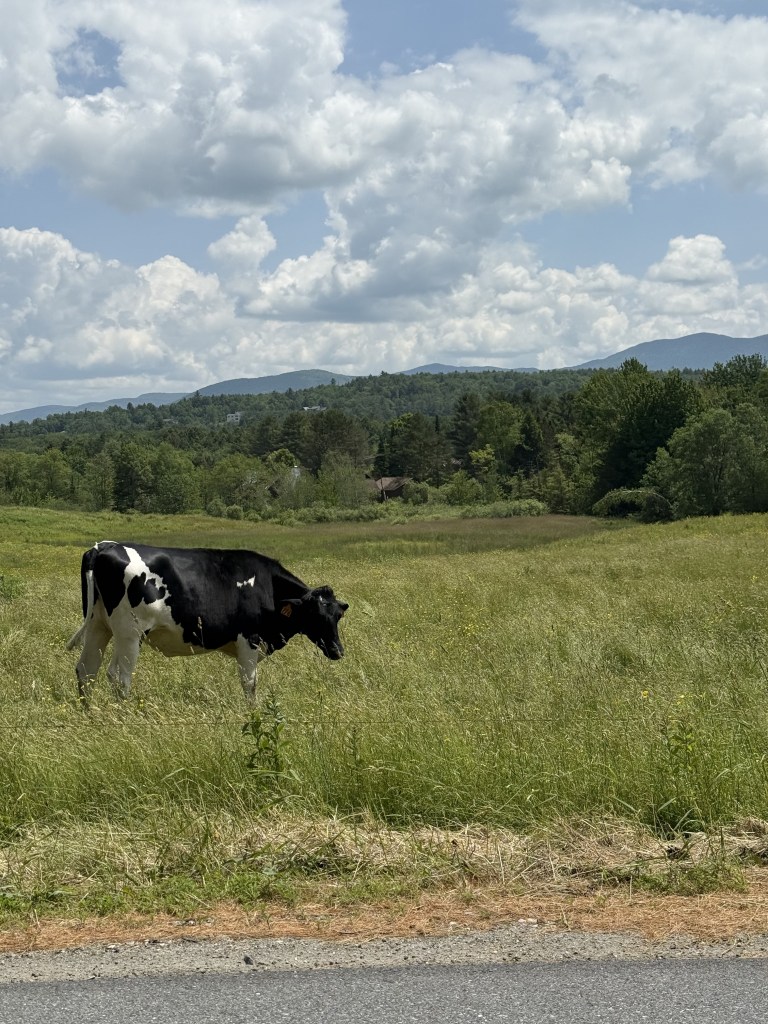
    A black and white cow grazing in a grassy field with mountains and cloudy sky in the background.

    What about the areas just south of Stowe Village, like Adams Mill?

    Adams Mill sits just south of the village, above the Little River, close enough that you can still bike into town without much trouble. It’s a smaller pocket than Moscow or the Mountain Road corridor, but it draws people who want a middle ground, some distance from Main Street’s foot traffic without giving up an easy trip in for dinner or errands.

    It’s the kind of area that doesn’t show up in every conversation about Stowe neighborhoods, but locals know it well. If you want quiet without committing to a long hillside driveway, it’s worth a look.

    How far is Stowe from the towns people commute to?

    Stowe sits in Lamoille County, with Morrisville a short drive north and Waterbury just over the mountain gap to the south. A fair number of people who live in Stowe work in one of those two towns, or further out toward Montpelier or Burlington, and the commute is part of the neighborhood equation whether people think of it that way or not.

    Homes closer to the village or along the lower stretch of the Mountain Road tend to have an easier time of it, since they’re closer to the main roads out of town. Properties up on the hillside, while beautiful, add extra minutes to every single trip, in every season, and that adds up over a working year in a way that’s easy to underestimate from a single visit.

    How do winters affect the choice of neighborhood in Stowe?

    Elevation changes everything up here. A house at the base of the valley near the village might see rain turn to snow while a property a thousand feet up on Edson Hill or further along the Mountain Road is already buried in a foot of powder. That’s not an exaggeration, it’s just how Vermont’s terrain behaves.

    Snow removal is another practical factor. Village streets and the main stretch of the Mountain Road get plowed quickly and consistently. Smaller back roads and long private driveways on the hillside properties often depend on the homeowner arranging their own plowing, which is a cost and a logistics question worth asking about early, not after the first storm.

    Road access in general is worth walking through with whoever you’re working with before you commit to a property. Some of the prettiest hillside lots in town sit at the end of roads that are genuinely challenging in a hard winter, and that’s not something you want to discover in February.

    What should you think about before choosing a neighborhood in Stowe?

    The honest answer is that it comes down to how you want your ordinary Tuesday to feel, not your vacation week. A few questions tend to surface the right answer faster than anything else:

    • Do you want to walk to dinner, or are you fine driving everywhere?
    • Is this a full time home or a place you’ll use seasonally?
    • How do you feel about managing a long driveway through a Vermont winter?
    • Do you want neighbors close by, or space between you and the next house?

    People who move here year round often end up valuing different things than people buying a ski weekend house, and that’s worth being honest with yourself about before you start touring properties. A house that feels perfect in July can feel very different in a February whiteout, and vice versa.

    Spend time in each of these areas in more than one season if you can. Stowe Village in July, with tourists filling the sidewalks and the farmers market going, feels almost nothing like Stowe Village in a quiet March. The same is true of Moscow, the Mountain Road, and the hillside neighborhoods. The place doesn’t change, but your experience of it does, and that’s exactly the point.

    There’s no wrong neighborhood in Stowe, only the one that fits the life you’re actually planning to live here.

    I’m Conner, a Realtor with Igor Real Estate, working buyers and sellers across Northern Vermont. I keep my real estate work over at soldoutvermont.com, if you’re ever curious what’s on the market.

  • Top Reasons to Buy Your First Home in Vermont

    Top Reasons to Buy Your First Home in Vermont

    What Draws People to Buy Their First Home in Vermont

    There’s a particular kind of morning in Vermont, somewhere in early October, when the fog is still sitting low in the valley and the maples on the hillside above have gone the color of a struck match. Someone driving through on their way to work stops the car on the shoulder, just for a minute, to look. That moment happens more often than you’d think, and it’s the same moment that quietly starts a lot of people thinking about buying their first home in Vermont.

    It rarely shows up as a single decision. It’s more like a slow accumulation of small pulls, a farmhouse glimpsed off Route 100, a farmers market in a town square, the sound of a wood stove ticking as it heats up on a cold night. Understanding what actually draws people here, and what they’re looking for once they start seriously considering it, says a lot about what makes Vermont different from other places people might land their first home.

    Why do people want to buy their first home in Vermont?

    For a lot of first-time buyers, it comes down to scale. Vermont towns are small enough that you can know your neighbors, recognize the person behind the counter at the general store, and still be within a couple hours of a city if you need one. That balance, quiet without being isolated, is hard to find in a lot of the country.

    There’s also the landscape itself. The Green Mountains run like a spine down the middle of the state, and no matter where you land, you’re rarely more than a short drive from a hiking trail, a swimming hole, or a dirt road that turns into a tunnel of trees in summer. People who grew up visiting Vermont on ski trips or fall foliage weekends often describe wanting to buy a first home here as wanting to stop visiting and start living inside that feeling year-round.

    And then there’s pace. Vermont life still runs on seasons in a way that feels increasingly rare. Mud season slows everything down in March and April. Sugaring season fills the air with sweet steam in late winter. Summer means farm stands and swimming holes, fall means foliage and cider, and winter means wood stacked by the door. Buying a first home here often means buying into that rhythm, not fighting against it.

    What kind of homes do first-time buyers in Vermont look for?

    The classic Vermont farmhouse, white clapboard, a front porch, maybe an attached barn or woodshed, still tops a lot of wish lists. There’s something about that shape on the landscape that feels like the platonic ideal of a Vermont home, and plenty of first-time buyers arrive with exactly that image in mind.

    Capes and colonials are common too, especially in the smaller towns scattered through the Mad River Valley, the Champlain Valley, and up toward the Northeast Kingdom. These homes tend to have low ceilings, wide floorboards, and a wood stove or fireplace as a central gathering point, details that feel distinctly Vermont even in a home built two hundred years ago.

    A lot of first-time buyers also want land, even if it’s just an acre or two. A garden plot, room for a few chickens, a stretch of woods to walk in. That desire for a little breathing room around the house is one of the clearer threads running through what people are looking for when they buy their first Vermont home, whether they’re settling in a small village or somewhere more rural.

    • Farmhouses with mudrooms and wood stoves
    • Capes and colonials in walkable village centers
    • Homes with a few acres for gardens or animals
    • Properties within an easy drive of a downtown or ski area

    Which Vermont towns attract first-time home buyers?

    Towns like Richmond, Waitsfield, and Hardwick draw people who want a real Main Street, a general store, and a strong sense of community, without needing to be in Burlington itself. They’re close enough to a city for groceries and errands, far enough to feel genuinely rural.

    Montpelier and Middlebury pull in buyers who want a bit more density, cafes, bookstores, a college town energy, paired with quick access to open countryside. Morrisville and towns along the Lamoille Valley attract people drawn to the ski culture around Stowe and Smugglers’ Notch without the price tag that comes with being right in those towns.

    Further south, Woodstock, Manchester, and the towns along Route 7 pull a different kind of first-time buyer, often someone who’s spent years vacationing in southern Vermont and finally decided to make the leap to owning something there instead of just visiting.

    What ties all of these towns together isn’t size or proximity to a ski hill. It’s that each one still has a working center, a store, a school, a place people gather, rather than being just a collection of houses along a road.

    How does Vermont’s lifestyle shape the decision to buy?

    Once someone starts picturing life in a specific Vermont town, the lifestyle details tend to move from abstract to specific fast. They start imagining hauling their own firewood, tapping a few maple trees in late February, or walking to a farmers market on a Saturday morning instead of driving to a grocery store parking lot.

    Remote work has changed this calculation for a lot of people too. Being able to work from a home office with a view of a hayfield, then step outside for a hike or a ski run on lunch break, has turned Vermont from a weekend destination into a realistic place to actually live and build a career from. That shift alone has brought a wave of first-time buyers who might never have considered a rural home purchase a decade ago.

    There’s also a cultural pull that’s harder to quantify. Vermont has a strong identity around independence, craftsmanship, and doing things a little differently, small breweries, cideries, farm-to-table restaurants, artists working out of converted barns. Buying a first home here often means buying into that identity as much as into the physical house.

    What should someone weigh before buying their first home in Vermont?

    Winter is the honest answer here, and most people who’ve spent any real time in Vermont will tell you the same thing. A home that feels perfect in October needs to also work in January, with a driveway that can be plowed, a heating system that can keep up, and enough insulation to make the cold months comfortable rather than something to survive.

    Land comes with its own considerations too. A few acres sound wonderful until someone realizes they’re now responsible for mowing, tree maintenance, and a driveway long enough to need its own snow removal plan. None of this is a reason to avoid rural property, it’s just worth picturing honestly before falling for a listing photo taken in July.

    Distance matters in a different way here than it does in a city. Ten miles on a Vermont back road in March can feel longer than it looks on a map. Buyers who spend a little time driving the actual roads to a property, in different seasons if they can manage it, tend to end up happier with their choice than those who fall for a home based on photos alone.

    Community matters more than people expect going in. Vermont towns tend to notice new faces, in a good way. Showing up to a town meeting, a school event, or the annual town cleanup day tends to matter more here than it might somewhere larger, and people who lean into that tend to feel settled a lot faster.

    It also helps to think honestly about upkeep. Older homes have character, but character often comes with an aging roof, a well that needs monitoring, or a foundation that has settled in its own particular way over a century or more. None of that should scare a buyer off, plenty of first-time owners learn these skills as they go, but it helps to walk in with open eyes rather than only falling for the wide pine floors and the view out the kitchen window.

    What does a first Vermont home actually mean to the people who buy one?

    Talk to enough first-time Vermont buyers and a pattern starts to show up. It’s rarely about square footage or resale value. It’s about the porch they picture themselves sitting on in July, the wood stove they imagine lighting on the first cold night in October, the dirt road they’ll learn to recognize every rut and pothole of after a few winters.

    It’s a home that asks something of the people who live in it, a little more attention to the seasons, a little more involvement in a small community, and in exchange it gives back a kind of rootedness that’s genuinely hard to find elsewhere. That trade feels worth it to more people every year, and it’s exactly why so many first Vermont homes end up meaning a great deal more than the deed alone would suggest.

    Every first home in Vermont carries its own version of that October morning on the shoulder of the road, the moment someone decided this particular corner of the state was worth staying for.

    I’m Conner, a Realtor with Igor Real Estate, working buyers and sellers across Northern Vermont. I keep my real estate work over at soldoutvermont.com, if you’re ever curious what’s on the market.
  • Top Tips for Choosing a Vermont Realtor

    Top Tips for Choosing a Vermont Realtor

    There’s a farmhouse on a back road outside Hyde Park that I’ve driven past for years, the kind with a sagging porch and a view of the mountains that stops people mid conversation. Last month a “sale pending” sign finally went up in the yard, and it got me thinking about how many people are moving to Vermont right now, and how differently that process can go depending on who’s guiding them through it.

    Buying or selling a home here isn’t quite like doing it anywhere else. Vermont’s towns are small, the inventory is limited, and a lot of what makes a property worth loving (or worth avoiding) isn’t something you can learn from a listing photo. That’s where the right agent makes all the difference, and it’s worth taking some time to figure out who that is before you sign anything.

    How do I find a good real estate agent in Vermont?

    Start local. Vermont’s real estate world is small enough that agents tend to specialize by region, and someone who knows Chittenden County inside and out might not know the first thing about a town two hours north. If you’re looking in Lamoille County or the towns around Stowe, Morrisville, Hyde Park, Johnson, or Cambridge, look for an agent who actually works that area regularly, not just one licensed to sell there.

    A good place to start is asking people who’ve recently bought or sold in the area you’re interested in. Local Facebook groups, town listservs, and even the comment section of a community post can turn up honest opinions fast. People in small Vermont towns tend to talk, and that’s a good thing when you’re trying to figure out who’s actually good at this job.

    What questions should I ask a real estate agent before hiring them?

    This is the part people skip, and it’s the part that matters most. An interview with a potential agent doesn’t need to feel formal, but it should give you a real sense of how they work and whether they know the area you care about.

    A few questions worth asking any agent you’re considering:

    • How many transactions have you closed in this specific town or region in the past year
    • What’s your usual response time when a buyer or seller has a question
    • Can you walk me through how you’d approach a property like the one I’m interested in
    • What do you think people underestimate about buying or selling in this part of Vermont

    That last question tends to say the most. An agent who’s actually spent time in the area will usually have a real answer, something specific about a town’s water systems, road maintenance, or the way certain neighborhoods hold their value. An agent who gives you a generic answer might be a perfectly fine agent somewhere else, just maybe not here.

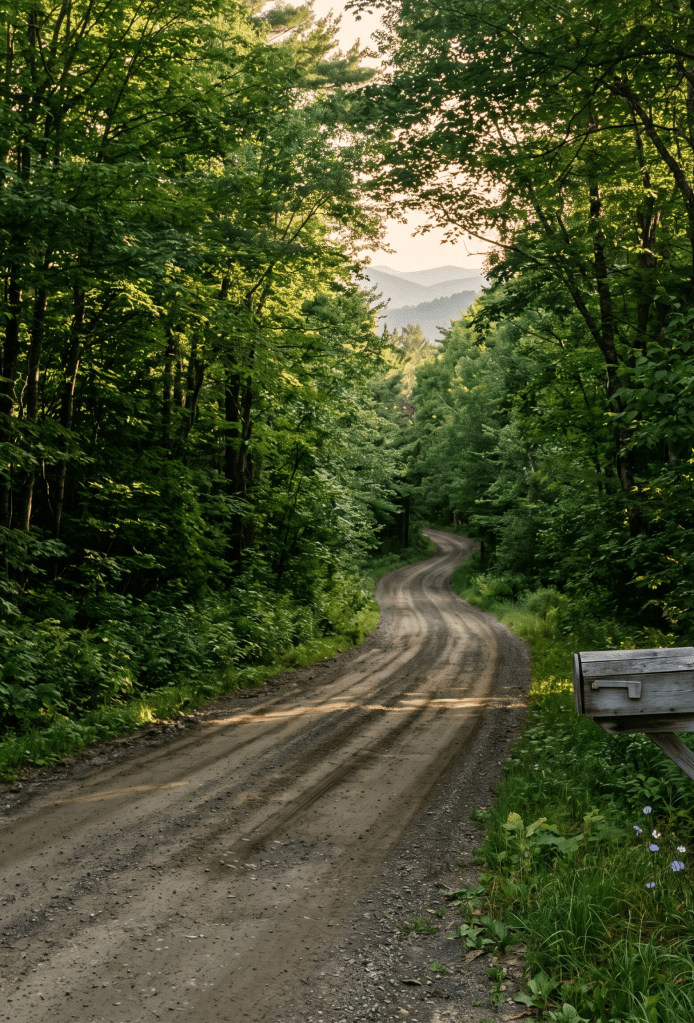
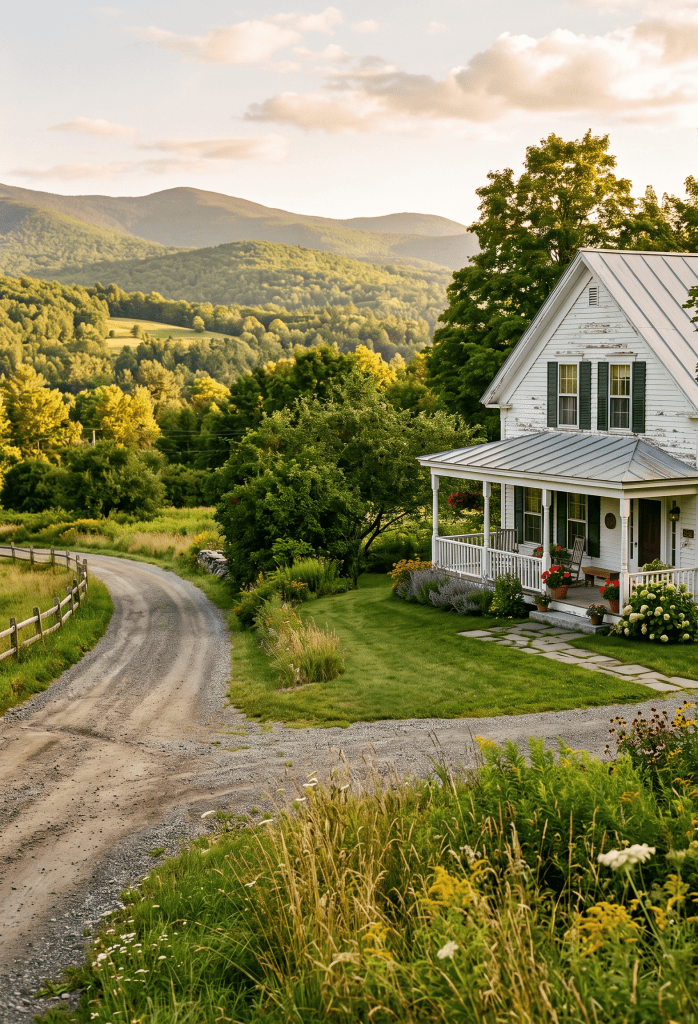
    A winding dirt road lined with lush green trees, leading toward distant mountains under soft sunlight.

    The agent who knows why a dirt road matters

    I once heard a story about a family who almost bought a beautiful place outside Johnson before their agent mentioned, almost in passing, that the road wasn’t town maintained in winter. That single detail changed their whole plan, not because the house wasn’t right, but because they hadn’t thought through what a private road actually means for day to day life up here. That’s the kind of thing you want an agent to bring up before you ask, not after you’ve already fallen in love with a listing.

    Why does it matter if an agent knows Vermont small towns specifically?

    Vermont living is full of small, town specific realities that don’t show up in a standard listing. One town might have a well known issue with cell service in certain valleys. Another might have a school system that draws families from three towns over. A third might have a completely different feel depending on which side of Main Street you’re on.

    An agent who’s actually spent time in these towns, not just sold a house or two nearby, tends to know these things instinctively. That local knowledge is part of what makes the Vermont lifestyle feel accessible instead of overwhelming, especially if you’re coming from somewhere with a completely different rhythm.

    What’s different about relocating to Vermont compared to a local move?

    People relocating to Vermont from out of state often come in with a mental picture built from a single vacation or a handful of photos. That picture usually leaves out a lot, like how different towns can feel just twenty minutes apart, or how much personality a place takes on once you’ve seen it in more than one season.

    A good agent will slow that process down a little. Instead of just showing you what’s on the market, they’ll ask what you’re actually looking for out of living in Vermont. Are you hoping for a walkable downtown, or total privacy at the end of a dirt road? Do you want to be five minutes from a ski hill, or an hour from anything resembling a crowd? Those answers matter more here than in a lot of places, because the towns really do differ that much from one another.

    Why people move to Vermont varies a lot from one family to the next. Some come for the quiet. Some come chasing a specific kind of outdoor life. Some just want their kids to grow up somewhere that still feels like a real place instead of a suburb of somewhere else. The right agent listens for that reason early, and lets it shape the whole search.

    How do I know if an agent understands what I’m actually looking for?

    You’ll usually know within the first conversation. A good agent asks more questions than they answer at first. They want to understand your daily life, your work situation, whether you need to be near a hospital or a school or just near enough to a decent grocery store, before they start sending listings your way.

    You’ll also notice it in the properties they suggest. If everything they send feels like it’s chasing a trend rather than fitting what you described, that’s worth paying attention to. The agents who do this well tend to send fewer listings, but ones that actually make sense.

    A short gut check before you commit

    Before choosing an agent, it can help to picture a slow Tuesday, not a fast paced weekend showing spree. Would you feel comfortable calling this person with a small, half formed question? Would they take the time to actually answer it, even if it wasn’t about a specific listing? That comfort level tends to predict how the whole process will go.

    What should I expect once I’ve found the right agent?

    A good working relationship with a Vermont agent tends to feel more like an ongoing conversation than a transaction. You’ll likely hear from them even when there’s nothing urgent to report, just a note about a property that might fit, or an honest opinion about a town you mentioned once in passing.

    That kind of steady, low pressure communication is part of what makes the whole process feel manageable, especially for anyone moving from out of state and trying to make sense of a place that’s new to them. It’s less about speed and more about making sure the decision actually fits the life you’re hoping to build here.

    Finding that person takes a little effort up front, but it tends to pay off in a search that feels less like a scramble and more like a good, honest conversation about what you actually want.

    I’m Conner, a Realtor with Igor Real Estate, working buyers and sellers across Northern Vermont. I keep my real estate work over at soldoutvermont.com, if you’re ever curious what’s on the market.
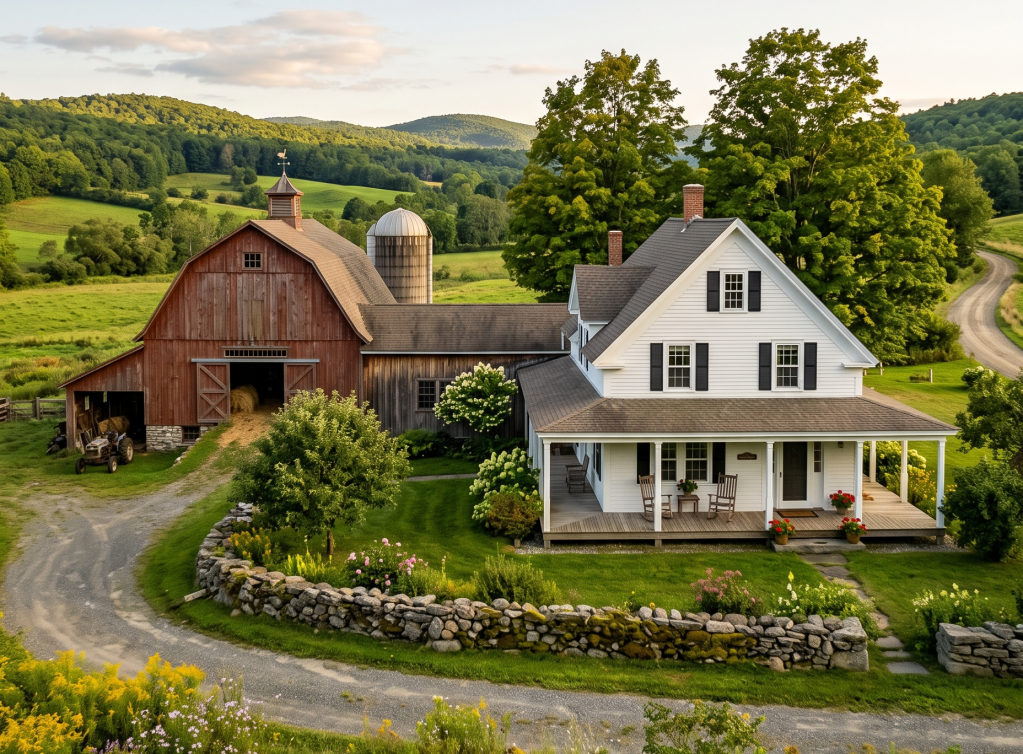
    Some of the best homes up here never look quite right in a photo, and it usually takes the right person standing beside you to see what they could be.

  • Living in Vermont: Cost Comparison with New England

    Living in Vermont: Cost Comparison with New England

    Last October I stood in my driveway watching the propane truck top off the tank, doing that quiet math every Vermonter does around the same time every year. Winter is coming, the tank needs to be full, and the bill is going to sting a little. A friend from outside Boston texted me that same week asking about moving to Vermont, wanting to know if it would actually save her any money compared to staying put in Massachusetts.

    It is a question I get a lot, usually from people who picture Vermont as the “cheap and quiet” alternative to the rest of New England. The real answer is more nuanced than that, and it depends heavily on which state you are comparing us to and which town you are looking at.

    Is it more expensive to live in Vermont than other New England states?

    Vermont sits in a strange middle spot. We are not the most expensive state in the region, not even close, but we are also far from the cheapest. Housing here runs above the national average, heating costs are real, and property taxes are on the higher end nationally.

    At the same time, Vermont tends to look downright reasonable next to Massachusetts and holds up fine against New Hampshire and Connecticut, depending on the town. Maine can go either way, since coastal Maine has gotten expensive while the northern counties remain some of the most affordable in New England.

    So when someone asks whether living in Vermont is expensive, my honest answer is: expensive compared to the country, moderate compared to our neighbors.

    How does Vermont’s cost of living compare to New Hampshire?

    This is the comparison I hear most, mostly because people assume New Hampshire wins automatically since it has no state income tax. It is not that simple once you look at actual home prices.

    Vermont’s statewide median home price has been running somewhere in the low to mid $400,000s, while New Hampshire has been trending noticeably higher, often in the high $400,000s to near $500,000 depending on the month and region. Southern New Hampshire towns near the Massachusetts border and the Seacoast area carry a real premium because of their easy commute into Boston.

    New Hampshire wins on income tax and sales tax simplicity. Vermont tends to win on land, older farmhouses, acreage, and a slower pace that a lot of relocating families are specifically chasing. Buyers who want privacy, a dirt road, and a view usually find more of it for the same money on our side of the Connecticut River.

    Is Vermont cheaper than Massachusetts?

    Almost always, yes, and this is the comparison where Vermont looks the most affordable by a wide margin. Massachusetts median home prices have been sitting well above $600,000 statewide, and that number climbs fast once you get anywhere near Boston, MetroWest, or the coast.

    A lot of the people relocating to Lamoille County right now are coming from exactly this situation. They are selling a home outside Boston, and even after buying something nicer in Stowe, Morrisville, or Cambridge, they are walking away with meaningful equity left over.

    Vermont’s tradeoff is obvious too. You are giving up density, restaurant variety, and big city job markets. What you gain is space, quiet, and a housing dollar that stretches noticeably further.

    What about Maine and Connecticut?

    Maine is the trickiest comparison because the state is so split. Coastal Maine, especially around Portland and Cumberland County, has become one of the more expensive corners of New England. Inland and northern Maine, on the other hand, remains genuinely affordable, sometimes more affordable than rural Vermont.

    Connecticut ends up landing close to Vermont on paper, with statewide home values in a similar range. The experience feels different though. Connecticut’s cost of living leans more suburban and commuter driven, tied closely to access into New York City and Hartford, while Vermont’s costs are shaped more by land, heating, and small town infrastructure.

    Rhode Island is smaller and denser than all of these, and tends to price similarly to Connecticut once you account for its coastal premium.

    What does it actually cost to heat a home in Vermont?

    This is the line item that surprises transplants the most, and it is worth being honest about it. Between November and April, a typical Vermont home can run anywhere from a couple hundred dollars a month up into the $400 to $500 range, depending on the size of the house, the insulation, and whether you are heating with oil, propane, or wood.

    Plenty of people up here have shifted to heat pumps or wood and pellet stoves to soften that seasonal spike. I know several families in Hyde Park and Johnson who split their heat between a wood stove and a mini split system, which keeps the propane truck visits fewer and further between.

    This cost exists in New Hampshire and Maine too, but it is worth budgeting for specifically if you are coming from somewhere with milder winters, since it is not always factored into someone’s first year of Vermont cost projections.

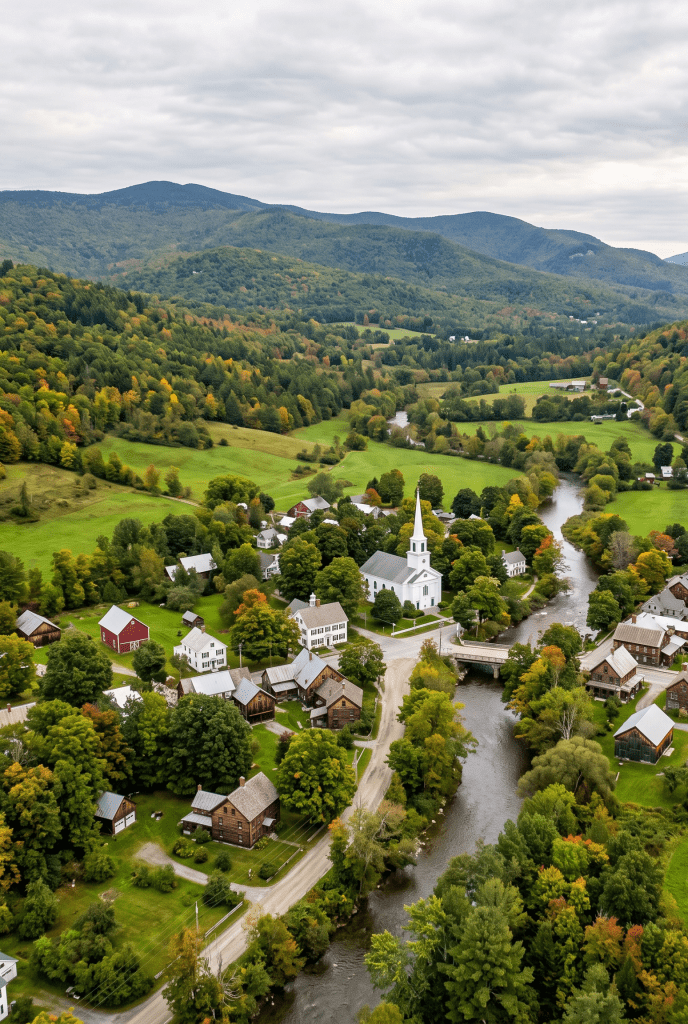
    Aerial view of a picturesque rural village surrounded by lush green fields and autumn-colored trees, featuring a white church with a steeple and a flowing river.

    Which Vermont towns offer the best value right now?

    Lamoille County is a good example of how much variation exists inside one small region. Stowe carries a resort premium because of the mountain and the tourism economy. Drive twenty minutes in almost any direction and that premium starts to soften.

    Morrisville and Hyde Park tend to offer more house for the money while still keeping you close to Stowe’s amenities and the ski hill. Johnson and Cambridge have their own quieter, more agricultural character, often appealing to buyers who want land and a slower rhythm without giving up proximity to the Lamoille Valley Rail Trail or the Green Mountains.

    • Stowe: resort town pricing, strong long-term value, higher taxes and insurance
    • Morrisville and Hyde Park: more affordable, still close to skiing and downtown Stowe
    • Johnson and Cambridge: rural character, more acreage per dollar, quieter pace

    Why do people still choose Vermont, even with the higher costs?

    This is the part that numbers alone never fully explain. People who move here are usually not chasing the cheapest option on a spreadsheet. They are chasing something closer to a feeling, the kind you get watching fog settle into the valley from Route 15, or picking up cider donuts at a farm stand that has been in the same family for three generations.

    Vermont’s version of Vermont lifestyle costs more, but it also delivers something that is getting harder to find elsewhere in New England: small towns that still feel like communities, mountains that are actually part of daily life rather than a weekend destination, and a pace that lets people breathe.

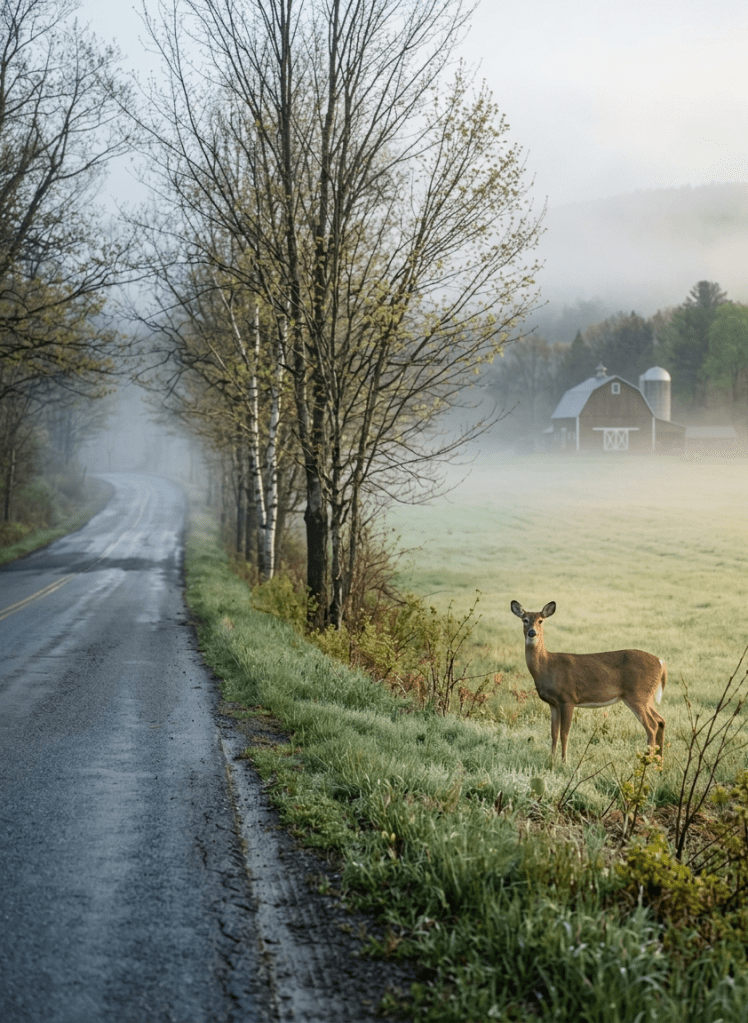
    deer on the side of the road in a foggy field with a red barn behind it

    So is moving to Vermont worth the cost?

    For a lot of the families and remote workers I talk to, the honest answer is yes, especially compared to Massachusetts or the pricier parts of Connecticut and coastal Maine. For someone strictly optimizing for the lowest possible tax bill and the cheapest home price in the region, New Hampshire or inland Maine may win on paper.

    What Vermont offers instead is a kind of value that does not show up neatly in a cost of living calculator. It shows up in the length of your commute, the number of times you actually use your porch, and whether your kids know their neighbors’ names.

    Every fall, that propane truck still shows up in my driveway, and every fall I stil think it is worth it.

  • Family Life in Vermont: What to Expect

    Family Life in Vermont: What to Expect

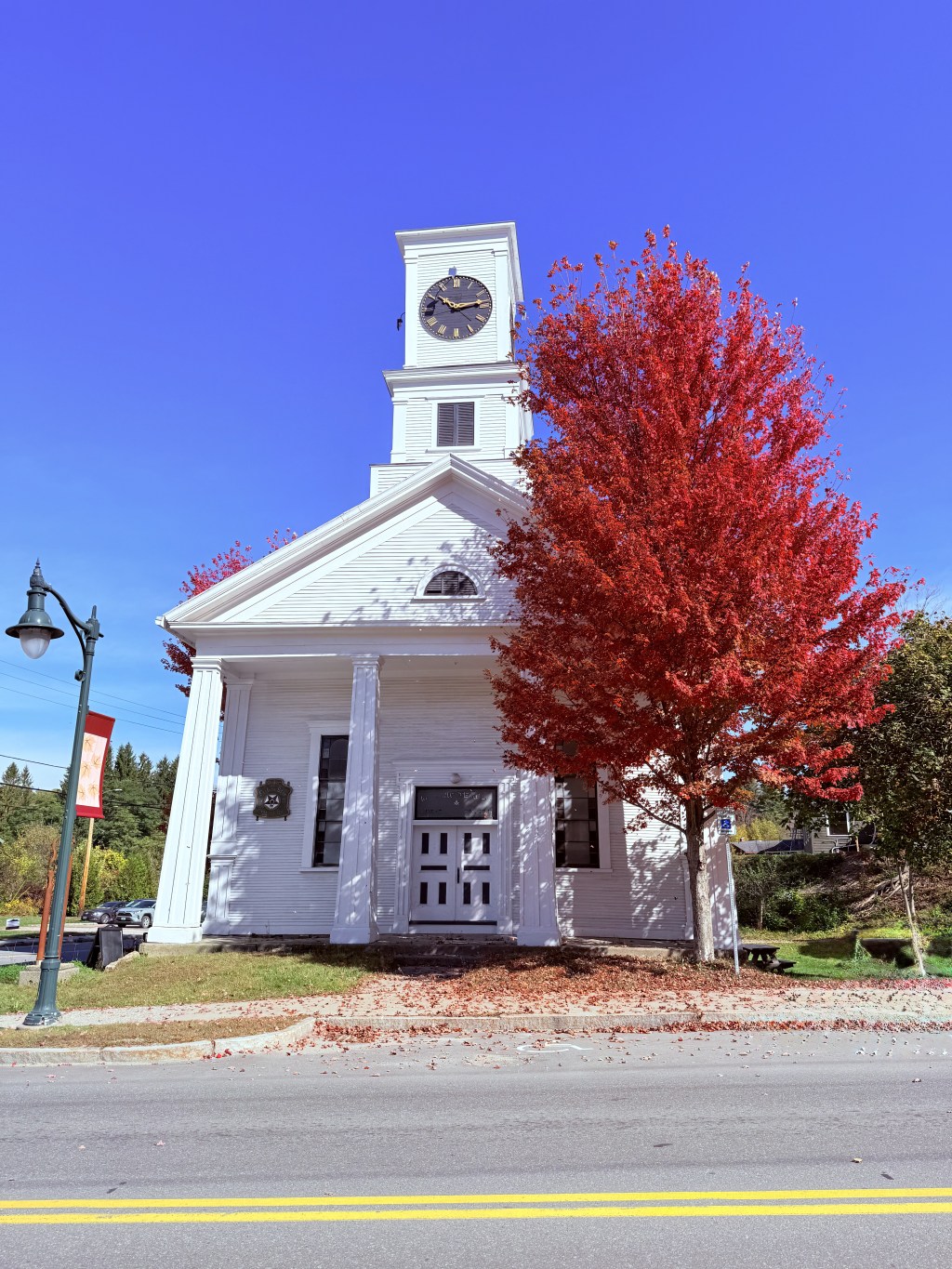
    johnson, vermont in autumn

    There is a particular kind of afternoon that happens in Vermont in early October, the kind where the light goes golden and flat around 4 PM, the maples are doing something almost embarrassing with color, and the school bus rolls down a dirt road past a weathered red barn with nobody in a hurry about any of it. Kids pile off and disappear into the woods behind their houses with sticks and boots and zero supervision. It is a scene that plays out the same way it always has, and it is one of the reasons so many families are asking the same question right now: what is it actually like to raise kids in Vermont?

    Moving to Vermont with kids is not a small decision. The winters are real. The job market is specific. The nearest Target might be forty minutes away. But for families who want something quieter, slower, and genuinely connected to the outdoors and to a community, Vermont delivers in ways that are hard to find anywhere else right now.

    Here is an honest look at what family life in Vermont is actually like, from the practical stuff to the parts nobody mentions until you are already here.

    What Is It Actually Like to Raise Kids in Vermont?

    Slower, But Not in a Bad Way

    The pace of daily life in Vermont takes some getting used to, especially if you are coming from a city or suburb where everything is immediate. Grocery runs double as social events. School pickup turns into a twenty minute conversation. The hardware store guy knows your kid’s name within a month.

    For kids, that slowness tends to be a gift. There is more unstructured time here. More room to be bored and then figure out what to do with that boredom. More freedom to roam in a way that feels genuinely old fashioned, in the best sense.

    That said, Vermont families are not sitting around doing nothing. The activities just look different. Soccer practice on a lumpy field in the rain. Skiing on weekday afternoons at local mountains. Maple sugaring in the mud season. 4H projects. Town meeting attendance that kids actually take seriously because their parents do.

    Community Is Closer Than You Expect

    Vermont is a genuinely community oriented place. Small towns function like extended families. You will know your neighbors faster here than almost anywhere else, partly because you need each other and partly because the culture still values showing up.

    School communities especially tend to be tight. In smaller towns, a graduating class might be thirty kids who have known each other since kindergarten. For some families, that closeness is exactly what they wanted. For others, it can feel like there is less room for reinvention. It is worth thinking honestly about which kind of family you are before you commit to a small town school district.

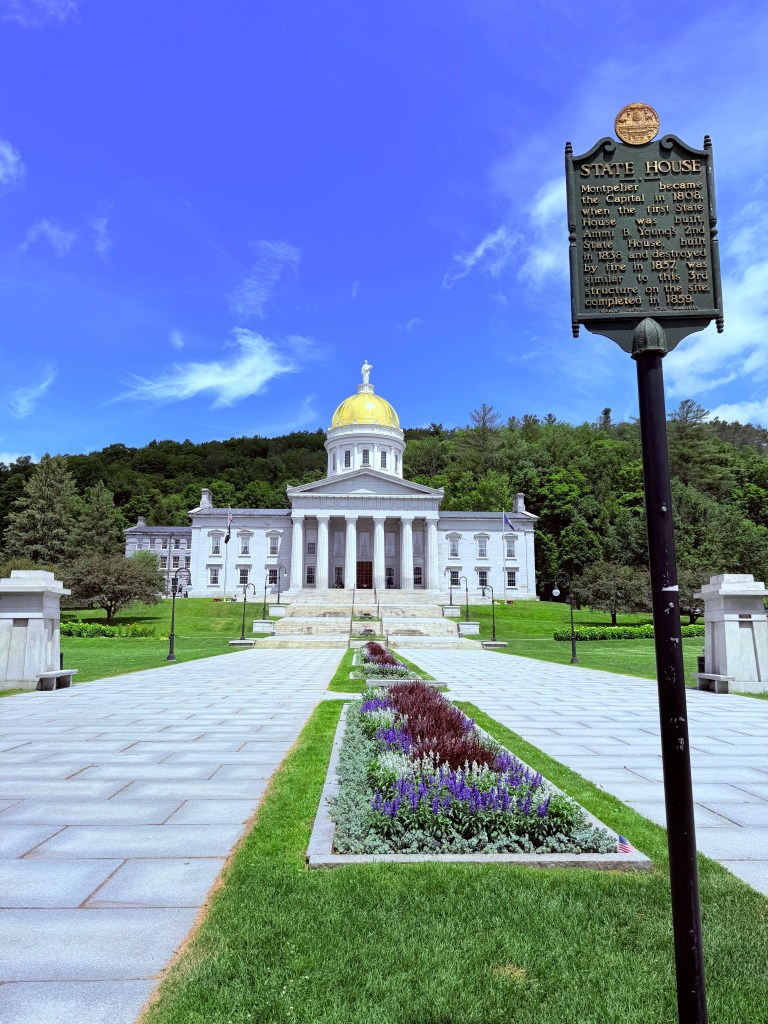
    vermont state house in montpelier

    Where Do Families Actually Move When They Come to Vermont?

    The Towns That Keep Coming Up

    Not every Vermont town is equally set up for family life. Some of the most talked about spots are popular for good reason. Others are worth a closer look if you want something slightly off the beaten path.

    Stowe comes up constantly, and for good reason. The schools are solid, the outdoor access is exceptional, and the town has enough infrastructure to feel livable year round, not just during ski season. The tradeoff is cost. Stowe has become genuinely expensive, and housing inventory is tight.

    Morrisville is the town right next door to Stowe, and it is where a lot of families land when they want the same access without the Stowe price tag. It has a real downtown, a good school, and a community that feels less transient than some of the resort adjacent areas.

    Johnson is a little further out and has that classic Vermont small town feel, with Johnson State College giving it some cultural energy and the Lamoille River running right through it. For families who want more space and more quiet, it is worth a serious look.

    Waterbury and Middlesex tend to attract families who want easy access to Montpelier (the state capital, which has good services and a strong local food scene) while staying in a more rural setting. The commute corridor along I-89 makes this stretch practical for families with one partner working in the greater Burlington area.

    Burlington and its suburbs, including Williston, Shelburne, and South Burlington, are the most urban option Vermont offers. If you need a coffee shop that is actually open on Sunday morning, proximity to an airport, or a pediatric specialist within twenty minutes, the Burlington metro area is probably where you belong.

    What About Schools?

    Vermont school quality varies a lot by district, and this is one area where families should do their homework before committing to a specific town. The state has gone through significant consolidation in recent years, and some smaller towns now tuition their students to larger nearby schools rather than maintaining their own.

    For families with strong opinions about school choice, Vermont has a longstanding tradition of town tuitioning that gives families in certain districts more flexibility than you might expect. It is worth asking specifically about the arrangement in any town you are seriously considering.

    Independent and private school options exist too, particularly in the Burlington area and in some of the more well established communities further south. Families relocating from areas with a strong independent school culture sometimes find exactly what they are looking for here, and sometimes find the options thinner than expected.

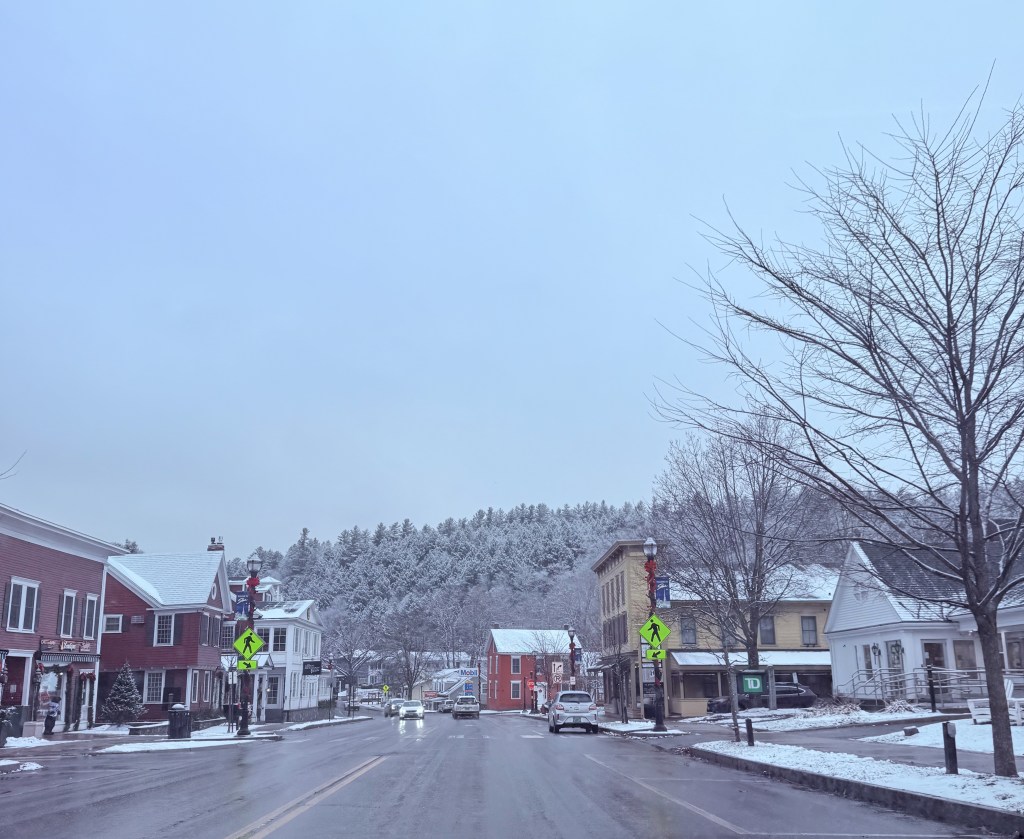
    A snowy street view in a small town featuring colorful buildings, bare trees, and a backdrop of snow-covered hills under a gray sky.

    What Do Families Struggle with Most After Moving to Vermont?

    The Winter Is Longer Than You Think

    Everyone says this, and everyone still underestimates it. Vermont winter starts in November and goes through April in a meaningful way. There are beautiful stretches in there, genuinely magical ones, but there are also gray weeks in February where the cold is relentless and the mud has not started yet so there is nothing to signal that spring is coming.

    Families who thrive here tend to either ski or have made peace with winter in some other active way. Families who white knuckle it through every February tend to leave within two or three years. It is not a small thing. Talk honestly with your family about how you handle cold, dark, and limited daylight before you commit.

    Finding Your People Takes Time

    Vermont is warm but it is not quick. Long time Vermonters are genuinely friendly, but the transition from acquaintance to actual friend can take a year or two. This is especially true for families settling into rural areas where the social fabric is already well established.

    The families who find their footing fastest are usually the ones who get involved early: in the school community, in local sports, in a church or community organization, or in some kind of volunteer work. Vermont rewards showing up. It just does not hand you a welcome basket the moment you arrive.

    Services Are Spread Out

    If your child has a specialist they need to see regularly, or if you are used to having immediate access to children’s services, therapy, pediatric care, or certain kinds of extracurricular programming, you will need to plan ahead here. Vermont has good medical care in its regional centers, but rural families often drive thirty to sixty minutes for appointments that would have been five minutes away somewhere else.

    This is not a dealbreaker for most families, but it is a real adjustment. The practical side of living in Vermont with kids requires building in more time and more patience for logistics than most people are used to.

    What Do Kids Love About Growing Up in Vermont?

    The Outdoors Is Not Optional, It Is the Culture

    Kids who grow up in Vermont spend a disproportionate amount of time outside compared to their peers in most other states. Not because they are being forced to, but because there is always something to do out there and the culture around them makes it normal to be out in it.

    Skiing and snowboarding are practically rites of passage. Most schools have ski programs, and lift ticket prices through youth programs are genuinely accessible compared to what you would pay elsewhere.

    In the warmer months, it is hiking, swimming holes, fishing, mountain biking, and spending time at fairs and farm events that feel like they were designed for kids. Vermont 4H programs, county fairs, and agricultural traditions give children a relationship with where food comes from that is increasingly rare.

    The Creative and Cultural Life Is Richer Than the Size Suggests

    Vermont punches above its weight culturally. There are strong arts programs in many schools, local theater, robust library systems in even small communities, and a genuine culture around music, craft, and making things. Farmers markets are social events as much as anything else, and children grow up participating in them as vendors, helpers, and regulars.

    The food culture here is worth mentioning on its own. Kids in Vermont grow up eating well, often in a genuinely hands on way, whether that is through school gardens, CSA shares, or just having maple syrup and locally made cheese as normal parts of the grocery rotation.

    covered bridge in vermont in autumn

    Is Moving to Vermont Right for Your Family?

    The Families Who Tend to Stay

    The families who put down roots here tend to share a few things. They genuinely wanted a slower pace, not just as an aesthetic but as a lifestyle. They came prepared for real winters. They were willing to trade convenience for community and space. And they gave Vermont time to reveal itself, which it does, but not always on the timeline people expect.

    Vermont is not a place that will dazzle you immediately. It is a place that grows on you. The first mud season is not pretty. The first February can feel endless. But the first spring, when the sap is running and the kids are outside until 7 PM and a neighbor drops off a jar of something homemade and asks if you need anything, that is when most families understand why they came.

    A Few Things Worth Knowing Before You Sign a Lease

    • Housing inventory is limited in most desirable areas, and the market has been competitive in recent years. Come with your financing in order and be ready to move when something right appears.
    • Heating costs are real. Factor in the cost of oil, propane, or wood into your monthly budget, especially if you are looking at older Vermont homes.
    • Internet access varies significantly by town and neighborhood. If you work remotely, verify the actual connectivity options at any specific address before committing.
    • Vermont has a strong small business and farming culture. If someone in your family has been thinking about a side business, a small farm, a craft, or a local service, Vermont is one of the better places to try it.
    • The outdoor gear costs add up. Skiing, hiking, camping, and cold weather gear for growing kids is a real budget line here.

    Living in Vermont with kids is not for every family. But for the ones it fits, it fits in a way that is hard to explain to people who have not experienced it yet. Something about the combination of community, land, season, and pace makes childhood here feel like something worth choosing on purpose.

    There is a reason so many people who grew up here come back, and a reason the families who arrived for a fresh start are still here a decade later, with kids in the same schools their neighbors went to, learning the same mountains, the same mud, the same rhythms of a place that does not try to be anything other than exactly what it is.

  • Vermont Living: The Allure of Community and Nature

    Vermont Living: The Allure of Community and Nature

    There is something that happens to people the first time they drive through Vermont in October. The hills go impossibly red and orange, the air has that cold-clean smell that wakes you right up, and somewhere along a two-lane road lined with sugar maples, the thought creeps in: what if I just stayed?

    For a lot of people, that thought eventually turns into a lease, then a purchase, then a whole life built around maple syrup, mud season, and knowing your neighbors by name. Vermont has been quietly pulling people in for decades, and the pace of that movement has only picked up over the last several years.

    So what is actually drawing people here? And once they arrive, what makes them stay? I have spent enough time talking with transplants and watching people settle into northern Vermont communities to have a pretty good sense of the answer. It is not one thing. It is a hundred small things that stack up.

    The Quality of Life Is Different Here

    People who move to Vermont from bigger cities often describe the shift in the same way. Life feels manageable again. The commute is short or gone entirely. The grocery store is not crowded. You can get a table at a restaurant on a Friday night without a reservation.

    That might sound small, but the cumulative effect of those frictions disappearing is significant. People report sleeping better, feeling less stressed, and actually having time to cook dinner or take a walk after work. There is a reason Vermont consistently ranks near the top of national health and wellbeing indexes. The pace here does something good for people.

    In Lamoille County and the towns around Stowe, Morrisville, Hyde Park, and Johnson, you also get access to outdoor recreation that most people in the country would have to drive hours to reach. Hiking, skiing, snowshoeing, kayaking, mountain biking. It is not a weekend getaway. It is Tuesday evening after work.

    autumn road in vermont

    Remote Work Changed Everything

    The shift to remote work opened Vermont up to a wave of people who had always wanted to live here but assumed their careers would not allow it. Once the laptop became the office, suddenly the location question was wide open.

    Vermont leaned into this hard. The state launched a program called Remote Worker Grants that offered financial incentives for people who relocated here and worked remotely for out-of-state employers. It was one of the first programs of its kind in the country, and it attracted national attention. People who had been daydreaming about Vermont suddenly had a concrete reason to make the move.

    The timing lined up with something broader too. A lot of people spent the early 2020s reconsidering what they wanted from where they lived. Proximity to a downtown office became less important. Square footage, outdoor access, community connection, and affordability (relative to major metro areas) moved up the list. Vermont offered all of those things in a package that was genuinely hard to find elsewhere.

    Vermont Towns Actually Feel Like Communities

    This one is harder to quantify but it is probably the most important factor in why people stay. Vermont towns are real communities in a way that a lot of places in the country are not anymore.

    Town meeting is still a thing here. People show up on the first Tuesday of March and vote in person on local budgets, road projects, and school questions. You know your select board members. You run into your kids’ teachers at the farmers market. The librarian knows your name. These are not quaint nostalgic details. They are the texture of a life that feels connected and rooted.

    Small towns like Johnson and Hyde Park in Lamoille County have that quality in abundance. They are not destination towns. There are no ski resort gondolas or trendy restaurant strips. What they have is a tight fabric of people who look out for each other, volunteer for things, and show up when it matters. For people coming out of anonymous urban environments, that can feel genuinely revolutionary.

    The Outdoor Life Is Not a Selling Point, It Is the Point

    winter waking trail

    Anyone who moves to Vermont and does not end up spending real time outside is going to have a rough adjustment. The outdoors is not an amenity here. It is woven into how people structure their time and their relationships.

    In winter, that means skiing or snowshoeing or just learning to embrace cold in a way that you probably never did before. Stowe has some of the best terrain in the East. Bolton Valley, Smugglers Notch, and Jay Peak are all within easy reach of northern Vermont. Cross-country skiing trails run through the woods and across farm fields in a way that feels completely different from anything you find in more developed parts of the country.

    Spring and summer shift the whole rhythm. The Long Trail passes through, hiking options are everywhere, and the rivers come alive. Camping by a fire in the Green Mountains, cooking over an open flame with real wood smoke, watching the sky go dark without any light pollution competing with the stars. There is a quality to those evenings that is hard to describe to someone who has never experienced it.

    Fall is what gets people emotional. Leaf peeping in Vermont is not hype. It is genuinely one of the most beautiful seasonal transitions you will see anywhere in the world, and living here means you get to experience it every year instead of fighting traffic for one weekend of it.

    Vermont Is a Good Place to Raise a Family

    For people with kids, or thinking about having kids, Vermont tends to score very well on the things that matter most. Schools are generally strong, particularly in communities that are committed to them. The crime rate is among the lowest in the country. Kids here have a real childhood, with room to roam, clean air, and the kind of independence that is hard to give children in denser, more guarded environments.

    There is also something to be said for growing up in a place with four real seasons and deep roots in agriculture, craftsmanship, and community. Vermont has its own identity, and kids who grow up here tend to carry that with them. They learn where food comes from. They participate in town life. They develop a relationship with the land that most of their peers elsewhere simply do not have.

    The Food and Farm Culture Is the Real Deal

    Vermont has a food scene that punches way above its weight for a state with fewer than 650,000 people. The farm-to-table movement did not arrive here as a trend. It has always just been how things work when you are surrounded by working farms, sugar bushes, cheesemakers, and craft breweries.

    The farmers markets in towns like Morrisville and Stowe run through the growing season and draw incredible vendors. Local maple syrup shows up in everything from cocktails to glazed meats. The cheese alone is worth the move. Cabot, Jasper Hill, and dozens of smaller producers make Vermont one of the premier dairy and cheese regions in the country.

    For people who care about knowing where their food comes from, Vermont makes that easy. You can buy a half cow from a farm twenty minutes away. You can pick your own blueberries in August. You can get a CSA share that fills your fridge with vegetables you actually recognize and taste like something.

    porch with coffee during stick season

    What Keeps People Here Once They Arrive

    Moving anywhere requires optimism. Staying requires something deeper. The people who put down real roots in Vermont tend to point to the same things: the sense of belonging, the physical beauty that never gets old, and the feeling that their choices and their values are reflected in the community around them.

    Vermont is not a perfect place. Winters are long and genuinely cold. The housing market in desirable areas has gotten more competitive in recent years. There are rural access challenges and income gaps that are real. Anyone considering a move here should come with eyes open to the full picture.

    But the people who stay do so because something clicks into place here that did not click before. The pace fits. The community holds. The view from the front porch on a clear November morning makes everything feel worth it. That is a hard thing to walk away from once you have found it.

    Thinking About Making the Move to Vermont?

    If you are somewhere in the research phase, the best thing you can do is spend real time here across different seasons. A long weekend in July is beautiful. A week in February will tell you a lot more about whether Vermont is actually right for you.

    Northern Vermont in particular, the towns spread across Lamoille County and the surrounding areas, offers a version of this state that is less about tourism infrastructure and more about actual Vermont life. It is quieter, more affordable than the resort towns, and full of the kind of community fabric that people who end up staying here are usually looking for.

    Come with curiosity. Take your time. Talk to people. Vermont has a way of telling you whether it is the right fit, and it does not usually take long.

    Vermont has been here a long time. It is not going anywhere. Take your time getting here right.

  • Discovering the Hidden Charms of Vermont’s Northeast Kingdom

    Discovering the Hidden Charms of Vermont’s Northeast Kingdom

    A wide open Vermont landscape in the Northeast Kingdom, looking out across rolling forested hills and farmland under a pale blue autumn sky, golden light raking across the scene from a low angle, a weathered red barn partially visible at the edge of the frame

    There is a reason people who move to the Northeast Kingdom rarely leave. It is not that they cannot. It is that after a while, they stop wanting to.

    The NEK, as locals call it, covers Essex, Orleans, and Caledonia counties in the far northeastern corner of Vermont. It is the largest, least developed, and most sparsely populated region in the state. No major highways cut through it. No big box retail strips line the roads. The closest airport with real options is Burlington, a solid two hours away depending on where you are sitting.

    If that sounds like a deterrent, it might not be the right place for you. But if that sounds like a selling point, keep reading. Because what the NEK lacks in convenience, it gives back in something harder to name and even harder to leave behind.

    What the Northeast Kingdom Actually Looks and Feels Like

    Spend a few days here and you start to understand why artists, writers, and people running from burnout have been quietly moving to the NEK for decades. The landscape is enormous and unhurried. Long stretches of forest open into farms that have been worked by the same families for generations. The light here in late afternoon, especially in fall, is something you will remember.

    The largest towns in the region are St. Johnsbury, Newport, and Derby. None of them would qualify as a city by most measures. St. Johnsbury is the regional hub, with a main street that has more going on than people expect. Newport sits right on Lake Memphremagoo (locals drop the formal name and just say “the lake”), a body of water that crosses the border into Canada. Derby straddles Interstate 91 and has the kind of practical amenities that make daily life workable without much drama.

    Between and beyond those towns is a landscape of small villages, general stores, and stretches of road where you might go twenty minutes without seeing another car. That is not an exaggeration. It is part of the deal.

    The Honest Pros of Living in the NEK

    Land and Space at Prices That Still Make Sense

    Compared to Chittenden County or even Lamoille County, land in the Northeast Kingdom is still genuinely affordable. You can find acreage here that would cost three times as much an hour south. For people who want room to breathe, to grow food, to keep animals, or just to look out their window and see trees, the value equation is hard to argue with.

    The housing market has tightened up over the past few years, as it has everywhere in Vermont, but the NEK still has more inventory and more variety than most of the state. Old farmhouses, small camps on ponds, newer builds tucked into the woods. If you are patient and willing to do some work on a property, you can still find real deals.

    A Community That Means Something

    People look out for each other here in ways that can feel almost foreign if you are coming from a more populated place. Neighbors show up when something goes wrong. The person at the hardware store actually knows what they are talking about. You see the same faces at the farmers market, at the town meeting, at the diner on a Tuesday morning. After a while, that repetition stops feeling small and starts feeling like exactly what a community is supposed to be.

    There is a strong sense of local identity in the NEK. People here are proud of the region without being showy about it. They are also refreshingly direct. If something is not working or someone is not pulling their weight, someone will say so. That candor can catch newcomers off guard, but most people who stick around come to appreciate it.

    Outdoor Life That Goes Deep

    The recreational access here is real and largely uncrowded. Kingdom Trails in Burke is one of the best mountain biking networks in the entire country, not just Vermont. Jay Peak gets more natural snowfall than almost anywhere in the Northeast. The Connecticut River headwaters, the Clyde River, Echo Lake, Lake Willoughby, the Barton River corridor. It goes on and on.

    Hunting and fishing culture runs deep here in a way that is different from the more recreational outdoor scene you see in places like Stowe or Woodstock. This is a region where people have been living off the land for a long time, and that knowledge and tradition is still intact and passed down.

    A serene winter landscape featuring a frozen lake surrounded by snow-covered mountains and evergreen trees, with a small area of open water in the foreground reflecting the trees.

    The Honest Challenges of NEK Life

    Distance Is Real and It Costs You

    Everything takes longer here. The grocery run might be thirty minutes each way. Specialty medical care, certain services, larger shopping trips, they all involve planning in a way that people from more urban areas are not used to. The interstate runs through the southern part of the region and makes St. Johnsbury reasonably accessible, but head north toward Canaan or Island Pond and you are genuinely remote.

    Gas prices matter more here because you are driving more. Time in the car becomes a bigger part of your week than you might expect. For some people that is totally fine, even peaceful. For others it grinds on them eventually. It is worth being honest with yourself about which one you are before making a move.

    Economic Realities

    The local economy has changed a lot over the decades. Manufacturing jobs that used to anchor communities have largely gone. Agriculture is still here but farming has never been an easy living in the NEK. Remote work has genuinely helped in the past several years, bringing in people with income from outside the region who can afford to live well here without depending on local wages.

    If you need to find local employment, the options are more limited and the wages reflect that. Healthcare, education, trades, and some public sector roles are the most stable. If you are building a business, there is real opportunity and less competition than in the Champlain Valley, but you are also working with a smaller local customer base.

    Winters Are Long and They Are Serious

    This is not a soft winter region. The NEK sits in a geographic position that collects cold air and snow in ways that even other parts of Vermont do not. Derby and Canaan regularly see temperatures and snowfall totals that would be considered extreme anywhere else. You will need a reliable vehicle with good winter tires. You will need to know how to heat your home efficiently. You will need to like snow, or at least make peace with it.

    The flip side is that the winters here are stunningly beautiful if you let them be. Cross-country skiing out your back door. Frozen ponds you can skate on. That particular quiet that only comes when there is deep snow on the ground and not much moving. But those things require a certain orientation to winter that not everyone has naturally.

    Towns Worth Knowing Before You Move

    St. Johnsbury anchors the southern end of the region and has the most services, the most dining options, and the most cultural infrastructure of anywhere in the NEK. The Athenaeum is a remarkable building with a collection that has no business being in a small Vermont town (which makes it all the more worth visiting). There is a growing food and arts scene here that does not always get the credit it deserves from people who only know the NEK by reputation.

    Newport has the lake, a revitalized downtown with some genuinely good restaurants and shops, and a location close to the Canadian border that gives it an interesting cultural mix. Jay Peak is just twenty minutes away, which shapes a lot of what the area offers in winter.

    Derby and Derby Line have practical advantages, including access to I-91, a Walmart, and the kind of everyday infrastructure that keeps life running. Derby Line in particular is a fascinating place, a town literally split by the international border in ways that are visible in the architecture and the street names.

    If you want quiet and you want it seriously, look at places like Irasburg, Albany, Craftsbury, or Westfield. These are small even by NEK standards, but they have their own gravity and a quality of daily life that you cannot replicate somewhere with more going on.

    Is the Northeast Kingdom Right for You?

    The people who thrive in the NEK tend to share a few things. They are comfortable with self-reliance. They do not need a lot of options in order to feel free. They find meaning in the physical and seasonal rhythms of life here rather than being worn down by them. They want to know their neighbors and be known themselves.

    The people who struggle here often came for the right reasons but underestimated the adjustment. The distance eventually became isolating rather than peaceful. The winters were longer than expected. The local economy did not support the life they imagined. These are not failures of character. The NEK is just a genuinely specific kind of place, and not every life fits it.

    If you are thinking seriously about a move, spend real time here before committing. Not a weekend in the fall when everything looks like a postcard. Come in mud season. Come in February. Drive the back roads on a Tuesday. Talk to people who have been here a long time and people who arrived five years ago. You will learn more in a few honest conversations than from anything you read online, including this.

    The Northeast Kingdom has a way of making the right people feel like they have been looking for it their whole life. There is nothing quite like the moment you stop passing through and start realizing you are home.

  • Why Stowe, Vermont Is the Perfect Place to Live

    Why Stowe, Vermont Is the Perfect Place to Live

    There are towns in Vermont that feel like they were built for a postcard. Stowe is one of them. But what makes it different from the other picture-perfect New England villages is that it actually holds up when you stay longer than a weekend. The mountain is real. The community is real. The life you can build here is real.

    I have spent a lot of time in Stowe, both as a visitor drawn back again and again and now as someone who knows the roads by heart in every season. And the more time I spend here, the more I understand why people who come for a ski trip end up calling a real estate agent before they leave.

    What Stowe Actually Feels Like to Live In

    Stowe is not a resort town pretending to be a real place. It has a functioning downtown with a post office, a library, a hardware store, and restaurants that locals actually eat at on a Tuesday night. Mountain Road has the lodges and the shops tourists love, but a five-minute drive gets you into neighborhoods where people have lived for decades.

    The scale of it matters too. Stowe has around 5,000 year-round residents, which means it is small enough that you start recognizing faces quickly but large enough that it has real infrastructure. You are not driving 45 minutes for groceries. You are not waiting months for a contractor to return a call. The town functions, and that is worth more than people realize until they have lived somewhere that does not.

    Winters here are serious, but they are also beautiful in a way that stops feeling like a cliché once you are in the middle of it. The kind of morning where everything is quiet and the mountain is covered and the air smells like woodsmoke and cold. People who love that feeling find Stowe and do not want to leave.

    A snowy street view in a quaint town, lined with charming buildings and a tree on the right, set against a backdrop of snow-covered hills beneath a gray sky.

    The Case for Buying in Stowe

    Real estate in Stowe is not cheap, and anyone telling you otherwise is not being straight with you. But the reasons prices hold here are the same reasons the investment makes sense. Stowe is not going anywhere. The mountain is not going anywhere. The demand from people who want a piece of this place is not going anywhere.

    What you get for the price is genuine. Whether it is a farmhouse on a quiet road with views of Mount Mansfield, a condo a short walk from the ski area, or a home in one of the neighborhoods where kids ride bikes and neighbors know each other’s names, Stowe delivers on what it promises. That is rarer than it sounds.

    Year-Round Demand Keeps Things Stable

    One thing that sets Stowe apart from some other Vermont ski towns is that it draws people in every season. Summer brings hikers, cyclists, and people doing the Stowe recreation path. Fall brings foliage seekers from all over the country. Winter is ski season. Spring is mud season, and even that has its own charm if you grew up here.

    That year-round draw matters if you are thinking about a property as both a place to live and something with long-term value. The town does not go quiet for eight months. There is always something happening, always people coming through, always a reason to be here.

    The Outdoor Life Is the Whole Point

    Stowe Mountain Resort is the anchor, obviously. It is one of the best ski areas in the East, full stop. But the outdoor life in Stowe extends well beyond the mountain. The Stowe recreation path is one of the most beloved trails in Vermont, running along the West Branch River and connecting the village to the mountain. It is the kind of place where you see people walking dogs, pushing strollers, and finishing a morning run, all at the same time.

    The hiking around here is serious too. Mount Mansfield is the highest peak in Vermont, and having that in your backyard never really gets old. Smugglers’ Notch is just over the ridge. The Long Trail runs nearby. If you are the kind of person who wants your weekend to feel like it was actually spent outside, Stowe delivers that every single week of the year.

    The Community Side of Stowe

    Something I did not expect when I started spending real time in Stowe was how tight the community actually is. For a town with a big tourism footprint, it has held onto a strong sense of local identity. The farmers market at the Grange Hall draws real locals. The Stowe Elementary School has the energy of a school where people know each other. Local events like the Stowe Foliage Arts Festival feel like they belong to the town, not just to visitors passing through.

    There is also a real culture of small business here. The coffee shops, the bookstore, the local restaurants, the breweries and cideries nearby, they are all built by people who chose to put down roots in this place. That says something. When the people running the businesses are also your neighbors, the whole town feels more coherent.

    Practical Things Worth Knowing About Stowe

    The drive from Stowe to Burlington is about an hour, which puts it within reach of an airport, a hospital system, a university, and a real city when you need one. For people moving from an urban area, that kind of access matters. You are not giving up civilization. You are trading the noise of it for something quieter, and keeping the option to dip back in when you want.

    The school system here is well-regarded, and for families that is often a deciding factor. Lamoille Union High School, which serves Stowe students, has a strong reputation in the region. It is the kind of place where teachers know students and students have room to figure out who they are.

    Internet in Stowe has improved significantly, which has made remote work more viable for people who want to live here full-time rather than just vacation here. That shift has brought a new wave of people to town, people who realized they did not have to choose between a place they love and the career they have built.

    What the Real Estate Market in Stowe Looks Like

    Stowe has a wide range of property types, which is part of what makes it interesting from a real estate standpoint. There are working farms with significant acreage. There are condominiums in slopeside developments. There are classic Vermont cape-style homes in the village. There are newer builds that take full advantage of the mountain views. The inventory shifts, but the demand has stayed consistent.

    Properties here tend to move. When something is priced well and positioned right, it does not sit. That is worth understanding before you start looking, because the pace of the market can catch people off guard if they are used to having more time to decide.

    What Kind of Buyer Does Well in Stowe

    The people who tend to find exactly what they are looking for in Stowe are the ones who know what they actually want and why. They are not just chasing a general idea of Vermont. They have thought about whether they want to ski in winter, hike in summer, work from a home office, raise kids in a small community, or some combination of all of it. That clarity makes the search go better and makes the decision feel solid once it is made.

    If you are earlier in that thinking process, that is fine too. Spending time in Stowe across different seasons before committing is genuinely useful. The town that shows up in January is different from the one in July, and both of them are part of the deal.

    Why People Who Move Here Tend to Stay

    I have talked to a lot of people who came to Stowe thinking they would be here for a year or two and ended up building their whole life around this place. It happens more than you would expect, and when you ask them why, the answers are usually pretty simple. The mountain. The people. The pace of things. The feeling of being somewhere that has its own identity and does not apologize for it.

    Vermont in general has that quality, but Stowe has it in a particular way. It is a town that has been sought after for a long time, and it has stayed itself through all of it. That is not easy to do, and it is a big part of what makes this place worth paying attention to.

    If Stowe is on your radar, whether you are visiting for the first time or you have been coming back for years and finally want to explore what it might look like to stay, it is worth having a real conversation about what that could look like for you.