Vermont has a way of getting into people’s heads. You visit once, maybe during peak foliage or on a ski trip in January, and something clicks. The air feels different. The pace feels right. The mountains look like something out of a painting, and the little towns seem too good to be real.
Then you start looking at real estate listings.
The idea of actually moving to Vermont is one thing. The reality of doing it is another. Not because Vermont disappoints, but because it surprises you in ways that no blog post, no relocation guide, and no weekend visit quite prepares you for. This is the version of the conversation that tends to get skipped over.
Vermont Is Not What You Think It Is (And That’s the Point)
Most people arrive in Vermont with a mental image pulled from October foliage photos, Ben and Jerry’s cartons, and ski resort brochures. That Vermont is real. It exists. But it’s one layer of a much thicker place.
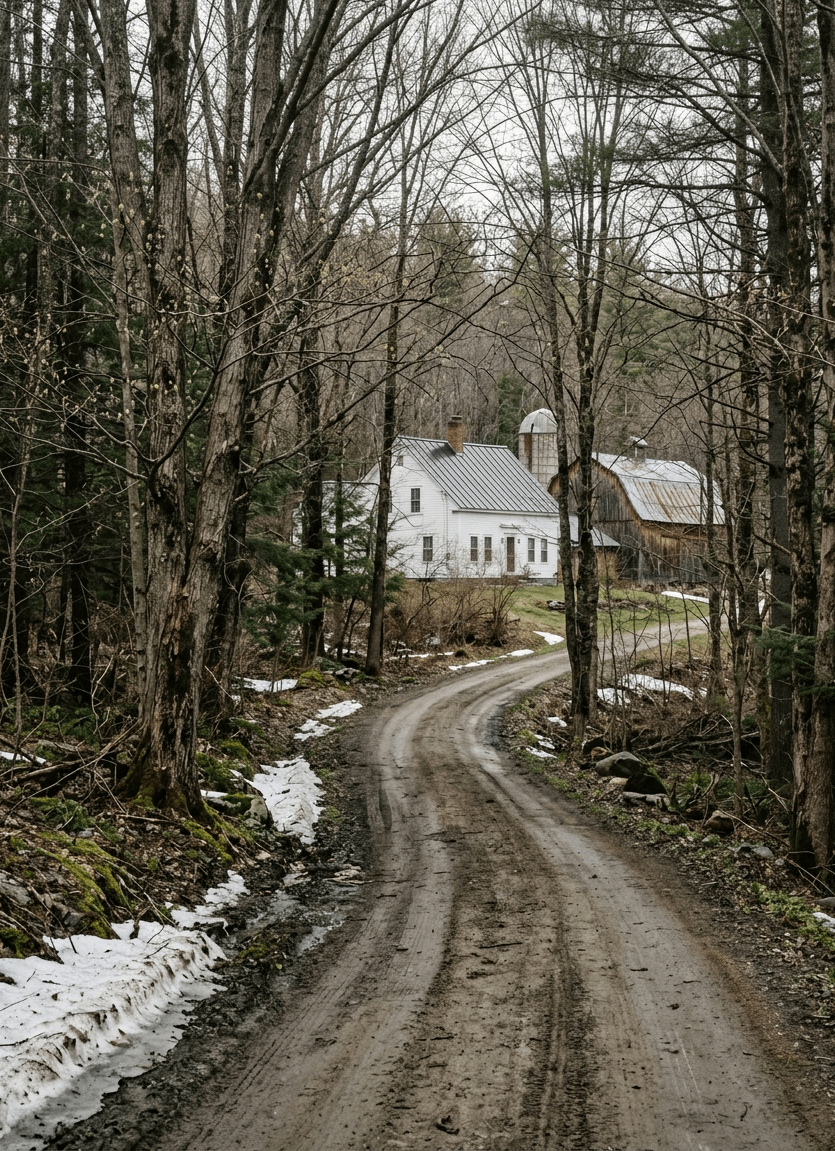
The Vermont people actually live in is quieter, more rural, and more demanding than the postcard version. Grocery stores close earlier than you’re used to. The nearest urgent care might be 40 minutes away. Cell service drops out between towns. Some roads turn to mud in April and become nearly impassable.
None of that is a criticism. It’s just the full picture. Vermont’s pace and its wildness are exactly why people love it here. But loving it from the outside and choosing it as your permanent address are two different decisions, and they deserve two different levels of honesty.
The Housing Market Moves Fast and Inventory Stays Low
If you’re planning to relocate to Vermont and buy a home, you need to understand one thing right away: the market does not wait for you. Good homes in desirable areas, especially in Lamoille County, Washington County, and communities along the I-89 corridor, often go under contract within days of listing. Sometimes within hours.
Vermont’s housing inventory has been tight for years. The pandemic-era surge of out-of-state buyers accelerated that trend significantly, and the market hasn’t fully exhaled since. Properties that would have sat for weeks in other states get multiple offers here, and buyers who aren’t prepared tend to lose out repeatedly before they adjust their strategy.
Getting pre-approved before you start touring is not optional. It’s the baseline. Sellers in Vermont, especially in rural areas with limited comparable sales, want to see that you’re serious and financially ready before they take their home off the market.
One more thing about listings: “as-is” in Vermont real estate often means exactly what it says. Many older homes carry decades of deferred maintenance, and sellers may not be in a position to negotiate repairs. Going in with clear eyes about what you can take on, and what you can’t, saves a lot of heartache.
What Vermont Buyers Need to Know About Septic and Well Systems
A large percentage of homes in Vermont, particularly outside of larger towns like Burlington, Montpelier, and Barre, are on private well and septic systems. This is not unusual for rural New England, but if you’re coming from a suburban background, it may be new territory.
A thorough inspection of both systems is non-negotiable. Well water should be tested for arsenic, bacteria, and other contaminants that can vary significantly by location. Septic systems have a lifespan, and replacing one can run anywhere from $15,000 to $40,000 or more depending on soil conditions and system type. Know what you’re buying before you close.
Vermont Winters Are a Lifestyle, Not a Season
People who grew up in cold climates sometimes underestimate Vermont winters. People who didn’t grow up in cold climates almost always underestimate them. Winter here isn’t just a few months of inconvenience. It’s a rhythm that shapes everything, including how you shop, how you drive, how you heat your home, and how you budget.
Mud season deserves its own paragraph. From roughly mid-March through early May, the ground thaws unevenly and unpredictably. Dirt roads can become soft enough that heavy vehicles get stuck. Some rural driveways become genuinely difficult to navigate. If you’re buying a home on a dirt road or at the end of a long private drive, visit during mud season before you commit.
Road maintenance matters more here than almost anywhere else. Find out who maintains the road your potential home sits on. Is it a town road, a private road, or a Class 4 highway? Class 4 roads in Vermont are legally maintained by the town only to the minimum standard, which in practice can mean they’re not plowed at all in winter. That’s a detail that can completely change a property’s livability.
Propane, Pellets, and Wood: Know Your Heat Source
Vermont homes run on a wider variety of heating systems than most buyers expect. Propane, fuel oil, wood pellets, cord wood, heat pumps, and radiant floor systems are all common. Some older homes have multiple systems running in combination.
Before you make an offer, find out what fuel the home runs on and get an honest estimate of annual heating costs. A house heated by propane can cost significantly more to heat in a Vermont winter than the same house on a different system. Weatherization matters too. Older homes with minimal insulation and single-pane windows can send your heating bill somewhere uncomfortable in a hurry.
Vermont has excellent weatherization programs through Efficiency Vermont. They’re worth exploring if you end up in an older home that needs some help.
The Cost of Living in Vermont Is More Nuanced Than the Headlines
Vermont regularly appears near the top of lists measuring state tax burden, and that reputation is not entirely wrong. Property taxes are high relative to the national average, and Vermont has a progressive income tax structure that affects higher earners meaningfully. These are real factors worth building into your financial planning.
But the full picture is more complicated. Vermont doesn’t have a sales tax on groceries or clothing, which matters for everyday expenses. Housing costs outside of Chittenden County are often much lower than comparable markets in the Northeast. And the cost of what you get, the quality of life, the outdoor access, the community scale, tends to feel reasonable to people who actually live here.
Remote workers should also understand how Vermont’s income tax applies to them specifically, particularly if they’re still employed by an out-of-state company. It’s worth a conversation with an accountant who knows Vermont tax law before you finalize a move.
Community Takes Time, But It’s Worth It
Vermont communities are some of the most genuine places you’ll find. They’re also some of the most initially opaque. If you move to a small Vermont town and expect to be welcomed with open arms the first week, you may find the experience a little quieter than you hoped.
That’s not unfriendliness. It’s caution. Vermont towns have a long history of watching people arrive with big ideas and leave before they put down roots. The community opens up when it trusts that you’re staying. And the best way to demonstrate that you’re staying is to show up, repeatedly, without an agenda.
Farmers markets, town meetings, local volunteer fire departments, community events at the library or the town hall, these are the places where people actually connect in rural Vermont. They’re not networking events. They’re just life. Show up for life and the rest follows.
Remote Work and Vermont: A Real Conversation
Vermont has actively recruited remote workers for several years now. The state’s Worker Relocation Incentive Program offers up to $7,500 to eligible remote workers who relocate to Vermont and work for an out-of-state employer. You can find current program details and eligibility requirements at ThinkVermont.com. It’s a real program and worth looking into if your work situation qualifies.
What the promotional materials don’t always lead with is the broadband situation. Internet access in Vermont is improving, but it is not uniform. Coverage varies enormously from one town to the next, sometimes from one road to the next. Before you fall in love with a particular property, check the actual available service at that address. Don’t assume. Ask. Test if you can.
Some of the most beautiful and affordable properties in Vermont are in areas where the internet infrastructure is still catching up. That tradeoff may be perfectly acceptable to you, or it may be a dealbreaker. Either way, you want to know before closing, not after.
What Vermonters Wish More Movers Understood
Vermont has a strong culture of conservation, land stewardship, and respect for the natural environment. That shows up in formal ways, Act 250 land use regulations, local conservation commissions, strict zoning in many towns, and in informal ones. People here take care of the land because they’ve watched what happens when it isn’t taken care of.
Supporting local businesses isn’t just a nice idea in Vermont. It’s part of how the economy actually functions. Many small Vermont towns exist because the people in them make a conscious choice to buy local, hire local, and keep money circulating in the community. That ethic is worth understanding and participating in, not because anyone is watching, but because it genuinely matters here.
The “flatlander” label isn’t always meant harshly, but it does carry meaning. It marks someone as an outsider, someone who hasn’t yet learned how Vermont works. The fastest way to shed that label isn’t to pretend you know things you don’t. It’s to ask honest questions, admit what you’re still learning, and stay.
So, Should You Move to Vermont?
Yes, if you’re someone who genuinely wants to slow down and means it. Yes, if you’re drawn to four real seasons and you understand what that phrase actually contains. Yes, if you’re willing to learn how a place works on its own terms rather than trying to replicate what you left behind.
Vermont rewards people who lean into its rhythms. The ones who figure out how to get their driveway plowed and their firewood stacked and their neighbors’ names learned tend to find exactly what they came looking for. The ones who fight the winters and mourn the lack of conveniences tend to leave within a few years.
If you’re seriously considering a move, try to visit in April. Not foliage season, not ski season. April. Mud season. If Vermont still looks right to you in April, with the gray skies and the soft roads and the sugar shacks wrapped in steam, then you’re probably ready for the real thing.
Vermont is not for everyone. It’s very much for some people. The good news is that it’s usually pretty clear which category you’re in, once you’ve seen it in all the seasons it actually has.
Shop Green Mountain Peaks on Etsy
Bring a little piece of Vermont into your home with our curated collection of gifts, apparel, and seasonal favorites. From cozy hoodies and crewnecks to Vermont-themed gift boxes and cookbooks, each item is designed to celebrate the Green Mountain spirit.
- Vermont-inspired designs and gift sets
- Printed and packaged with care
- Ships directly to your door
Discover gifts, apparel, and Vermont treasures made to share and enjoy year-round.


Leave a comment