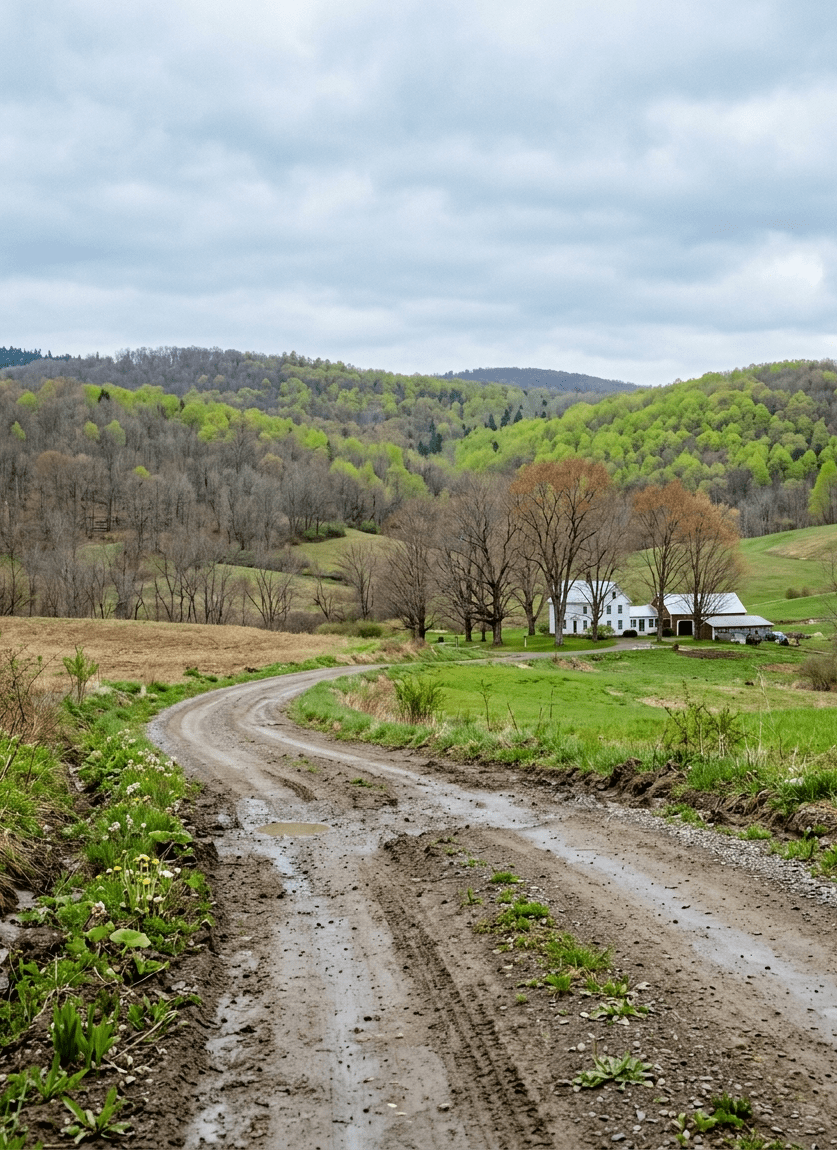
Spring in Vermont is not a gentle, predictable thing. It doesn’t arrive on cue, and it doesn’t ease you in. One week the hillsides are bare and gray, the kind of gray that makes you wonder if color even exists anymore. Then, sometime in late April or early May, something shifts. The hills go green, and when they do, it happens fast enough to feel like a surprise every single time.
If you’ve only ever seen Vermont in fall or summer, spring is worth planning a trip around. It’s quieter, stranger, and in some ways more beautiful than any other season. Here’s what you’ll actually find when you come.
Spring Comes Slowly Here (And That’s the Point)
Vermonters talk about mud season the way people talk about a difficult relative. There’s love there, but it’s complicated. Mud season is real. Unpaved roads turn soft, driveways become obstacles, and boots become essential in ways that feel extreme if you’re coming from somewhere warmer.
But mud season is also the honest face of spring in Vermont. The snow melts from the top down, the ground thaws unevenly, and everything smells like earth and cold water and something on the verge of waking up. If you lean into it instead of fighting it, mud season has its own charm. Locals tend to get philosophical about it right around the time the first crocuses push through.
April is the month most people skip on their Vermont travel calendar, and that’s understandable. But it’s also the month when the state feels most like itself: raw, honest, and completely uninterested in performing for anyone.
The Color Change Nobody Talks About
Everyone knows about Vermont foliage. The fall color gets talked about endlessly, photographed obsessively, and planned around months in advance. Spring green is less famous, but if you’ve stood on a hillside in early May and watched the color move up from the valley floors toward the ridgelines, you understand why it belongs in the same conversation.
The green that comes in spring is a specific shade. It’s not the deep, saturated green of July. It’s brighter, almost electric, and it shows up gradually against the gray and brown of bare trees. First the willows go, turning a yellow-green that’s almost luminous near water. Then the hillsides start to show color at lower elevations, and you can watch the treeline slowly change as weeks pass.
If you’re driving Route 2 through the Northeast Kingdom, or winding south on Route 12 through the hills above Northfield, or heading up Route 100 into the Mad River Valley, pay attention to the way different elevations hold different colors at the same time. You can be looking at green in the valley while the ridgeline above you is still bare. It’s a layered thing, and it only happens in spring.
What Week to Come If You Want Peak Green
The window for peak spring green in Vermont is roughly early to mid May, though it shifts depending on where you are in the state and how the winter played out. Southern Vermont and lower elevations tend to green up a week or two ahead of the Northeast Kingdom and higher terrain.
If you’re aiming for that moment when the hills are fully lit up and the air still has some cold edge to it, target the first two weeks of May. You’ll get the green, the wildflowers (more on those shortly), the waterfalls running high, and the quiet that comes before the summer crowd arrives. It’s a good window.
Waterfalls and Rivers Running Full
Vermont has waterfalls worth visiting in any season. But in spring, when snowmelt is coming off the mountains and the ground is still saturated, those waterfalls turn into something else entirely. The volume doubles and triples, the sound carries further than you’d expect, and standing near a Vermont waterfall in April feels genuinely powerful.
The rivers are worth watching too. The Lamoille, the Winooski, the Mad River, the Black River out of Springfield – they all run high and fast in spring, and the color of the water shifts with the melt. There’s a milky blue-gray tint to snowmelt water that’s different from summer flow, and it looks almost surreal against the bare-branched trees and muddy riverbanks.
If you’re walking near any high water, use common sense. Spring rivers are cold and faster than they look. Stay on established paths and respect the banks. But do go see them. It’s one of those Vermont experiences that doesn’t make it into the glossy brochures, and it should.
Wildflowers Before the Canopy Closes
Here’s something most visitors don’t know: Vermont’s forest floor is at its most beautiful before the leaves come in. For a few weeks in late April and early May, sunlight still reaches the ground, and what grows there is worth stopping for.
Trout lilies show up along stream banks and in damp, open forest, their mottled leaves followed by small yellow flowers that nod toward the ground. Trillium opens in patches under maples and beeches, white and precise against the leaf litter. Spring beauties carpet entire hillsides in some spots. If you know to look, the show is remarkable.
The window closes quickly. Once the trees leaf out, the light disappears and the forest floor shifts into a different kind of green. This particular moment, the brief overlap of wildflowers and bare canopy, is one of the things Vermont does that nobody adequately prepares you for.
Old carriage roads, rail trails, and any forest path that runs along a stream are good places to look. You don’t need to go deep into the backcountry. Some of the best wildflower walks are close to towns, on land that’s been quietly doing this every spring for centuries.
What’s Actually Open (And What Isn’t Yet)
Spring is shoulder season in Vermont, which means you get the landscape without the crowds, but you also need to plan around some closures and limited hours. Plenty of restaurants in smaller towns run winter schedules through April, which might mean closed Mondays and Tuesdays or shorter hours on weekdays. It’s worth a quick call before you drive somewhere specifically to eat.
The things that are open, though, are often better in spring. Farmers markets start coming back online in May. A few begin even earlier in the season, particularly in larger towns. The vendors are happy to see people, the atmosphere is unhurried, and the early-season offerings (maple products, greenhouse starts, storage vegetables, winter preserves) are genuinely interesting.
Local breweries and small food producers are often more accessible in spring than in July, when they’re slammed. If you’ve ever wanted to actually talk to the person making the thing you’re buying, spring is when that’s easiest.
The Sugar Season Overlap
If you come in late March or early April, you may catch the very tail end of maple season. Vermont’s sugaring season is driven by weather, not calendar, so it can run anywhere from February into April depending on the year. Some sugarhouses stay open for visitors through early spring, and if you can get inside one during or just after boiling season, do it.
The smell of a working sugarhouse is hard to describe. Hot sap, woodsmoke, steam, and sweetness all at once. It’s one of those specifically Vermont things that you don’t forget. Even if the boiling has finished by the time you arrive, many sugarhouses sell direct through spring and are worth visiting for the products alone.
Small Towns in Spring Feel Different
Vermont’s small towns are worth visiting any time of year, but spring has a particular energy to it. The tourists haven’t arrived yet in full force, locals are emerging from a long winter, and there’s something like collective exhale happening across every village green and general store parking lot.
Towns like Johnson, Hardwick, and Morrisville in Lamoille and Caledonia counties have that feeling in spring. The hardware stores get busy again. The diners fill up with contractors and farmers. The library posts a list of local events that actually sounds like things people want to do. It’s a community in the process of reopening, and if you pay attention, it’s one of the most human things Vermont shows you.
Summer Vermont is beautiful. But spring Vermont is specific and local in a way that feels more real to the people who actually live here.
A Few Things Worth Knowing Before You Go
Vermont roads take a beating over winter, and spring is when that shows up. Frost heaves (the bumps and buckles caused by freezing and thawing ground under the pavement) are marked with signs, but the signs don’t cover everything. Drive slower than you think you need to on back roads, especially in April.
The weather in spring is genuinely unpredictable. A warm, sunny morning can turn into a cold, rainy afternoon without much warning. Pack layers, bring a rain jacket, and don’t make plans that can’t tolerate a weather change. The people who have the best time in Vermont spring are the people who treat the weather as part of the adventure instead of an inconvenience.
One more thing worth knowing: black flies arrive in late May in Vermont, and they’re serious. If you’re hiking or spending time near water and trees after Memorial Day, bring insect repellent and consider a head net if you’re sensitive to bugs. Early May is usually before they arrive in full force, which is one more reason that early May window is particularly good.
Spring here is not polished. It’s wet and unpredictable and sometimes still cold enough to see your breath. But the hills go green in a way that genuinely stops you, and the quiet before summer arrives is its own kind of gift. Come with good boots and an open schedule, and Vermont in spring will give you something to come back for.
Shop Green Mountain Peaks on Etsy
Bring a little piece of Vermont into your home with our curated collection of gifts, apparel, and seasonal favorites. From cozy hoodies and crewnecks to Vermont-themed gift boxes and cookbooks, each item is designed to celebrate the Green Mountain spirit.
- Vermont-inspired designs and gift sets
- Printed and packaged with care
- Ships directly to your door
Discover gifts, apparel, and Vermont treasures made to share and enjoy year-round.

Leave a comment