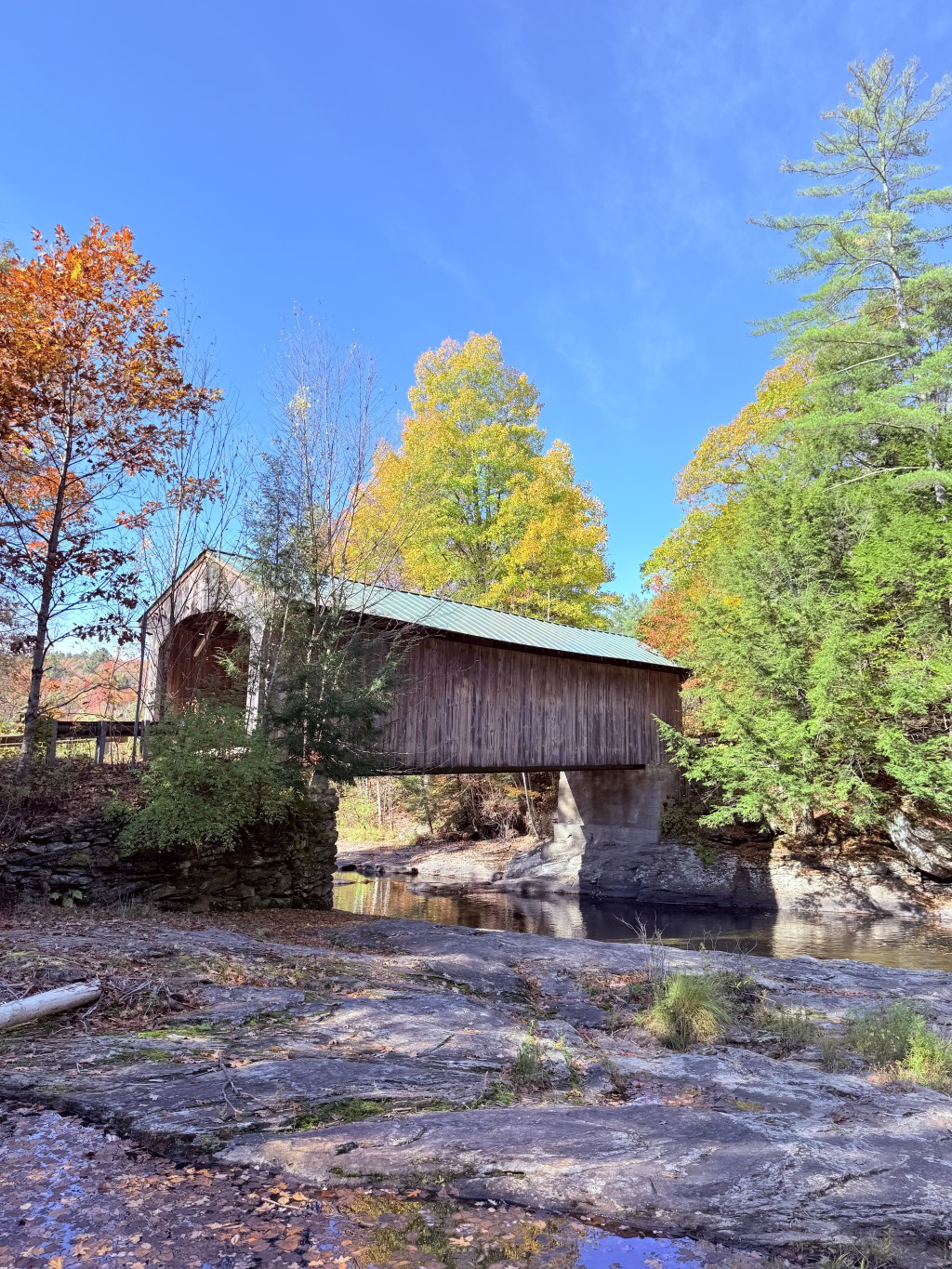
It was somewhere between the second and third bridge of the day when I stopped thinking about the route entirely. The map was still open on the passenger seat. I just was not looking at it anymore. The road had gone from pavement to packed dirt about a mile back, the tree canopy had closed in overhead, and somewhere ahead there was a covered bridge that had been standing in the same spot since before anyone currently alive was born. That has a way of resetting your priorities.
Covered bridge road trips have a reputation for being quaint, and sure, they are that. But they are also one of the most genuinely revealing ways to understand what Vermont is actually like as a place. Not the postcard version. The real version, with its dirt roads and working farms and small towns that have their own strong opinions about who they are and intend to stay that way. If you have ever been curious about living in Vermont, or even just curious about what Vermont life feels like underneath the foliage photos, a day on these backroads will tell you more than most guides ever do.
Why do people keep coming back to Vermont’s covered bridges?
There are over a hundred covered bridges still standing in Vermont, more per square mile than anywhere else in the country. That fact gets cited a lot, but the more interesting question is why so many survived when bridges elsewhere were replaced and forgotten.
The answer is essentially that Vermont communities decided they were worth keeping. Towns organized, raised money, pushed back against demolition proposals, and maintained structures that would have been easier to tear down. That is not a small thing. It says something about how people here relate to the places they live, and that relationship shows up everywhere once you start noticing it.
The bridges did not survive because they are pretty. They survived because people cared. And that particular quality, caring about place in a stubborn and practical way, is one of the most consistent things about Vermont culture across the whole state.
What Vermont towns are worth stopping in on a covered bridge road trip?
The bridges are the excuse to pull over. The towns are the actual experience. These are a few worth building your route around.
Montgomery: Six bridges and a town that means it
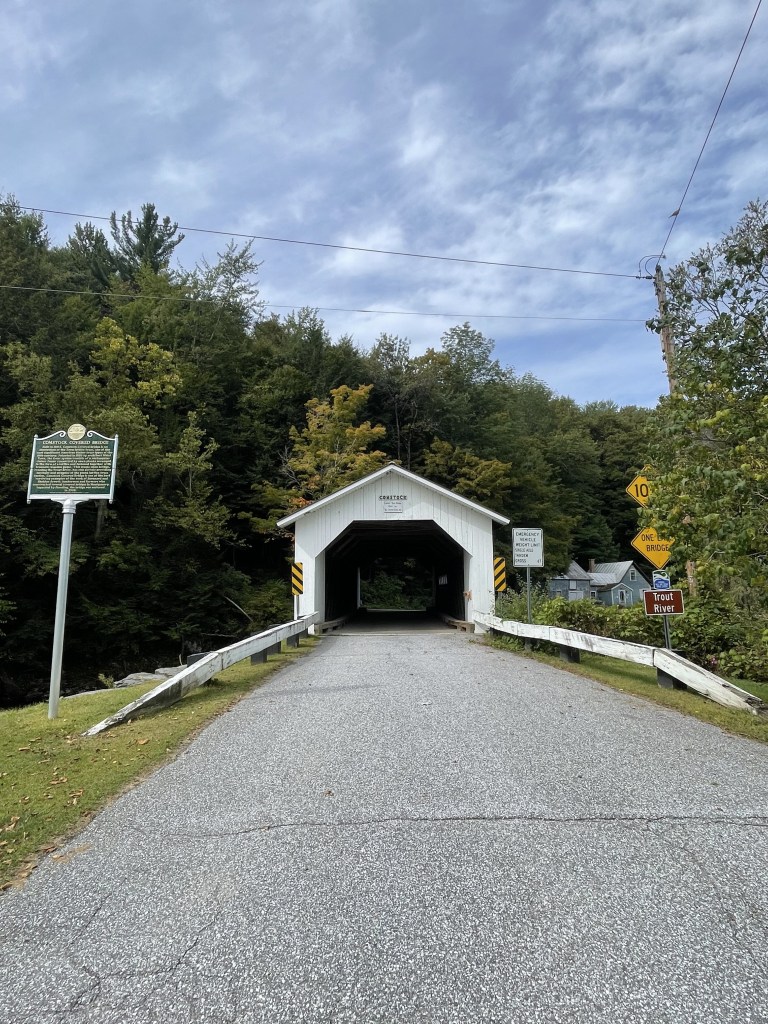
Franklin County’s Montgomery has six historic covered bridges within a short drive of each other, which makes it an obvious anchor for any northern Vermont road trip. But the bridges are almost secondary to what the town itself feels like. Montgomery is genuinely small, genuinely rural, and not performing anything for visitors. It is just itself, which happens to include a handful of remarkable wooden structures and some beautiful hill country surrounding them.
The drive between bridges here takes you along back roads where the fields open up and the Green Mountains sit in the distance in a way that feels almost improbably scenic for a regular Tuesday afternoon. Pack something to eat because you will want to stop more than once.
Northfield: History that shows up in the details
Northfield in Washington County has a different feel from the Franklin County towns. It is a little more connected, a little more layered historically, and home to Norwich University, the oldest private military college in the country. The covered bridges near the village center, including the Cox Brook Covered Bridge, sit close enough to town that you can walk from the bridge to a coffee shop or the green without any effort.
What Northfield does well is that combination of deep local history and active everyday community life. The bridges here are not isolated landmarks. They are just part of how the town is stitched together, which is exactly what makes them worth visiting.
Warren and the Mad River Valley: Small scale, big personality
The Warren Covered Bridge sits right at the edge of Warren Village, spanning the Mad River where the water runs loud and fast over rocks. Downstream there is a waterfall. The village itself is tiny but genuinely alive, with a well-loved general store that has been a community anchor for decades and enough local character packed into a few hundred square feet that you will want to stay longer than you planned.
The Mad River Valley as a whole is one of those areas that people discover on a road trip and then cannot stop thinking about. The outdoor access is serious, the community feel is real, and the landscape on a clear morning when the mist is still sitting in the valley is the kind of thing that is hard to describe without sounding like you are exaggerating.
Stowe area: Beautiful and worth understanding clearly
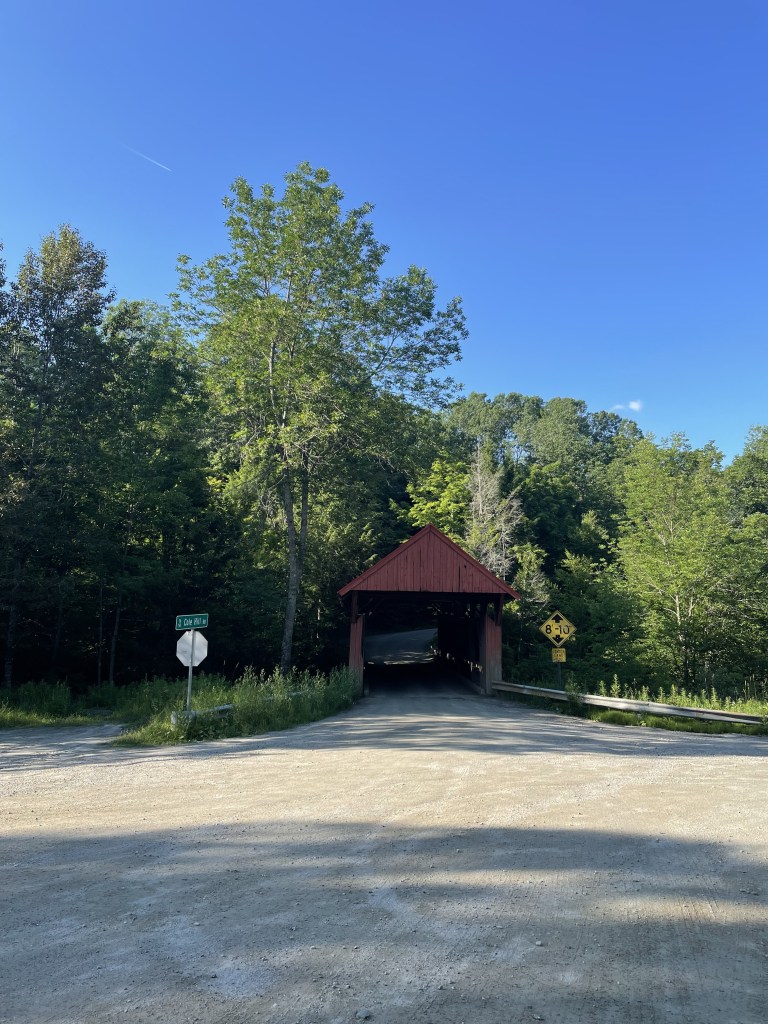
Stowe comes up in almost every Vermont conversation, which means it is worth including here and also worth being honest about. Emily’s Bridge on Gold Brook Road (well covered in our Vermont covered bridges location guide) gives you a quieter moment outside the main village, and the landscape looking out toward Mount Mansfield from the surrounding roads is genuinely extraordinary.
Stowe is a real place with real community underneath its well-known surface. But it is also one end of a wide Vermont spectrum. A good road trip gives you a chance to feel the difference between Stowe and Montgomery, between Warren and Northfield, and to start understanding how much variety exists within a state that is easy to flatten into a single image from the outside.
What does a covered bridge road trip actually feel like day to day in Vermont?
This is the part that is hard to explain to someone who has not spent time here yet. Vermont does not reveal itself through highlights. It reveals itself through accumulation. A hand-painted sign on a farm stand. A general store where someone behind the counter knows everyone who walks in. A church on a town green that has been the same church since 1812. A river sound you can hear from the road.
The covered bridge road trip works as a format because it gives you a reason to drive slowly through places that reward slow driving. You are not on an interstate. You are on a road that was designed for a horse, widened for a Model T, and has not changed much since. The pace that requires is exactly the pace Vermont makes sense at.
Vermont lifestyle gets talked about in broad terms a lot: outdoor recreation, farm-to-table food, four seasons, strong community. All of that is true. But the texture of it, the specific feeling of living inside this landscape, is harder to put into words and easier to just feel on a Tuesday afternoon with the windows down and nowhere particular to be by any particular time.
What should you know before planning a covered bridge road trip in Vermont?
A few things that are useful to know before you go, especially if you are coming from somewhere more urban or more planned.
- Dirt roads are real roads here. A lot of the best bridges are accessed by unpaved roads that can get rough after rain. A regular car handles them fine in dry conditions. Just know they exist and do not treat them as a warning to turn around.
- Cell service is inconsistent in the hill towns. Download your route before you leave rather than counting on navigation working reliably the whole time.
- Plan more time than you think you need. Not because the drives are long, but because you will keep stopping for things you did not plan to stop for.
- Weekdays are significantly quieter than weekends, especially in fall. If you can go on a Tuesday or Wednesday, the experience is genuinely different from a Saturday in October.
- The best stops are often the ones between bridges. A general store in a town you have never heard of can be the most memorable part of the day.
There is no wrong way to do this. The state is small enough that most of the bridges are within a few hours of each other, and Vermont rewards the kind of loose itinerary that leaves room for detours.
How does a road trip like this connect to what Vermont is really like year-round?
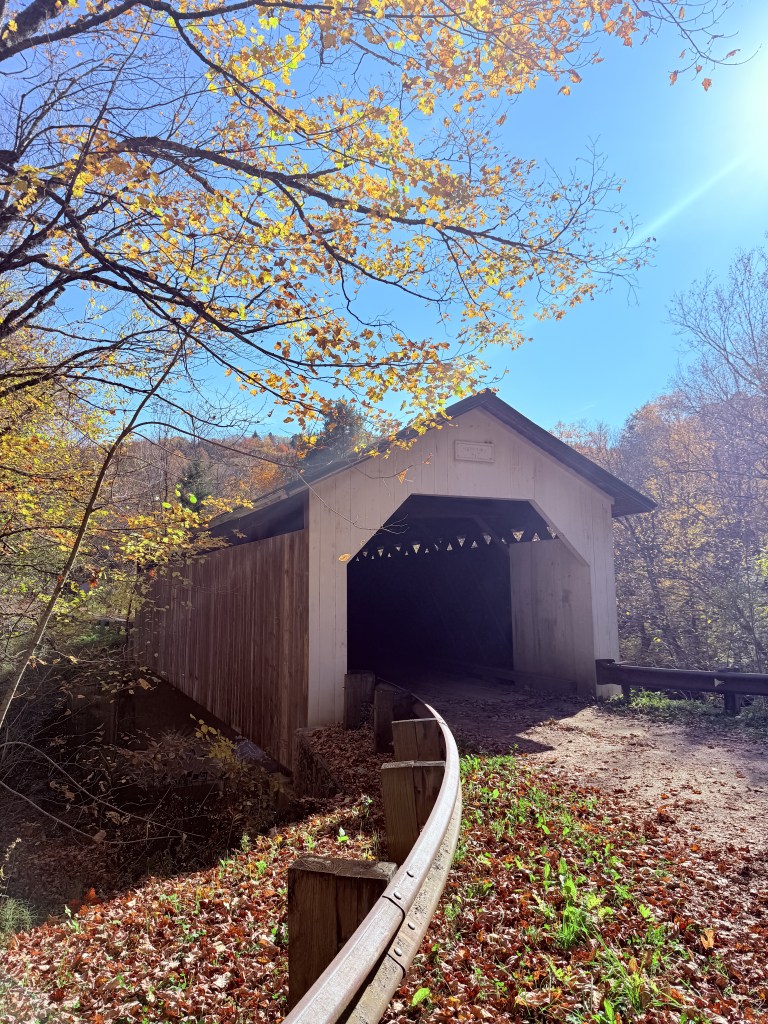
One thing a covered bridge road trip does that a typical vacation does not is put you in contact with Vermont that is not trying to entertain you. The farms are working farms. The towns are towns where people live full-time, year-round, through mud season and February and all of it. The bridges are maintained because the communities around them decided to maintain them, not because the tourism board requested it.
That quality of genuine-ness is one of the things people mean when they talk about why they love living in Vermont or why they were drawn to moving here from somewhere else. It is not a performance. It is a place that has a strong point of view about what it is and has been pretty consistent about that for a long time.
You can read about Vermont lifestyle in a lot of places. But there is a specific kind of understanding that only comes from a day on the backroads, the kind where you end up at a covered bridge you did not know existed, in a town you had never heard of, watching a river move under old wood, and realizing you have not thought about anything else for the last two hours.
That is a Vermont thing. And it does not get old.
Shop Green Mountain Peaks on Etsy
Bring a little piece of Vermont into your home with our curated collection of gifts, apparel, and seasonal favorites. From cozy hoodies and crewnecks to Vermont-themed gift boxes and cookbooks, each item is designed to celebrate the Green Mountain spirit.
- Vermont-inspired designs and gift sets
- Printed and packaged with care
- Ships directly to your door
Discover gifts, apparel, and Vermont treasures made to share and enjoy year-round.

Leave a comment