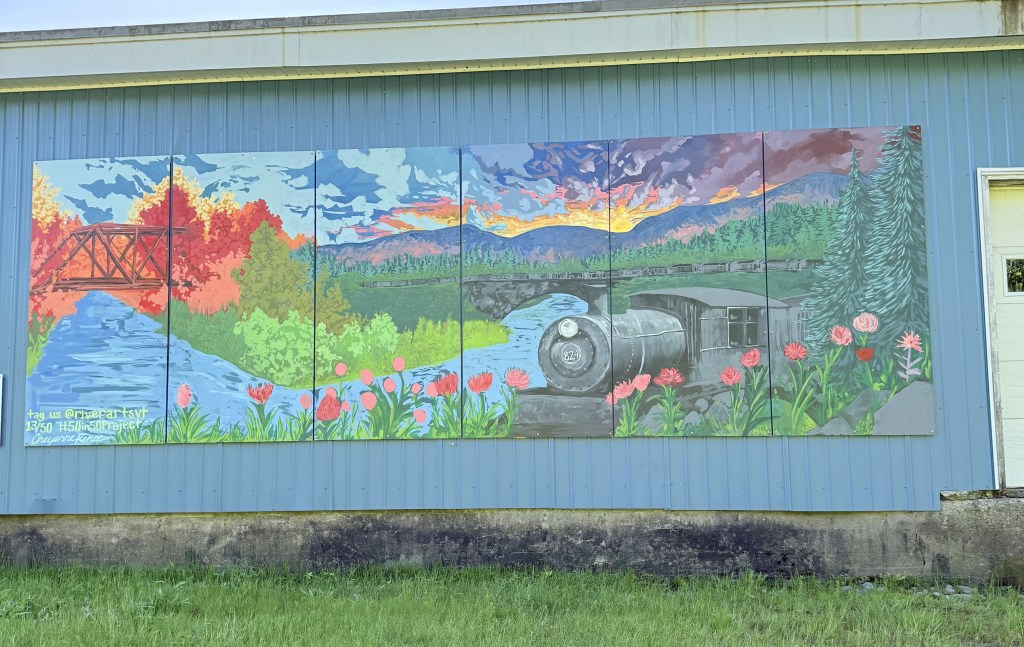
There’s a stretch of crushed stone just past the old depot in Morrisville where the trail dips through a stand of birches and the Lamoille River runs close enough on your right that you can hear it over your own tires. Nobody’s honking. Nobody’s passing you on a blind curve. That’s the thing about a rail trail. Trains never needed steep grades or tight turns, so the paths they left behind are gentle, wide, and made for exactly the kind of afternoon where you don’t want to think too hard about where your feet are landing.
Vermont has quietly become one of the best places in the country to ride a bike path built on an old rail bed, and if you’re looking for vermont bike paths that fit a lazy Saturday better than a technical singletrack ever could, this is where to start.
What Exactly Is a Rail Trail?
When a railroad stops running, the corridor it built doesn’t have to disappear. Vermont has converted dozens of these old lines into multi-use paths, graded flat, usually ten feet wide, and surfaced in packed crushed stone rather than pavement. The result is a trail with almost no elevation surprises, wide enough for a family to ride four across if they wanted to, and shaded by whatever grew up along the tracks over the last hundred years.
That gentle grade is the whole appeal. You can put a six year old on a bike, or a grandparent who hasn’t ridden in a decade, and everyone ends up at the same ice cream stand at the same time, tired in the good way instead of the defeated way.
Where Is the Longest Rail Trail in Vermont?
The Lamoille Valley Rail Trail is the one locals brag about, and fairly so. It runs 95 miles from St. Johnsbury to Swanton, threading through eighteen towns and five counties, which makes it the longest rail trail in New England. You don’t need to ride the whole thing in one day, and almost nobody does.
A good introduction is the section through Hardwick and Wolcott, where the trail hugs the river and passes old creamery buildings that have been repurposed into studios and small shops. Further west, the Morristown to Cambridge stretch rolls past dairy farms that still put cows out in the same fields the trains used to rattle by.
A Trail That Rewards Patience
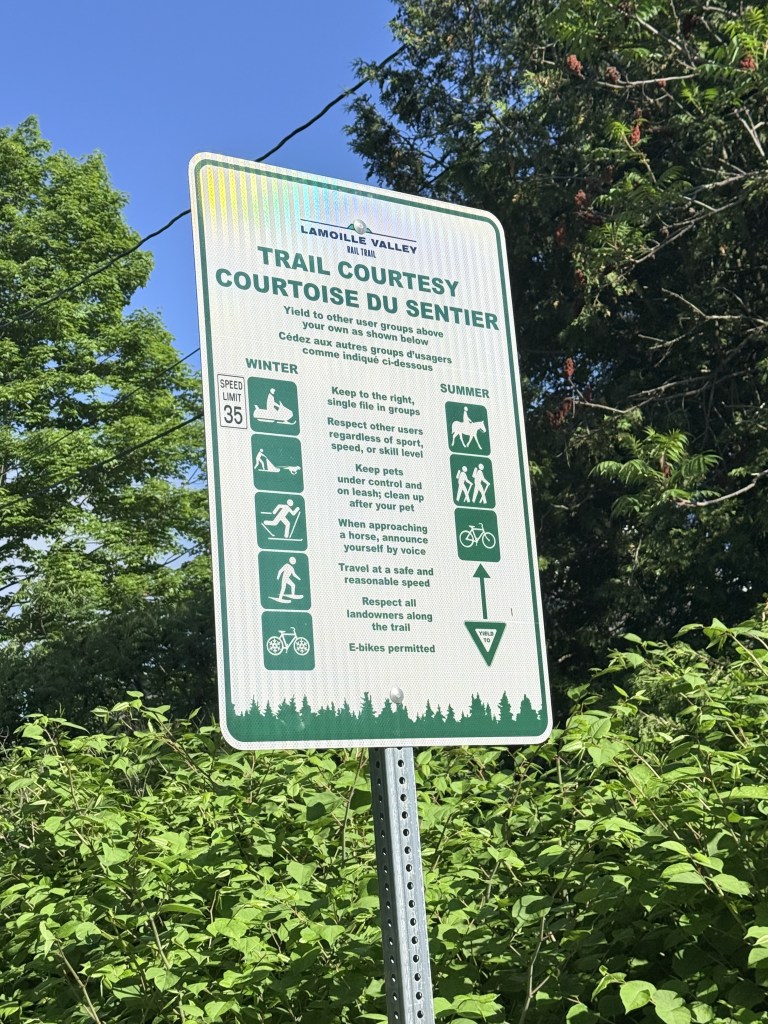
Because the LVRT is a four season corridor, it’s not just a summer bike path. Snowmobilers use sections of it in winter, and in shoulder season you’ll find it dotted with people walking dogs or pushing strollers at a pace that would be impossible on a road shoulder. There’s no rush built into the design of the thing, and that seems to rub off on the people using it.
Can You Bike Across Lake Champlain in Vermont?
You actually can, sort of. The Island Line Trail runs 14.4 miles from Oakledge Park in Burlington north through Colchester, and the last three miles ride out onto a causeway built from railbed stone straight into Lake Champlain, with the Adirondacks off to your left and the Green Mountains behind you.
At the end of the causeway there’s a 200 foot gap where the old rail bridge used to cross, and instead of rebuilding it, Local Motion runs a small bike ferry across the gap in season. It’s an odd little pause in the middle of a ride, boarding a pontoon boat with your bike still strapped to your side, but it’s become one of those Vermont experiences people plan whole weekends around. The ferry runs weekends in spring and fall and daily through summer, and landing on the far side in South Hero feels like arriving somewhere genuinely separate from the mainland, even though you only just crossed a few hundred feet of water.
What Rail Trails Are Good for a Quiet Afternoon in Southern Vermont?
The Delaware and Hudson Rail Trail doesn’t get the same attention as the LVRT, and that’s part of its charm. It runs about 20 miles through Rutland and Bennington counties, split into two sections, one between Castleton and Poultney, another further south near West Pawlet and Rupert, with a bit of on road connecting through New York in between.
Locals used to call the trains that ran this line the Slate Picker, a name that still shows up on old signage and in conversation at the general store in Poultney. Riding it now, you pass the same farms, the same slate outcroppings, and the same quiet villages the trains once served, minus the noise and the schedule. It’s a good pick when you want a shorter ride, an hour or two, without driving all the way up to the Kingdom.
The trail’s two Vermont sections aren’t connected directly, there’s a stretch of on and off road riding through New York in between, so most people treat the Castleton to Poultney piece and the West Pawlet to Rupert piece as two separate rides rather than one continuous trip. Both hold onto that slate country landscape that makes this corner of the state feel distinct from the dairy valleys further north, low stone walls, quarry ponds, and the occasional pile of discarded slate shingles rusted the color of the hills around them.
If you’re staying in the area, pairing a morning on the D&H with an afternoon poking around Poultney’s village green makes for an easy, unhurried day that doesn’t require much planning beyond checking that your tires are aired up.
Missisquoi Valley Rail Trail up near the Canadian border deserves a mention too, even though it’s smaller. It runs along the Missisquoi River through Sheldon, Enosburg Falls, and Richford, past covered bridges and old creamery sites, and it connects into the LVRT network near Sheldon Junction. It’s the kind of trail you find almost by accident, driving through on Route 105, and then can’t stop thinking about.
Each of these corridors gets maintained a little differently, some by state agencies, some by regional trail alliances and volunteer groups, which means surface quality and signage can vary from one section to the next. It rarely matters much once you’re riding, but it’s worth knowing if you’re the type who likes a trail map printed out before you leave the house.
What Should You Bring on a Vermont Rail Trail Ride?
Crushed stone surfaces are forgiving but they’re not pavement, so a hybrid or gravel bike handles better than a road bike with skinny tires. Beyond that, the list is short and mostly about not overthinking it:
- A tire pump or patch kit, since crushed stone occasionally hides a sharp piece of old ballast
- Water and snacks, especially on the longer LVRT sections where towns can be miles apart
- Cash for the bike ferry if you’re riding the Island Line Trail
- Layers, since river valleys and lakeside causeways run cooler than the trailhead parking lot suggests
Most of these trails also welcome walkers, runners, and in winter, snowshoers and skiers, so don’t feel locked into two wheels if that’s not your thing.
When Is the Best Time of Year to Ride a Vermont Rail Trail?
Late spring through early fall covers most of it, but the character of these trails changes a lot depending on the month. May and June bring high water in the rivers running alongside the LVRT, and the birdsong along the Hardwick to Wolcott stretch is at its loudest right after the leaves fill in.
Summer is the easiest window logistically, with the bike ferry running daily on the Island Line Trail and every general store along the way open for business. It’s also the busiest, so if you’re after solitude, weekday mornings are the move.
Fall is when these trails earn their reputation. Because rail corridors were graded to avoid steep climbs, they tend to run through low valleys and along waterways, which happens to be exactly where Vermont’s foliage color shows up first and lingers longest. Riding the LVRT through Cabot or Walden in early October, with the corn cut and the hills turning behind the barns, is a different experience than the same stretch in July. Northern sections at higher elevation change color first, sometimes by mid to late September, while the trail through the Champlain Valley holds its color into the second or third week of October most years.
Winter doesn’t shut these corridors down, it just changes who’s using them. Snowmobile clubs groom sections of the LVRT, and you’ll see cross country skiers and snowshoers on the flatter stretches near town. It’s a quieter kind of use, but the trails were built for four seasons and Vermonters tend to take that literally.
Why These Trails Feel Different From a Regular Bike Path
There’s something about riding a corridor that used to carry freight and passengers that makes the landscape read differently. You notice the old depot buildings, now sometimes a library or a café. You notice why a town grew up exactly where it did, because the tracks needed a flat spot and the town followed. The history isn’t explained on a plaque every mile, it’s just present in the grade of the trail and the shape of the buildings you pass.
That’s really the draw. A vermont bike path built on an old rail bed isn’t trying to be a workout or a destination in itself. It’s just a good, flat, quiet way to spend a few hours seeing a part of the state most people only drive past at fifty miles an hour.
Somewhere around mile twelve on any of these trails, the sound of your own tires on crushed stone becomes the only sound there is, and that’s usually when you stop checking the time.
Shop Green Mountain Peaks on Etsy
Bring a little piece of Vermont into your home with our curated collection of gifts, apparel, and seasonal favorites. From cozy hoodies and crewnecks to Vermont-themed gift boxes and cookbooks, each item is designed to celebrate the Green Mountain spirit.
- Vermont-inspired designs and gift sets
- Printed and packaged with care
- Ships directly to your door
Discover gifts, apparel, and Vermont treasures made to share and enjoy year-round.

Leave a comment