Green Mountain Peaks

Discover Vermont, One Story at a Time 🏔️

Welcome to Green Mountain Peaks, your local guide to all things Vermont. From hidden history and travel ideas to small-town life and seasonal adventures, there’s always something worth discovering. Subscribe for new posts, insider tips, and a little taste of Vermont straight to your inbox.


Posts

  • Mud Season in Vermont: What It Is & Why It Matters

    Mud Season in Vermont is more than just muddy roads. It is a quirky and essential part of Vermont life. Learn what it is, why it matters, and how to embrace it.

    When most people think of Vermont, they picture fiery fall foliage, powdery ski slopes, or lush green summer hikes. But there is a secret fifth season here that only true Vermonters know well. Mud Season sits between the melting snows of winter and the blossoms of spring. It is a defining and often messy part of life in the Green Mountain State.

    What is Mud Season?

    Mud Season usually runs from late March through early May, although the timing can shift depending on how snowy the winter was and how quickly things warm up in spring. As the ground thaws and rain begins to fall, Vermont’s dirt roads, which make up nearly half of the state’s roads, turn into rivers of thick, sticky, slippery mud.

    In rural areas, you’ll often find signs reading “Road Closed to Through Traffic” or warnings about “Impassable Conditions.” Cars can get stuck, boots can disappear into puddles, and walking to your mailbox might feel more like navigating an obstacle course.

    Why Does Mud Season Matter?

    Mud Season is not just a minor inconvenience. It is a major cultural and environmental event in Vermont. Here is why it matters.

    1. It’s Part of Vermont’s Identity

    Mud Season is one of those unique quirks that make Vermont, well, Vermont. It’s a symbol of resilience, patience, and respect for nature. Vermonters plan their travel routes carefully, choose their footwear wisely, and lean into the chaos with a good sense of humor.

    2. It Impacts Daily Life

    From farmers to mail carriers, everyone feels the effects of Mud Season. Delivery routes shift, school buses get rerouted, and rural homes sometimes become temporarily inaccessible. It’s a season of adapting and slowing down, whether you want to or not.

    3. It Highlights the Importance of Dirt Roads

    Vermont’s dirt roads are a cherished part of its landscape and history. According to the Vermont Agency of Transportation, about 55% of the state’s roads are unpaved. Mud Season reminds us of the ongoing effort required to maintain them and why preserving rural infrastructure is essential.

    4. It Signals New Beginnings

    As muddy as it gets, Mud Season is also the bridge to new life. It’s a sign that warmer days are coming, maple trees are waking up, and the first bursts of green are just around the corner. It’s messy, but it’s hopeful.

    How to Make the Most of Mud Season

    • Embrace the slow pace: Take scenic drives where paved roads allow and enjoy the quieter, less crowded side of Vermont.
    • Support local businesses: Some areas see fewer tourists during Mud Season, so it’s a great time to shop locally and help communities thrive.
    • Get outside (with caution): Stick to paved trails or gravel paths for hiking. Many parks and preserves ask hikers to avoid muddy trails to prevent erosion.

    Mud Season might not be glamorous, but it is an essential chapter in Vermont’s year. It is a reminder that beauty often grows out of a little bit of mess.

  • Why Vermont Banned Billboards: Preserving the Beauty of the Green Mountain State

    Why Vermont Banned Billboards: Preserving the Beauty of the Green Mountain State

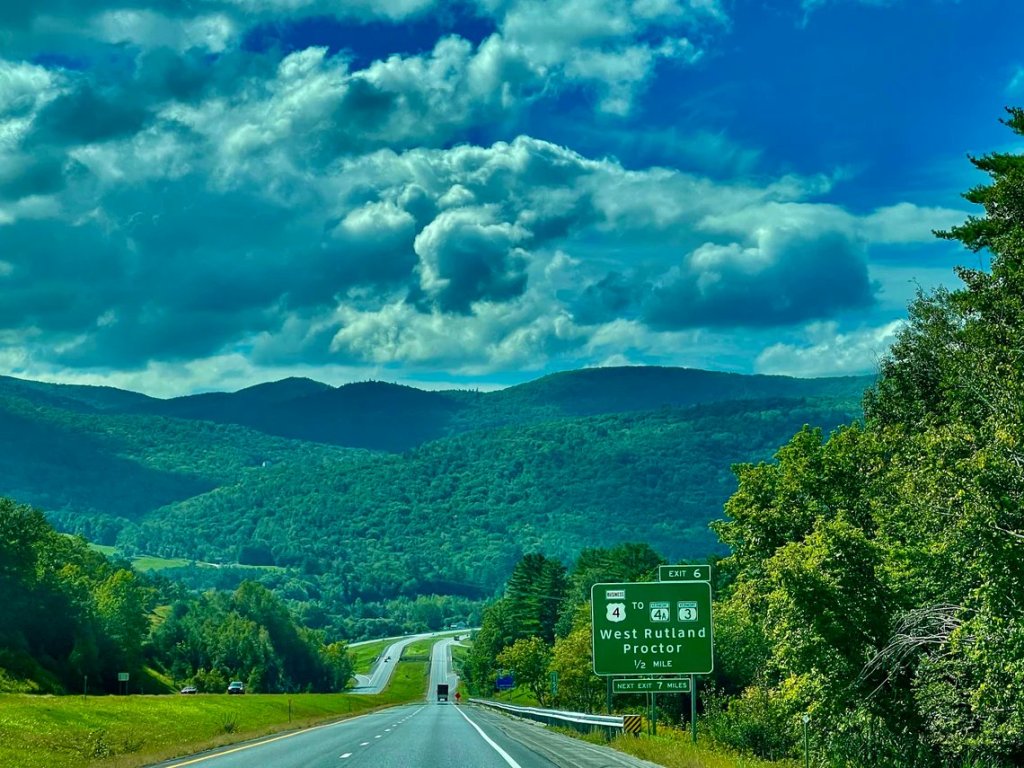
    When you drive through Vermont, something immediately feels different. The views are wide open, the forests are dense, and the mountains stretch into the horizon without a single advertisement blocking the scenery. Vermont is one of the only states in the country where billboards are completely banned, and it has been that way for more than fifty years.

    The decision to remove billboards was not just about aesthetics. It was about protecting Vermont’s identity, preserving its small-town charm, and putting community values above commercial interests. Here is the story of why Vermont banned billboards, and why the choice still matters today.

    The Rise of Billboards Across America

    In the early to mid-20th century, billboards exploded in popularity across the United States. As highways expanded and car ownership soared, businesses realized that road signs were a powerful way to grab the attention of drivers. Bright, flashy, and often larger than life, billboards popped up along major highways and rural backroads alike.

    By the 1960s, many parts of the country were overwhelmed by a clutter of signs advertising gas stations, motels, cigarettes, and soft drinks. Roads that once offered peaceful views of farmland or mountains became crowded with commercial messaging.

    While some states began to regulate billboard size and placement, very few considered removing them altogether. Vermont was about to change that.

    Why Vermont Took a Stand

    In the 1960s, Vermont was at a crossroads. Tourism had become a growing part of the state’s economy, but many Vermonters worried that the spread of billboards would ruin the very landscapes that drew visitors in the first place.

    At the same time, there was a deeper cultural concern. Vermont had always prized its independent spirit, its connection to the land, and its small-town way of life. The idea of letting national corporations plaster their advertisements across the state felt, to many, like a betrayal of those values.

    In 1968, Vermont’s legislature passed a law banning billboards completely. The law made Vermont the second state to ban billboards, following Hawaii’s lead just a few years earlier. However, Vermont’s ban was particularly strict. Not only were new billboards prohibited, but existing ones were systematically removed over time.

    Governor Deane Davis, who signed the law, put it simply. He believed that the natural beauty of Vermont was more valuable than any potential advertising revenue. In his words, “The scenery is too precious to be marred by advertising signs.”

    How the Ban Works

    Vermont’s billboard law is straightforward. No new off-premise advertising signs are allowed. An off-premise sign means any sign that advertises a business, service, or product not sold on the property where the sign is located.

    On-premise signs are still allowed, but they must meet strict guidelines about size, placement, and lighting. This allows businesses, especially small local ones, to advertise on their own property without creating visual clutter along the roads.

    The state also tightly regulates temporary signs, political signs, and directional signs. Everything is designed to keep the focus on the landscape, not on advertisements.

    The Impact on Vermont’s Landscape

    The result of the billboard ban is visible everywhere you go in Vermont. When you drive along Route 100, often called one of the most scenic highways in America, your eyes are filled with endless views of rolling fields, sparkling rivers, and dense forests. In autumn, the hillsides blaze with the colors of changing leaves. In winter, snow-blanketed farms and mountains create a postcard-perfect scene.

    Without billboards, Vermont’s towns and villages have also kept their historic character. Downtowns feel more personal and authentic. Visitors often comment that Vermont looks and feels like stepping back in time, in the best possible way.

    The ban has also helped Vermont tourism. Travelers seeking natural beauty, peace, and a break from commercialism find exactly what they are looking for in Vermont. For many, the absence of billboards is not just refreshing. It is part of what makes Vermont unforgettable.

    Criticisms and Challenges

    Of course, not everyone has agreed with the billboard ban. Some business owners have argued that without billboards, it is harder to attract customers, especially in rural areas where businesses can be spread far apart. Others have pointed out that digital advertising, internet searches, and GPS have replaced much of the need for roadside signs anyway.

    Over the years, there have been occasional pushes to loosen the regulations. So far, Vermont has held firm. Most Vermonters continue to support the ban, viewing it as a critical part of the state’s identity and a proud example of putting quality of life ahead of commercial convenience.

    A Legacy of Preservation

    Today, Vermont’s billboard ban is not just a quirky law. It is a symbol of the state’s values. It represents a commitment to protecting natural beauty, prioritizing community over commerce, and valuing long-term quality over short-term profits.

    In a world that often feels increasingly busy, cluttered, and loud, Vermont offers something rare. The freedom to drive, hike, and explore without being constantly sold something. A chance to experience nature without distractions. A reminder that sometimes, the best advertisement for a place is no advertisement at all.

    When you cross into Vermont and see the forests stretch uninterrupted to the horizon, you are seeing the result of a bold choice made more than fifty years ago. And for many, it is one of the best reasons to fall in love with the Green Mountain State.

  • The Green Mountain Boys: Vermont’s Legendary Founders

    The Green Mountain Boys: Vermont’s Legendary Founders

    When most people think about the founding of America, they picture Boston, Philadelphia, or maybe the battlefields of Virginia.
    But hidden in the rugged hills of the Northeast, another group of patriots fought for their land, their freedom, and their future: the Green Mountain Boys.

    Their story is one of rebellion, resilience, and a fierce pride that still defines Vermont today.


    🌲 Who Were the Green Mountain Boys?

    The Green Mountain Boys were a militia formed in the 1760s, made up of settlers living in the area known then as the New Hampshire Grants – what would eventually become the state of Vermont.

    At the time, these settlers found themselves trapped in a brutal land dispute:

    • New York claimed authority over the region.
    • New Hampshire had already issued land grants to the settlers.
    • The people living there? They had no intention of surrendering their homes to distant bureaucrats.

    Led by the fiery and charismatic Ethan Allen, the Green Mountain Boys fought to defend their land from New York authorities.
    They weren’t official soldiers – they were farmers, blacksmiths, and tradesmen willing to pick up arms to protect what was theirs.


    ⚔️ A Band of Rebels

    The Green Mountain Boys became notorious for their guerrilla tactics.
    They physically ejected New York officials, tore down fences, and sometimes used outright force to protect local settlers.

    To New York’s leadership, they were lawless criminals.
    To their neighbors, they were heroes.

    Their unofficial slogan could have easily been:

    “Live free or fight trying.”

    This independent spirit would become a defining feature of Vermont’s identity for centuries to come.


    🇺🇸 Their Role in the American Revolution

    When the American Revolution erupted in 1775, the Green Mountain Boys didn’t hesitate to join the fight – but on their own terms.

    Their most famous achievement:

    • In May 1775, Ethan Allen and a small band of Green Mountain Boys captured Fort Ticonderoga from the British.
    • The attack was swift, early in the morning, and almost bloodless.
    • Crucially, the victory gave the Continental Army much-needed cannons and artillery, which later helped drive the British out of Boston.

    Without the Green Mountain Boys, America’s early military campaigns might have looked very different.


    🛡️ Vermont’s Birth and Legacy

    During the Revolution, the settlers declared their independence – not just from Britain, but from New York too.
    In 1777, they formed the Republic of Vermont – a sovereign nation that existed for 14 years before Vermont officially joined the United States in 1791.

    Vermont’s fiercely independent spirit, born with the Green Mountain Boys, remains alive today.
    You can feel it in Vermont’s deep-rooted commitment to local governance, environmental stewardship, and a culture that proudly does things a little differently.

    The Green Mountain Boys may have started as a ragtag group of land defenders, but they ended up founding a state – and influencing a nation.


    ✍️ Final Thoughts

    The story of the Green Mountain Boys is not just a chapter in Vermont’s history; it’s a story about the enduring power of local communities, ordinary people willing to stand up for their rights, and the rugged spirit that continues to define the Green Mountain State.

    Next time you walk Vermont’s hills or drive its back roads, remember:
    You’re traveling the same paths once guarded by some of America’s earliest – and fiercest – freedom fighters.

  • Embrace Vermont’s Mud Season: A Unique Spring Adventure

    Embrace Vermont’s Mud Season: A Unique Spring Adventure

    Mud season in Vermont, typically spanning from late March through May, marks the transition from winter’s snow to spring’s bloom. While the thawing ground can make some trails and roads challenging, it also unveils a plethora of activities that showcase the state’s charm. Here’s how to make the most of this distinctive season


    🍁 1. Experience Maple Open House Weekend

    Celebrate Vermont’s rich maple syrup heritage during the Maple Open House Weekend. Sugarhouses across the state open their doors, offering tours, tastings, and demonstrations of the syrup-making process. It’s a sweet way to learn about this iconic Vermont tradition.


    🎿 2. Enjoy Spring Skiing

    As temperatures rise, ski resorts like Killington, Sugarbush, and Jay Peak offer spring skiing opportunities. Enjoy softer snow, fewer crowds, and festive events like pond skimming competitions. It’s a perfect blend of winter sports and springtime fun.


    🚶‍♀️ 3. Explore Mud Season-Friendly Trails

    While high-elevation trails may be off-limits, several lower-elevation paths remain accessible

    • Missisquoi Valley Rail Trail: A 26-mile trail stretching from St. Albans to Richford, ideal for walking and biking.
    • Trail Around Middlebury (TAM): A 16-mile loop offering scenic views and varied terrain.
    • Stowe Recreation Path: A 5.3-mile paved trail perfect for a leisurely stroll or bike ride.

    Always check trail conditions before heading out to ensure safety and trail preservation.


    🌊 4. Visit Waterfalls at Their Peak

    The melting snow feeds Vermont’s waterfalls, making mud season an ideal time to witness their power

    • Moss Glen Falls in Granville or Stowe
    • Texas Falls in Hancock
    • Thundering Brook Falls in Killington

    These natural spectacles are often accessible via short walks, allowing for easy exploration.


    🛶 5. Paddle the Waters Post-Ice-Out

    As lakes and rivers thaw, paddling opportunities abound

    • Lake Champlain: Offers expansive views and diverse wildlife.
    • Connecticut River: Ideal for a serene canoe or kayak trip.
    • Lowell Lake: A tranquil spot surrounded by nature.

    Ensure water levels and conditions are safe before embarking on any paddling adventure.


    🧖‍♀️ 6. Indulge in a Spa Retreat

    Rejuvenate during mud season with a visit to one of Vermont’s renowned spas:

    • Topnotch Resort in Stowe
    • Woodstock Inn & Resort in Woodstock
    • Mountaintop Inn & Resort in Chittenden

    These establishments offer a range of treatments to relax and revitalize.


    🎨 7. Discover Vermont’s Museums

    Delve into the state’s rich history and culture by visiting its museums:

    • Bennington Museum: Home to a vast collection of regional art and artifacts.
    • Shelburne Museum: Features diverse exhibits spanning art, design, and Americana.
    • Fairbanks Museum & Planetarium in St. Johnsbury: Offers natural history displays and a full-dome planetarium.

    🐣 8. Visit Baby Farm Animals

    Spring is synonymous with new life. Many farms welcome visitors to meet baby animals

    • Shelburne Farms: An educational farm with opportunities to interact with young livestock.
    • Billings Farm & Museum in Woodstock: Offers insights into Vermont’s agricultural past and present.

    🎶 9. Attend Local Music Events

    Mud season doesn’t dampen Vermont’s vibrant music scene. Check out local venues and community centers for live performances, ranging from folk to jazz. It’s a great way to connect with the local culture and enjoy indoor entertainment.


    🛍️ 10. Shop Local Artisans

    Support Vermont’s creative community by exploring local artisan shops and markets. From handcrafted pottery to unique textiles, you’ll find treasures that reflect the state’s artistic spirit.


    Embrace the Mud Season

    While mud season presents its challenges, it also offers a unique perspective on Vermont’s transition from winter to spring. By engaging in these activities, you not only enjoy the state’s offerings but also support local communities and traditions.

Green Mountain Peaks

Discover Vermont, One Story at a Time.

Skip to content ↓