Welcome to Green Mountain Peaks, your local guide to all things Vermont. From hidden history and travel ideas to small-town life and seasonal adventures, there’s always something worth discovering. Subscribe for new posts, insider tips, and a little taste of Vermont straight to your inbox.
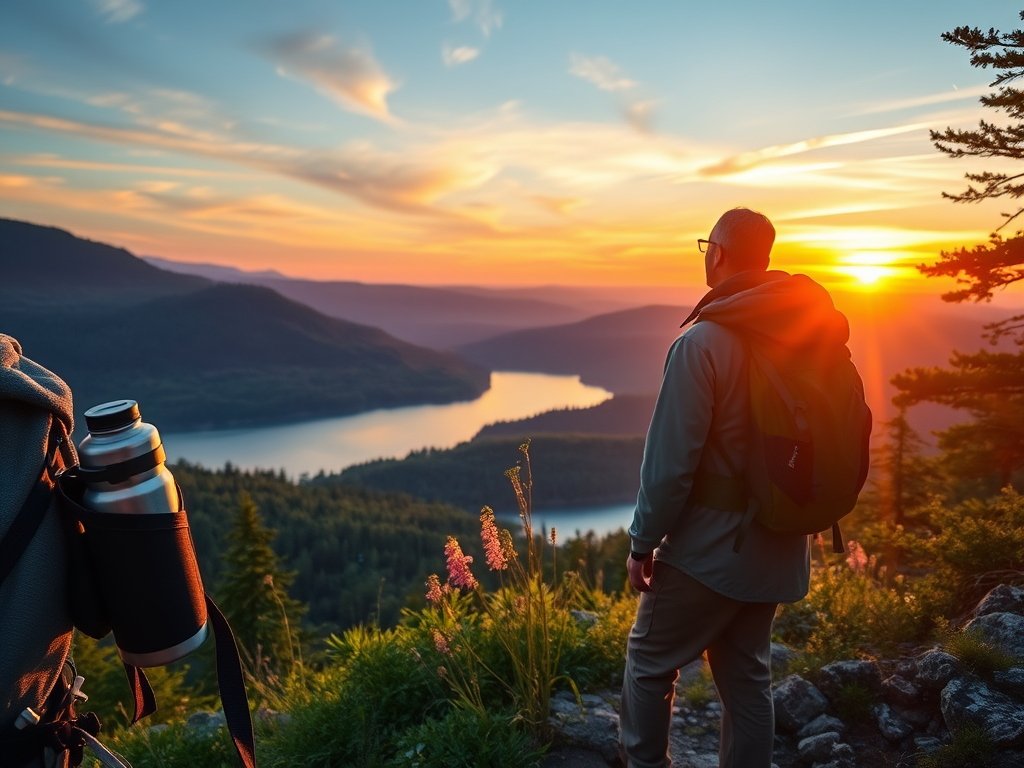
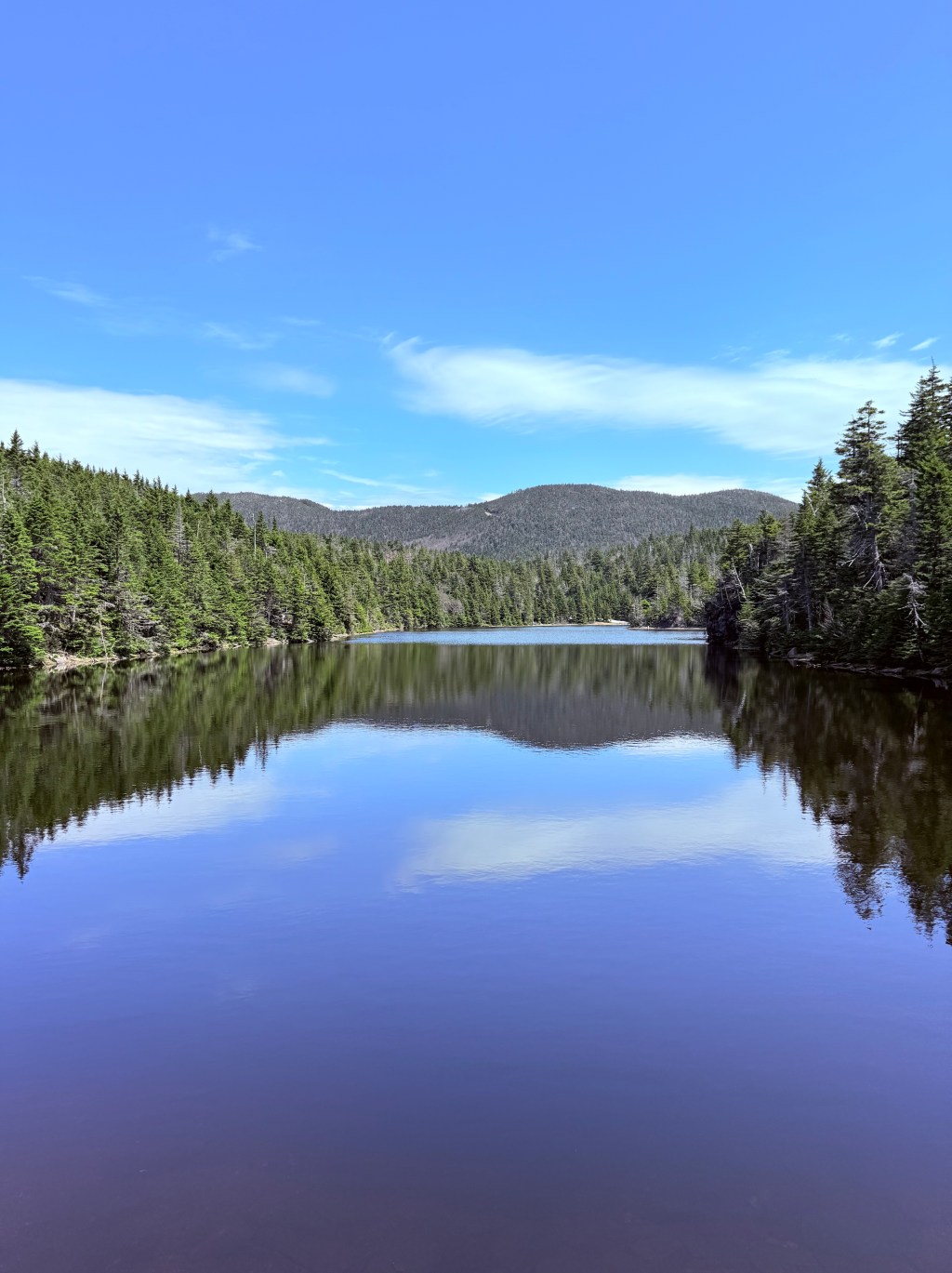
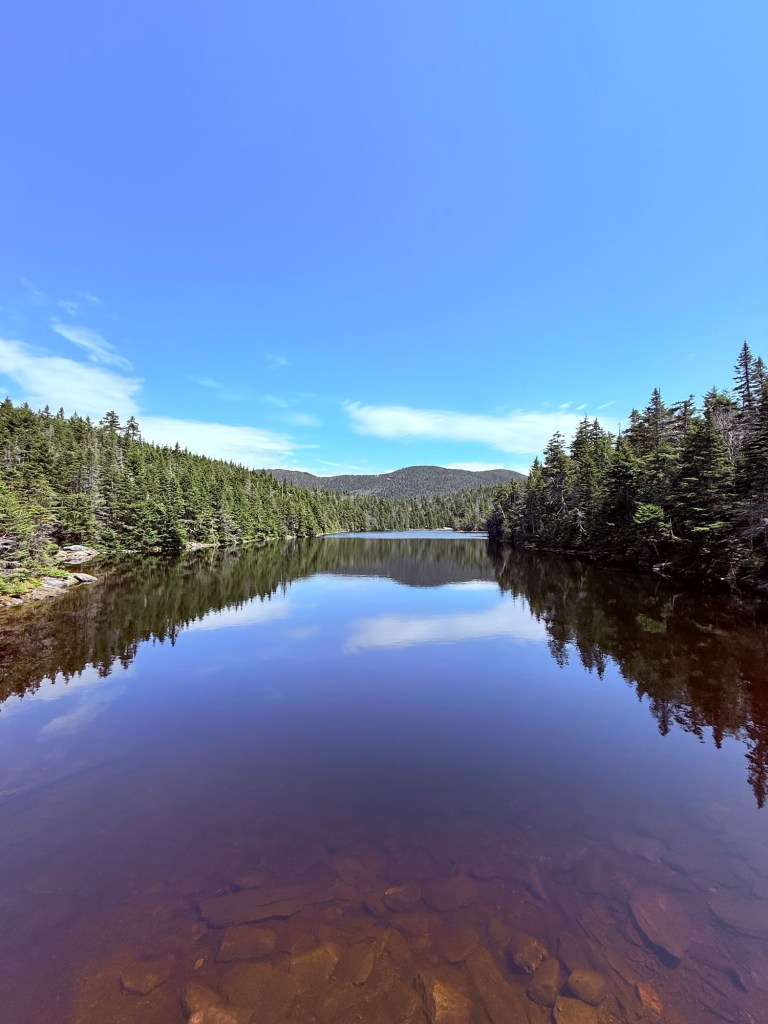
Earlier this week, I set out for a spring hike on the Sterling Pond Trail, one of Vermont’s most iconic short hikes. Just off VT-108 in Smugglers’ Notch, this ~2.2-mile out and back climbs steadily through the forest and delivers one of the most peaceful alpine ponds you’ll find anywhere in the state.
Trail Stats
Distance: ~2.2 miles (out & back)
Elevation Gain: ~950 feet
Time: Between an hour and a half & two hours
Difficulty: Moderate
Why Hike Sterling Pond in Spring?
Spring is one of the best times to hike this trail. You get a mix of seasons all in one hike. The snowmelt feeds rushing streams, the trail is alive with water and moss, and the pond is still half-wrapped in winter. There are fewer crowds than summer and just enough challenge to make the summit feel earned.
The Experience
It was 75 degrees and sunny. I parked near the Smugglers’ Notch trailhead, where Scenic Route 108 had just reopened for the season. Right away, the trail begins climbing. It is a steady incline with rocky sections, exposed roots, and the kind of terrain that demands a bit of focus but never feels overwhelming.
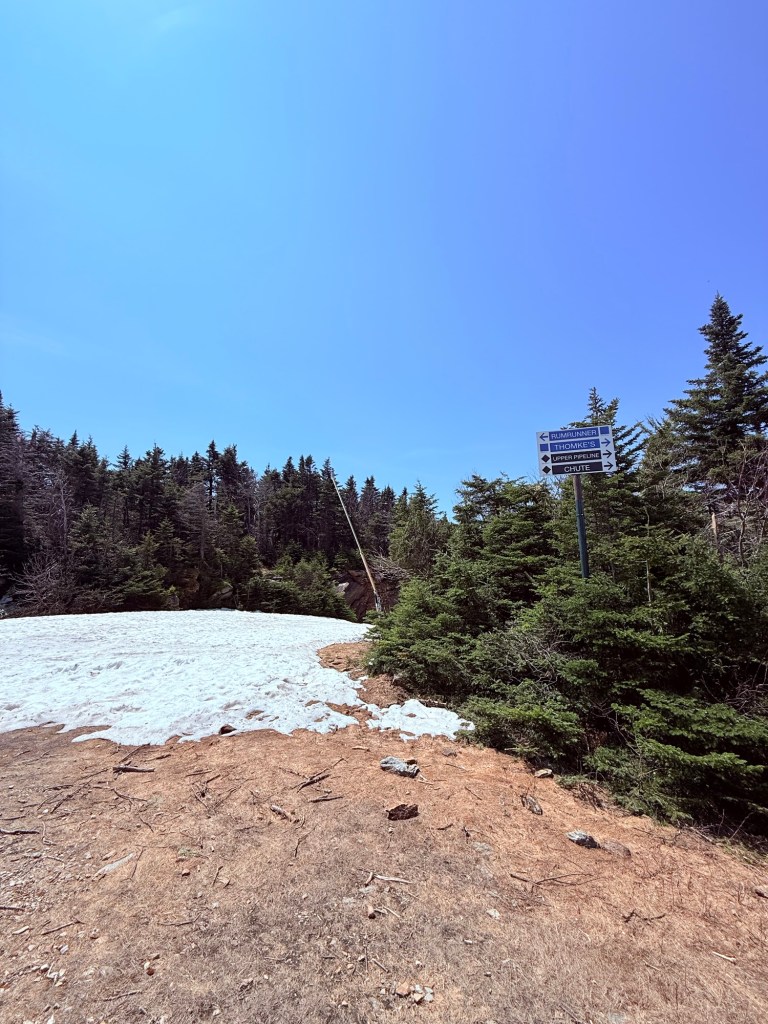
The trail was wet and muddy in sections. Meltwater formed small streams that flowed across the path, and I passed several miniature waterfalls along the way. In some corners, patches of snow were still holding on. Spring in Vermont does not come all at once. That contrast was part of what made the hike so beautiful.
At the top, the forest opened up to Sterling Pond. It was still and quiet. If you keep walking past the pond, you can reach the top of the Smugglers’ Notch Resort ski lift. The area is wide open this time of year and feels completely different without the winter crowds.
Trail Tips
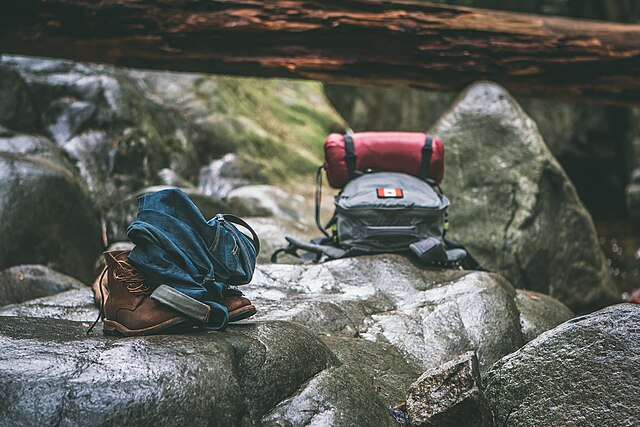
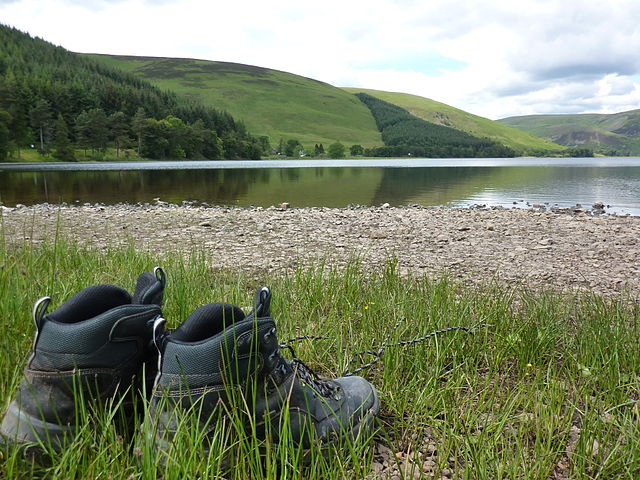
Waterproof hiking boots are a must in the spring.
Cell service can be spotty, so download your map in advance.
Watch your step on the rocky sections
Post-Hike Ideas
After the hike, I drove through Stowe with the windows down and no plan. It was the perfect way to wind down from a trail that feels both refreshing and remote. You could easily add lunch, ice cream, or a scenic drive to round out the day.
Would I Recommend It?
Yes, without hesitation! Sterling Pond Trail in spring is short, scenic, and just wild enough to feel like a real backcountry experience. It is ideal for visitors and locals alike, especially those who want a rewarding hike without committing to a full-day trek.
Vermont has a reputation. Maple syrup. Ski towns. Progressive politics. Cozy inns. But look closer and you’ll find a wilder story etched into the signs nailed up along its winding backroads. This is a place where town names don’t just sound odd. They are odd. They beg questions. They pick fights with pronunciation. And they almost always come with a hell of a backstory.
Here are a few of Vermont’s most unusual town names and the stories behind them.
Calais
Locals will tell you fast and without apology: it’s CALL-us, not ka-LAY. You want French elegance? Go to France. This Calais took the name during the Revolution as a nod to liberty, then twisted it into something that sounds more like a throat-clearing. It’s a small town with big opinions, dirt roads, and folks who prefer it that way. Mispronounce it and they’ll correct you with a smile that doesn’t quite reach the eyes.
Belvidere
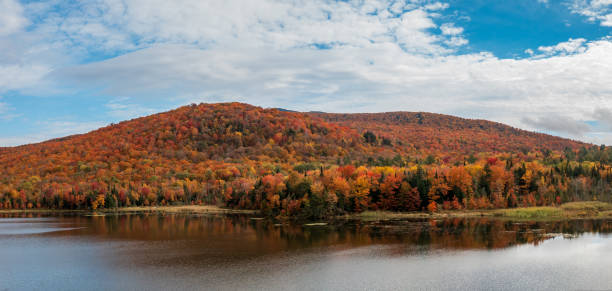
Belvidere Pond in Vermont reflecting the trees during the fall season
Sounds like it should have golf courses and luxury SUVs. What you’ll find is fewer than 400 people, a mountain that eats cell signals for breakfast, and some of the most staggeringly beautiful views this side of the Alps. The name comes from the Italian belvedere, meaning beautiful view. For once, the name isn’t a lie.
Dummerston
With a name like Dummerston, you might expect a punchline. But this town, founded in 1753, is anything but dull. It was named after William Dummer, an early colonial governor of Massachusetts. The name may raise eyebrows now, but Dummer was a respected political figure of his time.
Dummerston is also famous for being the longtime home of author Rudyard Kipling. He wrote parts of The Jungle Book while living in a house called Naulakha, which still stands today.
Tunbridge
Tunbridge is best known for its historic fairgrounds and the Tunbridge World’s Fair, which has been running since 1867. But the town’s name reflects a much older tradition. It was named after Tunbridge Wells in England, a fashionable spa town in the 1700s.
The Vermont version stuck to its farming roots. Today, Tunbridge is a poster child for rural life, known for covered bridges, heritage breeds, and a tight-knit community that turns out for the fair every September.
Wheelock
Now this one has a perk. Wheelock, located in Caledonia County, was named after Eleazar Wheelock, the founder of Dartmouth College. Thanks to an old land grant arrangement, Dartmouth students who are from Wheelock are eligible for free tuition at the Ivy League school.
It’s a small town with a big-time scholarship attached. And yes, there have been students who moved there just to qualify.
Braintree
Braintree might sound like a tech startup, but it’s actually a sleepy little town in Orange County. It was named after Braintree, Massachusetts, which was named after Braintree, England. The name might evoke images of brains and intellect, but the Vermont version is far more known for hiking trails and maple trees than academics.
Still, it does make a great trivia question: “What Vermont town sounds like it should be full of geniuses but is actually mostly cows and forests?”
Victory
Victory is one of the most remote towns in the state, with only about 70 full-time residents. It didn’t even get electricity until the 1960s, making it the last town in Vermont to be connected to the grid.
Its name is bold and dramatic, but the origin is unclear. Some believe it was named to celebrate a victory in the Revolutionary War, while others say it was just a name chosen to attract settlers. Either way, Victory stands strong — even if it is mostly trees, moose, and dirt roads.
Satan’s Kingdom
Yes, it’s real. No, it’s not a full town, but it’s definitely worth mentioning.
Satan’s Kingdom is a remote area in the northeastern part of Leicester. The name has puzzled and amused travelers for generations. Local legends vary, but one theory is that early settlers gave it the ominous name because of how rugged, rocky, and swampy the land was.
There’s not much there now, but let’s be honest — you kind of want to go visit just to say you’ve been to Satan’s Kingdom, Vermont.
The Northeast Kingdom
It’s not a town, it’s a whole region and the name has stuck for over 75 years.
The term Northeast Kingdom was coined in 1949 by Governor George Aiken to describe the rugged, wild corner of Vermont made up of Essex, Orleans, and Caledonia counties. The name caught on fast, and today it’s used in everything from tourism brochures to high school names.
The Northeast Kingdom has a vibe all its own. Think deep forests, tiny towns, glacial lakes, and some of the most breathtaking fall foliage in the country. The name might sound royal, but life here is more about wood stoves, dirt roads, and star-filled skies.
Vermont’s town names are as unique and unforgettable as its landscapes. Whether it’s a mispronounced French word, a bold declaration like Victory, or a place straight out of a horror novel, these names all come with a story — and a little bit of Vermont attitude.
So next time you’re driving through the Green Mountains and see a quirky name on a sign, take a second to wonder what tale might be behind it.
When people think of Vermont, they picture foliage porn and maple everything. Postcard-perfect barns. Maybe a Bernie meme. But underneath all that wholesome, flannel-wrapped charm is a quiet agricultural revolution. One that did not come from think tanks or Silicon Valley food labs, but from stubborn farmers, anarchist cheesemakers, and back-to-the-landers with dirt under their fingernails.
This is where America’s food conscience was born. And not in some loud, self-congratulatory way. Vermont just did the work.
Hard Land, Hard People
You do not farm in Vermont because it is easy. You farm here because you do not know how not to. The soil is rocky. Winters drag on. The growing season is short and unpredictable. But the people? They are tougher than all of it. Since the 1700s, they have carved lives out of these hills, growing root vegetables, tending sheep, milking cows. Not to build an empire, just to eat.
While the South built fortunes on enslaved labor and the Midwest doubled down on scale, Vermont stayed small. It stayed close to the land. That was never a marketing strategy. It was survival.
From Sheep to Cows 🐑 🐮
In the 1800s, Vermont was overrun with sheep. Merino wool was gold, and at one point there were more sheep here than people. The economy rode high on wool until the market collapsed. The sheep left. The farmers pivoted.
Dairy rose from the ruins. Not as a trend, but as a way forward. And Vermont did not just produce milk. It set the bar. Cooperative creameries, sanitation standards, pasteurization. While others were selling watery milk, Vermont was delivering quality. By the early 20th century, its butter, cheese, and cream had a reputation that stretched well beyond New England.
The Revolution Was Local
The back-to-the-land movement in the 60s and 70s brought in a new wave of dreamers. These were not corporate types. They were idealists who wanted to grow food that mattered. They planted heirloom vegetables before most people knew what that meant. They raised animals with care, composted everything, and questioned the chemicals being dumped on food elsewhere.
Out of this came some of the first certified organic farms in the country. Vermont did not follow the trend. It helped invent it. Farmers markets, community supported agriculture, and farm-to-table dining were just life here before they became national buzzwords.
Saving the Land for the Right Reasons
While other states sold farmland to developers and slapped up condos, Vermont chose a different path. In 1987, voters approved a statewide fund to protect farmland and keep it in the hands of those who actually farm.
Since then, over a thousand farms have been saved from development. The goal was never nostalgia. It was about keeping the soul of the state intact. Today, new farmers still have a shot at working the land without losing it to the highest bidder.
On the Front Lines of Climate Change
Vermont is not just holding the line on good farming. It is pushing forward. Farmers here are leading the way with regenerative practices, cover cropping, no-till methods, and pollinator-friendly policies. The state has passed some of the most progressive agricultural laws in the country to reduce runoff and protect water quality.
None of this is glamorous. It is hard work, done by people who care more about the soil than social media.
The Legacy
Vermont has never been about feeding the world. It has been about doing things right. You will not find massive grain silos or sprawling industrial feedlots here. But you will find farmers who give a damn. About the land. About their animals. About their neighbors.
So the next time you bite into a crisp apple, taste real milk, or stroll through a farmers market, there is a good chance the blueprint for that experience came from a quiet hillside farm in Vermont.
You think you know Vermont. Maple syrup. Red barns. That postcard shot of a snowy covered bridge. But if you really want to understand this state, if you want to taste it, start with the cheese.
Forget the tourist-trap cheddar cubes on plastic trays. I’m talking about raw milk funk bombs and cheeses that taste like they were aged in the root cellar of a poet. Vermont is a dairy dreamland. Its cheese scene hits hard. The best part? It’s not polished, not perfect, and definitely not trying to be cute. It’s honest, it’s messy, and it’s absolutely worth eating your way through.
Why Vermont Cheese Actually Matters
It starts with the milk. Good cheese doesn’t come from sad cows standing in mud. Vermont’s cows, goats, and sheep eat grass, breathe clean mountain air, and live on farms where people still name their animals. You can taste that.
Then there’s the obsession. These are not factory lines. These are small-batch artisans tweaking humidity levels like they’re tuning a jazz solo. It’s personal. It’s weird. And it’s beautiful.
The Heavy Hitters
🧀 Cabot Creamery
A cooperative since 1919. A staple. The Seriously Sharp Cheddar is a rite of passage. Try the Habanero or Alpine-style too. Cabot is the backbone of Vermont cheese. Sharp, salty, and proudly old school.
🧀 Jasper Hill Farm
Tucked up in Greensboro. These guys age cheese in underground caves that feel more like a Bond villain’s lair than a creamery. Harbison is their crown jewel. Soft, spoonable, and wrapped in spruce bark. It’s like eating a forest floor in the best possible way.
🧀 Vermont Creamery
If you think goat cheese is chalky and boring, you haven’t tasted theirs. Their chèvre is bright and fresh. Their triple creams are silky enough to make you forget every bad cheese plate you’ve ever had. Bonne Bouche is a good place to start. It’s ash-ripened, a little funky, and completely unforgettable.
🧀 Consider Bardwell Farm
Raw milk. Alpine-style. Aged with patience. This place straddles the border near New York and makes cheeses that are bold without being obnoxious. Rupert is the one to grab. Nutty, grassy, and perfect for grilled cheese that actually tastes like something.
What Makes Vermont Cheese Culture Different?
🍂 Local Pride: In Vermont, food isn’t just food. It’s a conversation. It’s not unusual to meet a cheesemaker who can tell you exactly what their goats ate that week and how that’s going to change the flavor of the next batch.
🧀 The Vermont Cheese Trails: This is a real thing. Over 45 cheesemakers, all packed into one small state. Farm tours, cheese tastings, barn cats, and dirt roads that lead to greatness. It’s like a wine trail, but with boots and a lot more brine.
🛍️ Farmers Markets: Forget shrink wrap and plastic tubs. You’ll find wedges wrapped in wax paper, free samples on toothpicks, and cheesemakers who treat you like a friend. The whole thing feels like a community potluck curated by food nerds.
What to Pair It With
Maple Syrup – Yes, on cheese. Especially blue or chèvre. Trust the process.
Apples and Hard Cider – Vermont grows good apples. Pair them with sharp cheddar and you’ll understand why locals never shut up about it.
Craft Beer – Vermont has more breweries per capita than anywhere else. A creamy brie with a hazy IPA? That’s the move.
Maple Liqueur or Bourbon Cream – Dessert doesn’t need to be cake. Try a pour of this next to an aged cheddar or a soft bloomy rind and call it a night.
Do Not Leave Vermont Without Trying…
✨ Bayley Hazen Blue – From Jasper Hill. Even blue cheese haters admit it’s good.
✨ Cabot Clothbound Cheddar – Aged in the cellars at Jasper Hill. Sharp, crumbly, and rich.
✨ Fresh Chèvre – Especially if it’s rolled in herbs or cranberries. Buy it from the person who made it.
✨ Weybridge – A small-format soft cheese with a bloomy rind and a center that melts on your tongue.
Final Thoughts
In Vermont, cheese is not just something you throw on a cracker. It’s tradition. It’s labor. It’s love. Every wheel tells a story of the land, the animals, and the hands that made it.
So don’t waste your time with grocery store knockoffs. Take the detour. Follow the unpaved road. Walk into a barn and let someone hand you something they made that morning. It might be funky. It might be strange. But it will be real.
Nestled along the banks of the Winooski River and framed by rolling green hills, Montpelier stands as a charming testament to Vermont’s unique spirit. With a population just shy of 8,000 residents, it holds the title of the smallest state capital in the entire nation. But despite its modest size, Montpelier’s history is anything but small.
A New State Needs a Center
When Vermont officially became the 14th state in 1791, it needed a permanent seat of government. At the time, no single town dominated Vermont’s landscape. Towns like Windsor and Bennington were influential, but settlers were still pushing into the rugged heart of the Green Mountains. Leaders wanted a capital that was geographically central, making it easier for representatives from all corners of the state to meet.
In 1805, after several years of debate, the Vermont legislature chose Montpelier. The decision was largely practical. Montpelier’s central location, its accessibility by early road networks, and a generous offer of land from local citizens helped seal the deal.
At the time, Montpelier was little more than a small village. Once the legislature arrived, though, hotels, inns, shops, and law offices sprang up almost overnight. The town’s transformation from a sleepy river community to the political heart of Vermont had begun.
Why Montpelier and Not Burlington?
Burlington was, and still is, Vermont’s largest city. So why was the bustling lakeside hub overlooked?
There were a few reasons. Burlington was seen as too far north and too heavily focused on commerce instead of politics. Many citizens feared that placing the capital in a commercial city would shift the government’s priorities away from ordinary farmers, who made up most of Vermont’s population. Montpelier’s location closer to the center of the state symbolized fairness and neutrality. Choosing Montpelier sent a message that Vermont’s government was meant to be accessible to everyone, not just the wealthy or powerful.
Building the Statehouse
The first Vermont State House in Montpelier was a modest wooden building completed in 1808. It served its purpose for a time, but as the town and the government grew, so did the need for a grander structure.
By 1833, a new, more impressive State House was built using local granite and featuring a Greek Revival style. Unfortunately, a fire in 1857 destroyed much of that building. Rising from the ashes, Vermont commissioned a third State House, designed by architect Thomas Silloway, which opened in 1859.
Today’s State House, topped with its iconic gold dome, is one of the best-preserved examples of Greek Revival architecture in the United States. It stands as a proud symbol of Vermont’s resilience and commitment to preserving its history.
A Capital That Stays True to Its Roots
Unlike many state capitals that expanded into sprawling cities, Montpelier has kept its small-town charm. There are no major highways cutting through the downtown area, and the skyline remains modest. Even the busiest parts of Montpelier feel personal, cozy, and community-driven.
The people of Montpelier take pride in supporting local businesses, fostering strong community ties, and maintaining a government that feels approachable. You will not find towering skyscrapers or endless stretches of suburbia here. In fact, Montpelier holds another unusual title. It is the only state capital in the United States without a McDonald’s.
This absence is not because Montpelier is anti-fast food. It simply reflects the city’s fierce commitment to keeping things local and preserving its small-town feel. Instead of chain restaurants, you will find independent cafés, bakeries, and restaurants, many of which feature Vermont-grown ingredients.
Montpelier’s small size also means politics stay personal. It is not uncommon to bump into state representatives at the local farmers market, library, or coffee shop. Here, democracy feels much closer to home.
Montpelier’s Role Today
Montpelier is more than just the seat of Vermont’s government. It is a lively center for arts, culture, and activism. The city is home to the Vermont College of Fine Arts, independent galleries, bookstores, and a thriving local food scene.
It is also known for its civic engagement. Montpelier consistently ranks among the highest in the country for voter turnout and community activism. Whether it is an Independence Day parade, a rally on the State House lawn, or the whimsical “March of the Penguins” parade in the middle of winter, Montpelier finds ways to celebrate both tradition and change.
A Small City with a Big Story
Montpelier’s story proves that influence is not measured by size. This tiny capital helped shape a state known for its independent spirit, strong sense of community, and political innovation. From early debates over statehood to modern efforts to protect the environment and promote social justice, Montpelier has stood firmly at the center of Vermont’s story.
It may be the smallest state capital in the nation, but its heart, its history, and its impact are larger than life.
Today’s the day! Vermont Route 108 through Smugglers’ Notch is officially open for the season! As the last patches of snow melt away, a whole world of adventure reawakens in the heart of the Green Mountains. Smugglers’ Notch is not just a road; it is an experience. Twisting between dramatic cliffs, dense forests, and hidden waterfalls, the Notch connects Stowe and Jeffersonville in a way that captures the true spirit of Vermont.
Smugglers’ Notch has a rich history that adds even more magic to the journey. In the early 1800s, the Notch served as a secret passageway for smugglers transporting goods across the Canadian border during the War of 1812, when trade restrictions crippled local economies. Later, during Prohibition, the caves and hidden pathways were used again to move illegal alcohol. Today, visitors can still explore these caves, adding a fascinating historic twist to their adventure.
Whether you are craving outdoor adventure, charming small-town vibes, or a little bit of both, there is no better time to explore the area than right now. Here is your ultimate guide to making the most of it!
Explore the Notch Itself
Hiking Paradise 🌿
Smugglers’ Notch is a hiker’s dream. As you drive through the winding pass, you will notice trailheads tucked in between boulders and evergreens. Some of the best hikes include:
Sterling Pond Trail: This moderate 2.5-mile roundtrip hike rewards you with a peaceful alpine pond nestled atop the mountain. In early summer, the reflections of the trees on the still water are breathtaking.
Hellbrook Trail: Ready for a challenge? This steep, rugged trail leads you up to the Chin of Mount Mansfield, Vermont’s highest peak. It is tough but incredibly rewarding.
Bingham Falls: A short, family-friendly hike to a stunning waterfall and swimming hole. Perfect for cooling off on a hot day!
Rock Climbing Adventures 🧻
The Notch is one of Vermont’s premier climbing destinations. Climbers from across New England flock here every season to tackle its rugged cliffs and towering boulders. Whether you are a seasoned pro or just starting out, there are routes for every skill level.
Popular climbing spots include Elephant’s Head, Blind Fate, and Jefferson Slab. If you are new to climbing, consider hiring a local guide service to show you the ropes.
Explore the Smugglers’ Caves 🏰
Tucked away in the cliffs and forests of the Notch are the caves that once played a major role in Vermont’s smuggling history. During the War of 1812 and later during Prohibition, these caves were used to hide contraband and move goods discreetly. Today, adventurous visitors can scramble and explore some of these rocky hideouts, imagining what it must have been like when the caves were alive with secret activity. Always exercise caution and wear sturdy shoes if you decide to explore!
Scenic Drives and Picnic Spots 🌽
Sometimes the best way to experience the Notch is simply to drive it. The road itself is an adventure, with hairpin turns, tight squeezes between rock faces, and dramatic scenery at every turn.
Make sure to pack a picnic and pull over at one of the scenic pullouts along the way. There is nothing quite like lunch with a view of towering cliffs and lush forest all around you.
OLYMPUS DIGITAL CAMERA
Things to Do in Jeffersonville
Explore the Village 🌍
Once you emerge from the Notch heading north, you will find yourself in Jeffersonville, a cozy, artsy village that deserves its own day of exploration.
Browse Local Art Galleries: Jeffersonville has a vibrant arts community. Check out the Visions of Vermont Fine Art Galleries, housed in historic buildings and featuring stunning local landscapes.
Sample Local Food: Grab a hearty breakfast or lunch at 158 Main, a classic Vermont eatery known for comfort food done right. For something sweet, do not miss Cupboard Deli’s legendary maple creemees.
Stroll the Lamoille Valley Rail Trail: Stretch your legs with a relaxing walk or bike ride along this scenic rail trail that weaves through the countryside.
Visit Smugglers’ Notch Distillery 🥃
Smugglers’ Notch Distillery, ranked as one of the top three tasting rooms in the United States, is a must-visit while you’re in Jeffersonville. This award-winning, locally owned distillery creates small-batch spirits with a true Vermont twist, including one of the highest-rated domestic vodkas in the country.
Step inside and enjoy a guided tasting of their full lineup, from smooth vodkas and crisp gins to rich bourbons and their signature maple cream liqueur. The staff are knowledgeable, friendly, and passionate about their craft, making every visit memorable.
Pro tip: Bring home a bottle or two to enjoy a taste of Vermont long after your trip ends.
More Adventures Nearby
Smugglers’ Notch Resort 🌿
You might think Smugglers’ Notch Resort is only for winter skiing, but it transforms into an outdoor playground in the summer. Explore hiking trails, zip lines, and even llama treks. It is perfect for families or anyone looking to pack a little extra fun into their trip.
Mountain Biking 🚴♂️
The surrounding area has some fantastic mountain biking trails. The Brewster River Trails are a local favorite, offering a mix of flowy singletrack and more technical sections through beautiful forest terrain.
Farmers Markets and Local Shops 🌾
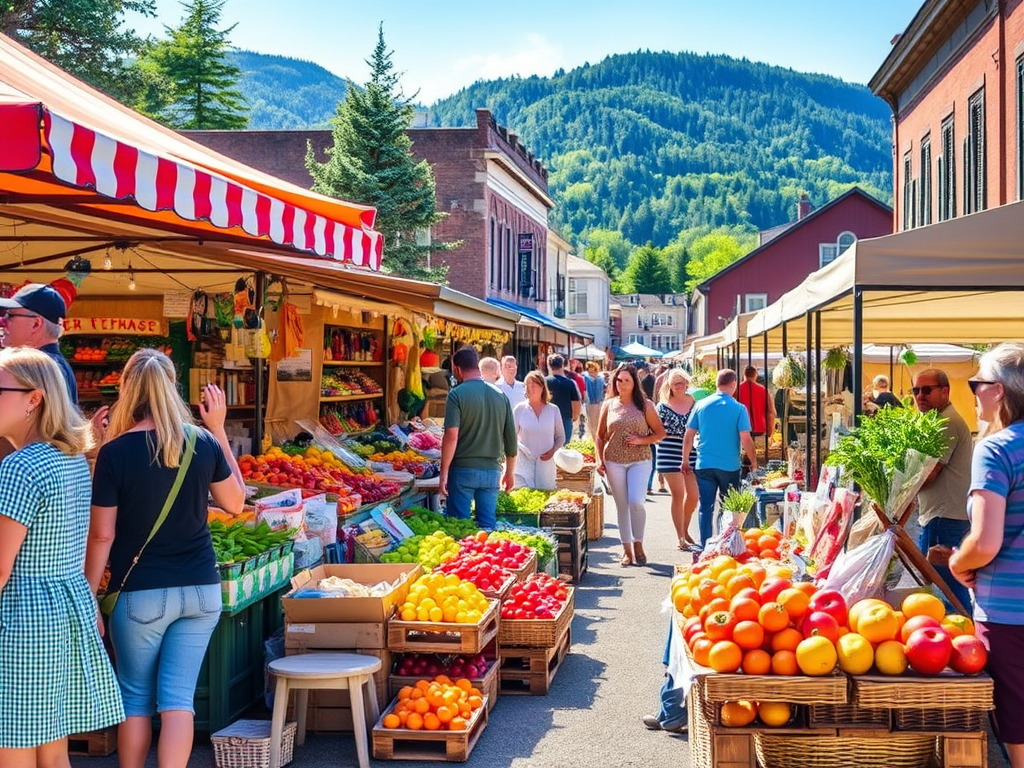
In season, Jeffersonville hosts a delightful farmers market where you can pick up fresh produce, artisan goods, and handmade crafts. It is the perfect way to support local farmers and makers while stocking up on Vermont goodies.
Covered Bridges and Country Roads 🏬
Take a scenic drive through the surrounding countryside and discover some of Vermont’s iconic covered bridges. The Cambridge Junction Covered Bridge is a must-see and makes for a perfect photo stop.
Tips for Visiting Smugglers’ Notch
Pack Layers: Even in summer, weather in the mountains can change quickly. Bring a light jacket or fleece.
Arrive Early: VT-108 is narrow and parking is limited at trailheads, so arriving early helps you beat the crowds.
Leave No Trace: Help keep this beautiful area pristine by packing out everything you bring in.
Check Road Conditions: Although VT-108 is typically open from May through early-November, conditions can vary. Always check before you go.
Know the Law: Vermont state law prohibits large vehicles from traveling this section of VT-108. Violators can face fines of over $4,000 and cause the Notch to close for hours. Always check current conditions and regulations with the Vermont Agency of Transportation before your trip.
Why Smugglers’ Notch Captures So Many Hearts
There is something about Smugglers’ Notch that sticks with you long after you have left. Maybe it is the feeling of driving between towering cliffs so close you can touch them, or the sound of waterfalls rushing just out of sight. Maybe it is the way Jeffersonville welcomes you like an old friend, or the first sip of bourbon at Smugglers’ Notch Distillery after a day of adventure.
Whatever it is, one thing is for sure: once you experience the Notch when the gates open for the season, you will be counting down the days until you can come back.
So pack your hiking boots, your appetite, and your sense of wonder because the Notch is calling!
When you think of Vermont, you might picture rolling hills, charming small towns, and endless maple syrup. And while those images are spot on, there is a lot more to the Green Mountain State than meets the eye. From quirky laws to historic firsts, Vermont has some seriously surprising stories up its sleeve. Here are some fun facts about Vermont you probably did not know.
🏴1. Vermont was an independent republic before joining the United States. Before it became the 14th state, Vermont was its own independent country, known as the Vermont Republic, from 1777 to 1791. It had its own currency, postal service, and even negotiated its own treaties.
🧭2. It is the only New England state without a coastline. Unlike its neighbors, Vermont is completely landlocked. But with Lake Champlain covering much of its western border, Vermonters still get to enjoy plenty of waterfront views.
🏛️ 3. Montpelier is the smallest state capital in the United States. With a population of around 8,000 people, Montpelier holds the title for the smallest capital city by population. Despite its size, it is packed with history, charm, and one seriously photogenic State House.
⛔️4. Vermont banned billboards. You will not find a single billboard along Vermont’s highways. The state banned them in 1968 to preserve its natural beauty, making every drive a scenic one.
🍁5. Vermont produces more maple syrup than any other state. It is no secret that Vermont takes its maple syrup seriously. The state produces roughly half of all maple syrup made in the United States. That is a lot of sweet, sticky goodness.
📜6. It was the first state to abolish slavery. In 1777, Vermont became the first territory in what would become the United States to prohibit slavery in its constitution, setting a powerful precedent for human rights.
🏔️7. Vermont is a major producer of marble and granite. In addition to syrup, Vermont has a history of quarrying beautiful stones. Barre, Vermont is known as the “Granite Center of the World,” and the state is also a major producer of high-quality marble.
⛷️8. It is home to the first ski tow in the United States. In 1934, a farmer in Woodstock, Vermont rigged up a rope tow powered by a Model T Ford engine, making it easier for skiers to get up the hill. Skiing has been a big part of Vermont culture ever since.
🍦9. Ben & Jerry’s gives away its “graveyard” flavors. Ben & Jerry’s, the iconic ice cream brand founded in Burlington, has a “Flavor Graveyard” where they honor discontinued flavors. You can visit it at their Waterbury factory and pay your respects to flavors like “Peanut Butter and Jelly” and “White Russian.”
🐄10. Vermont has more cows than people in some towns. While it is no longer true statewide, there are still Vermont towns where cows outnumber humans. Agriculture remains a big part of life, and you will often see dairy farms dotting the countryside.
🌲11. It is one of the least populated states. Vermont consistently ranks among the least populated states, making it a haven for those seeking open spaces, quiet towns, and a slower pace of life.
🛍️12. Vermont is fiercely proud of its local businesses. You will not find a lot of big box stores in Vermont, especially outside the larger towns. The state prioritizes local ownership and community-focused businesses, which adds to its unique charm.
🍦 13. Vermonters take their maple creemees seriously. Maple creemees, Vermont’s version of soft serve ice cream, are practically a rite of passage. You will find them at roadside stands all over the state once the weather warms up.
🌊14. Lake Champlain was briefly recognized as the sixth Great Lake. In 1998, Congress declared Lake Champlain the nation’s sixth Great Lake. The designation was quietly rescinded a few months later, but locals still joke about the “Great Lake” that almost was.
🗳️15. Vermont invented the modern concept of “town meeting” democracy. Town meetings, where residents gather to vote directly on budgets, policies, and leadership, are a New England tradition with roots deep in Vermont. It remains a proud example of grassroots democracy.
Tips for Enjoying Vermont Fun Facts:
Explore local museums and historic sites.
Chat with locals to hear firsthand stories.
Keep an eye out for plaques, roadside signs, and historic markers.
Vermont may be small, but it is packed with history, personality, and a few surprises. The next time you are traveling through, keep these fun facts in mind and you will see the Green Mountain State in a whole new light.
If you have spent even one summer in Vermont, you know one thing for certain: no trip is complete without a maple creemee. A creemee, for the uninitiated, is Vermont’s special take on soft-serve ice cream, and maple is the undisputed king of flavors. Whether you are visiting during peak foliage or a sunny July weekend, chasing the perfect maple creemee is practically a state sport.
Here are ten of the best maple creemees you can find across the Green Mountain State.
1. Morse Farm Maple Sugarworks – Montpelier Nestled just outside the state capital, Morse Farm is a must-stop. Their maple creemee is rich, perfectly balanced, and made with their own syrup. Enjoy it while walking their maple trail or exploring their charming country store.
2. Canteen Creemee Company – Waitsfield If you like your creemee with a twist, Canteen Creemee Company is famous for creative, over-the-top presentations. Their maple creemee is a crowd favorite, often served with housemade maple sprinkles or a drizzle of maple syrup for extra decadence.
3. Palmer Lane Maple – Jericho Palmer Lane is legendary among locals for its smooth, rich maple creemees. They use pure Vermont syrup and have perfected the consistency, creating a creamy texture that is just sweet enough without being overpowering.
4. Bragg Farm Sugarhouse & Gift Shop – East Montpelier Family-owned for generations, Bragg Farm offers one of the most authentic maple experiences you can find. Their creemee uses real maple syrup and is served the old-fashioned way, with pure Vermont goodness.
5. Village Creeme Stand – Plainfield This little roadside stand in Plainfield serves up one of the smoothest maple creemees around. It is simple, affordable, and perfect for a mid-drive treat while exploring the scenic backroads of Vermont.
6. Al’s French Frys – South Burlington An iconic stop for burgers and fries, Al’s also serves a fantastic maple creemee. It is the perfect way to end a casual meal, and the nostalgic vibe of Al’s classic diner atmosphere only makes it better.
7. Burlington Bay Market & Café – Burlington Enjoy your maple creemee with a view of Lake Champlain. Burlington Bay Market offers a creamy, flavorful creemee that is perfect to take on a sunset stroll along the waterfront.
8. Dairy Creme – Montpelier A no-frills spot beloved by locals, Dairy Creme serves up a maple creemee that hits all the right notes: creamy, full of flavor, and generously portioned. Lines can get long, but it is worth the wait.
9. The Village Scoop – Colchester A family-run ice cream stand that has become a summer staple in Colchester. Their maple creemees are smooth and flavorful, and they often offer maple twist options if you want to combine it with vanilla or chocolate.
10. Kingdom Creamery of Vermont – East Hardwick Kingdom Creamery is known for its farm-to-cone philosophy. Their maple creemee uses milk from their own cows and local syrup, resulting in a fresh, rich flavor that is hard to beat.
Tips for Finding the Best Creemee:
Look for Real Maple Syrup: The best creemees are made with real Vermont maple syrup, not artificial flavoring.
Texture Matters: A true creemee should be smooth and creamy, not icy.
Take Your Time: Some of the best creemee stands are little off-the-beaten-path spots. Exploring is half the fun.
Vermont and maple creemees go hand in hand. Wherever your travels take you across the Green Mountains, be sure to stop, savor, and experience this sweet Vermont tradition firsthand.
Tucked between the Adirondacks and the White Mountains, Vermont holds a one-of-a-kind place in American history. While most states followed a standard path to statehood, Vermont took an entirely different route. It forged its own identity through revolution, negotiation, and an unwavering sense of independence.
From disputed land claims to a peaceful, condition-free admission into the Union, Vermont’s journey to becoming the 14th state reflects the bold and resilient spirit of the Green Mountains.
🗺️ Before Vermont: A Land Caught in Conflict
In the early 1700s, the region we now know as Vermont was the subject of fierce territorial disputes. Both New York and New Hampshire claimed ownership.
In 1749, New Hampshire’s Royal Governor, Benning Wentworth, began issuing land grants west of the Connecticut River. These became known as the New Hampshire Grants. However, New York insisted that it held jurisdiction over the same territory.
This conflict was more than a legal disagreement. It sparked the rebellious energy that would come to define Vermont’s future.
⚔️ Enter the Green Mountain Boys
As New York attempted to enforce its claims, settlers in the New Hampshire Grants organized a resistance. At the heart of this movement was the Green Mountain Boys, a militia led by Ethan Allen.
These settlers were not just defending land titles. They were protecting the principle of local control and self-governance.
“Come out of there, you damned old rat”
Ethan Allen
The Green Mountain Boys became folk heroes. They symbolized the fierce independence that still defines Vermont today.
🔥 The Revolutionary War and Vermont’s Declaration of Independence
When the American Revolution erupted in 1775, Vermont settlers quickly took up arms against British rule. Ethan Allen and the Green Mountain Boys captured Fort Ticonderoga, providing critical artillery for the Continental Army.
However, Vermont remained in an unusual political limbo. It was not officially recognized as part of any colony or future state.
On January 15, 1777, delegates from across the New Hampshire Grants met in the town of Westminster, Vermont. There, they declared independence not from Britain, but from both New York and New Hampshire. This gathering, known as the Westminster Convention, marked the birth of the Republic of Vermont.
The new republic was initially called New Connecticut. That name was soon changed to Vermont, derived from the French phrase verts monts, meaning “green mountains.”
Later that year, Vermont adopted a constitution that was revolutionary for its time:
It abolished adult slavery
It granted voting rights to all men, regardless of property ownership
It supported public education
For the next 14 years, Vermont operated as a fully independent republic. It had its own postal system, currency, and even conducted foreign diplomacy.
🤝 Why Wasn’t Vermont Immediately Admitted?
You might wonder, if Vermont was so eager, why was it not immediately Despite its democratic values and contributions to the war, Vermont was not welcomed into the Union right away.
New York continued to object to Vermont’s admission, still upset about the earlier land disputes. Some leaders in the Continental Congress also feared that admitting Vermont would encourage other regions to break away and declare independence.
Adding to the tension, Vermont’s political views were more aligned with the anti-slavery northern states. At a time when the balance between North and South was delicate, Vermont seemed politically inconvenient.
Vermont’s leaders did not give up. While maintaining independence, they quietly negotiated behind the scenes. Eventually, Vermont agreed to pay New York thirty thousand dollars to settle its territorial claims. Vermont also signaled that it would align politically with northern states.
With those compromises in place, Vermont’s admission became possible.
📜 March 4, 1791: Vermont Becomes the 14th State
On March 4, 1791, Vermont officially became the 14th state in the United States. It was the first state added after the original 13 colonies.
This moment was historic for several reasons:
Vermont entered as a free state
It was the only state, outside of the original 13, to be admitted without any conditions
It showed that a region could join the Union through peaceful negotiation, not war or conquest
It proved that independent governments could become part of the United States without giving up their identity
“Vermont was born in controversy, grew up in opposition, and has been nursed in adversity.”
Ira Allen | The Natural and Political History of the State of Vermont (1798)
Today, March 4 is quietly remembered by Vermont historians as a symbolic day that honors the state’s proud and independent spirit.
The Flag of Vermont | Adopted June 1, 1923 | Motto: “Freedom and Unity”
🏔️ Vermont’s Legacy of Independence
The story of how Vermont joined the Union continues to shape its culture and politics.
Even now, Vermonters value:
Local control and small government
Political moderation and pragmatism
Historical figures like Ethan Allen and the Green Mountain Boys
Whether resisting New York authorities or navigating complex diplomacy, Vermont’s leaders proved that conviction, courage, and patience could achieve statehood without violence.
Drive through Vermont’s scenic roads and you’ll find echoes of its revolutionary spirit in every village green and stone wall.
🌲 Final Thoughts
Vermont’s path to statehood was never just about geography or borders. It was about principles.
From the very beginning, Vermonters believed in freedom, fairness, and self-reliance. Those same values that inspired them to declare independence in 1777 continue to define the state today.
What makes Vermont’s story so remarkable is how it joined the Union. It did not rely on conquest or political favor. Instead, it used diplomacy, persistence, and a deep commitment to its ideals.
More than two centuries later, Vermont stands as a powerful example of how a small, determined republic earned its place in the United States while staying true to its identity.
Spring in Vermont is pure magic. As the snow melts and the landscape bursts into color, the Green Mountain State becomes a patchwork of rolling hills, flowering trees, and sparkling rivers. One of the best ways to experience it all? A scenic drive. Whether you’re a local looking for a weekend adventure or a visitor eager to soak in Vermont’s natural beauty, these five drives capture the very best of spring.
1. Route 100: Vermont’s Green Mountain Byway
If there’s a “must-drive” road in Vermont, it’s Route 100. Stretching from the Massachusetts border all the way to Canada, Route 100 winds through the heart of the Green Mountains, passing charming towns like Weston, Ludlow, and Stowe along the way.
Springtime Highlights:
Watch waterfalls roar to life with snowmelt, especially Moss Glen Falls near Granville.
Stop for a maple creemee at a roadside stand (spring is prime sugaring season!).
Enjoy uncrowded trails and emerging wildflowers at state parks along the route.
Tip: The section between Killington and Waterbury is especially stunning and packed with cozy towns for lunch stops.
2. The Lake Champlain Byway: Water Views and Open Skies
For those who love open water and big-sky views, the Lake Champlain Byway is unbeatable. This route hugs Vermont’s western edge, following Route 2 and Route 7 along the Lake Champlain shoreline.
Springtime Highlights:
Watch the Champlain Islands awaken from winter – apple blossoms, farms, and peaceful country roads await.
Take a slight detour to South Hero’s Hackett’s Orchard for early-season blooms and farm visits.
Spot migrating birds at places like Dead Creek Wildlife Management Area – spring is prime birdwatching season.
Tip: South Hero, Grand Isle, and North Hero are easy to explore by car in a single relaxed afternoon.
3. The Molly Stark Byway: A Journey Through Vermont’s History
Named after the wife of a Revolutionary War general, the Molly Stark Byway along Route 9 offers a beautiful blend of history and scenery. Running east to west across southern Vermont, it connects Brattleboro to Bennington.
Springtime Highlights:
Drive through the lush, emerging greenery of the Green Mountain National Forest.
Stop in historic Bennington to see the Bennington Battle Monument and charming covered bridges.
Explore Brattleboro’s art galleries, bookstores, and farm-to-table restaurants blooming back to life after the winter lull.
Tip: Bring a jacket – southern Vermont’s spring weather can still be brisk, especially at higher elevations!
4. Route 108 through Smugglers’ Notch: Dramatic Mountain Pass
If you’re craving a little adventure, the drive through Smugglers’ Notch near Stowe is unforgettable. Route 108 narrows dramatically as it winds through massive boulders and steep cliffs. (Note: It’s typically closed for part of early spring, so check road conditions first!)
Springtime Highlights:
Watch as lingering snow patches give way to trickling waterfalls and bright green moss along the cliffsides.
Hike short trails near the notch if conditions allow – spring mud can be tricky but rewarding.
Visit the town of Stowe for coffee, spring skiing, or simply wandering charming Main Street.
Tip: If 108 is still closed early spring, you can enjoy scenic detours via Jeffersonville and Cambridge on Route 15.
5. The Northeast Kingdom Loop: Untamed and Beautiful
For those willing to venture farther off the beaten path, Vermont’s Northeast Kingdom delivers raw, untouched beauty. Take Routes 5, 114, and 105 through towns like Burke, Island Pond, and Derby.
Springtime Highlights:
See Vermont’s wilderness shake off winter – open pastures, hidden lakes, and endless forests.
Visit Lake Willoughby, often called the “Lucerne of America,” where towering cliffs flank crystal-clear waters.
Wander through sleepy towns that feel unchanged by time.
Tip: The Kingdom can be cooler and muddier than southern Vermont in spring – plan for a few unpaved roads and possible detours!
Final Thoughts
Spring in Vermont is a fleeting, breathtaking moment. As the landscape awakens from winter’s grip, these scenic drives offer a front-row seat to one of nature’s best shows. Whether you’re chasing waterfalls, exploring tiny villages, or simply rolling down your windows to breathe in the fresh, maple-scented air, these routes remind you why Vermont truly earns its nickname: the Green Mountain State.
So gas up the car, grab a camera, and hit the road – Vermont is calling.