Discover Vermont, One Story at a Time 🏔️

Local culture, season adventures, small towns,
and the honest side of life in the Green Mountains


Category: Seasonal Vermont

Experience Vermont through the seasons. Whether it’s fall foliage, spring hikes, summer festivals, or winter traditions, this category highlights the best of Vermont all year long.

  • Discover Vermont: Authentic Experiences Off the Beaten Path

    Discover Vermont: Authentic Experiences Off the Beaten Path

    autumn in vermont

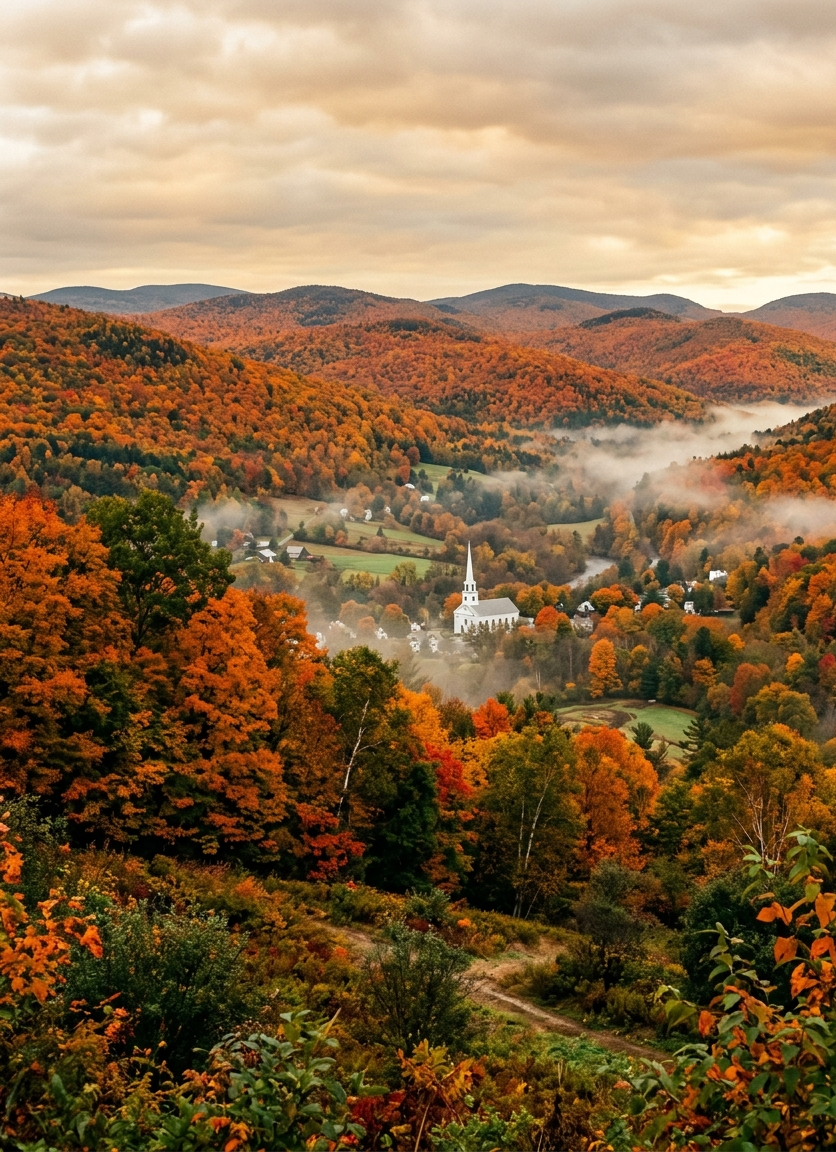
    Vermont has a way of sneaking up on you. You come for a long weekend, maybe just to catch the fall foliage or ski a few runs, and then you find yourself standing at the edge of a covered bridge or eating the best bowl of cheddar soup you have ever tasted and thinking: I need more time here. There is always more time needed in Vermont.

    Whether you are visiting for the first time, spending a season here, or you have lived in the Northeast Kingdom your whole life and somehow still have not done everything on this list, consider this your guide. These are twenty things worth doing in Vermont before you go. Not tourist traps. Not the same recycled list you find everywhere. Just the real stuff.

    The Classics That Deserve Their Reputation

    1. Watch the Foliage From a Back Road

    Everyone talks about fall foliage in Vermont, and yes, the hype is real. But the difference between a foliage experience and a foliage memory is the road you take. Skip Route 100 on a Saturday in October and instead wind through Craftsbury, Greensboro, or the hills above Johnson. Pull over when the urge hits. There is no rush here.

    2. Eat a Maple Creemee

    Soft serve made with real Vermont maple syrup is not something you can replicate at home. It is creamy in a way that feels almost unfair. Find one at a local farm stand or sugarhouse rather than a chain. The ones sold roadside near a working sugarbush taste noticeably better, and half of that is probably just the setting.

    3. Visit a Working Sugarhouse in March

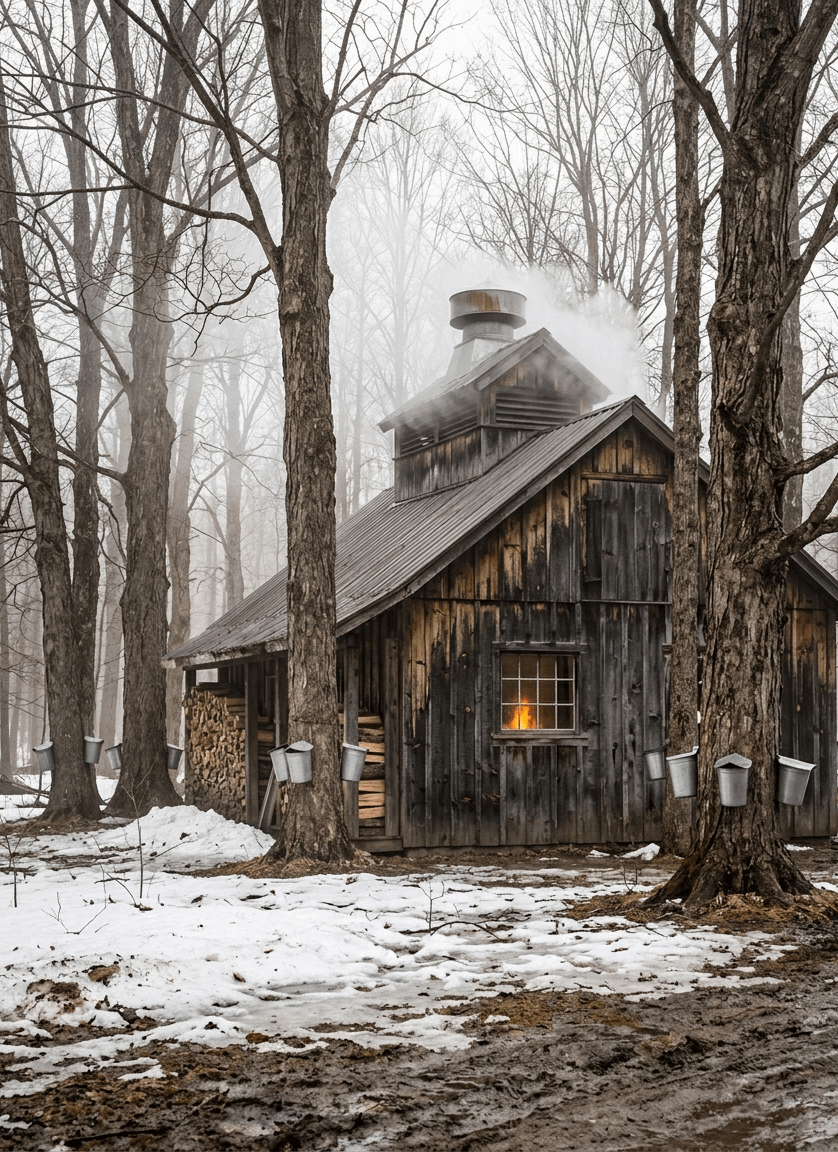
    Mud season gets a bad reputation, but early spring is when Vermont’s most iconic tradition comes alive. Sugarhouses across the state open their doors during sugaring season, and you can watch the whole process up close, smell the steam rolling off the evaporators, and taste fresh maple syrup poured over snow. The Vermont Maple Sugar Makers Association keeps an updated list of open farms each year.

    4. Cross a Covered Bridge on Foot

    Vermont has more than a hundred covered bridges still standing, and the experience of walking through one quietly, no car rushing past, is something completely different from driving through. The bridges near Stowe, Montgomery, and Northfield are particularly beautiful in any season. Stop in the middle and just listen to the water below.
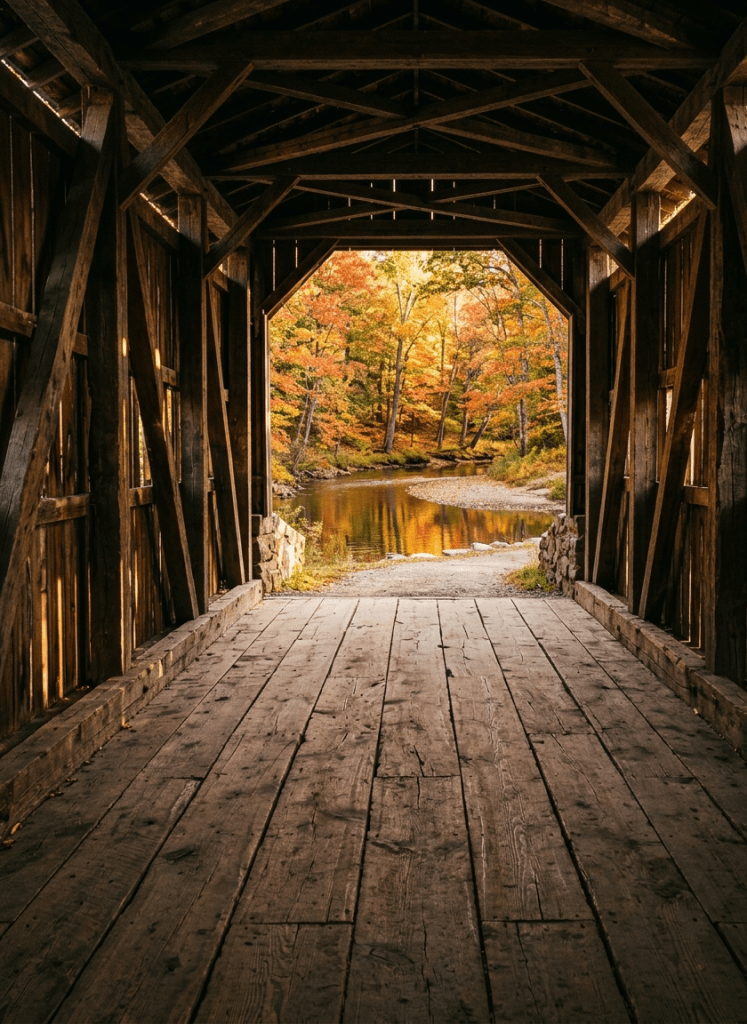
    covered bridge in autumn in vermont

    Get Into the Vermont Outdoors

    5. Hike to a Fire Tower

    Vermont has several old fire lookout towers that are still climbable, and the views from the top are worth every step. Spruce Mountain in Plainfield, Elmore Mountain in Lake Elmore, and Belvidere Mountain up in Eden each offer a different experience. Clear days reward you with views that stretch into New Hampshire, New York, and Canada.

    6. Swim in a Swimming Hole

    Vermonters guard their swimming holes with a certain quiet loyalty, and you understand why the moment you arrive at one. Cold, clear water fed by mountain streams, rocks to jump from, and an informal social code that basically amounts to: be cool and leave no trace. Bingham Falls near Stowe is a well-known one. The falls at Texas Falls in Hancock are also worth the short walk in.

    7. Ski or Snowboard a Classic Vermont Mountain

    Stowe and Killington get most of the attention, and rightfully so. But there is something to be said for a smaller mountain on a quiet Tuesday in January when the lift lines are nonexistent. Mad River Glen is co-op owned, single-chair, and proudly old school. Bolton Valley stays uncrowded and has terrain that surprises you. Pick the one that fits your style and go more than once.

    8. Paddle a Lake at Sunrise

    Lake Champlain is the obvious choice, and it is magnificent. But smaller lakes like Caspian Lake in Greensboro, Shadow Lake in Glover, or Elmore Lake offer a stillness that is hard to find anywhere else. Get out early, before the wind picks up, and you will understand what people mean when they say Vermont has a quietness that feels alive.

    9. Walk a Stretch of the Long Trail

    The Long Trail is the oldest long-distance hiking trail in the country, running 273 miles from the Massachusetts border to the Canadian line. You do not need to thru-hike it to appreciate it. Pick a section, pack lunch, and spend a half day in the Green Mountains. The stretch around Mount Mansfield or the Camel’s Hump ridge line gives you classic Vermont alpine scenery without requiring a week off work.
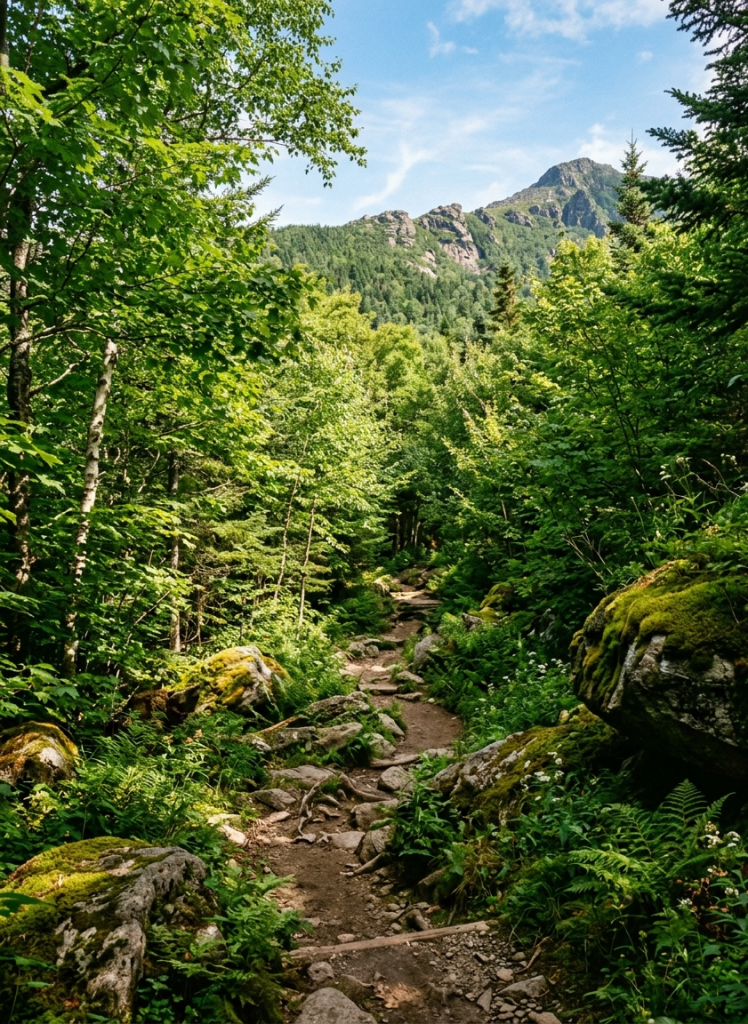
    summer hiking trail in vermont

    Dig Into Vermont Food and Drink

    10. Do a Vermont Cheese Tour

    Vermont is home to more than 50 artisan cheesemakers, and many of them welcome visitors. Cabot is the most famous name, but places like Jasper Hill Farm in Greensboro Bend, Neighborly Farms in Randolph Center, and Consider Bardwell Farm near Manchester are equally worth visiting. Buy something wrapped in paper, take it home, and eat it with crackers and local honey.

    11. Have Breakfast at a Diner That Has Not Changed in Decades

    There are still diners in Vermont where the coffee comes in a ceramic mug before you even ask, where the pie is made by someone in the back, and where the booths are vinyl and the floor is linoleum. The Miss Lyndonville Diner, the Blue Benn in Bennington, and Miss Bellows Falls Diner all carry that energy. Arrive hungry.

    12. Drink a Vermont Craft Beer at the Source

    The Heady Topper pilgrimage to The Alchemist in Stowe is practically a Vermont rite of passage at this point. But beyond that, breweries like Hill Farmstead in Greensboro, Foam Brewers in Burlington, and Lost Nation in Morrisville are worth a visit on their own terms. Drink something draft that does not travel outside the state. That is the whole point.

    13. Eat a Full Meal at a Farm-to-Table Restaurant

    Vermont’s food scene punches well above its weight given the state’s size. Restaurants here have long-standing relationships with local farms, and it shows on the plate. Places like Hen of the Wood in Waterbury and Burlington, The Inn at Weathersfield, or even smaller spots tucked into places you would never expect offer meals that genuinely reflect the season and the region.

    Small Towns Worth Your Full Attention

    14. Spend a Saturday Morning in Stowe Village

    Most people come to Stowe for the mountain, but the village itself is worth slowing down for. Walk Main Street, pop into the independent shops, get coffee somewhere that is not a chain, and watch the locals do their weekend errands. The farmers market runs seasonally and is genuinely good. It is the kind of town that makes you understand why people move here and then never leave.

    15. Wander Woodstock and Actually Go Inside Something

    Woodstock is beautiful, and yes, it can feel a little polished. But it has real substance too. The Billings Farm and Museum is one of the best living history farms in New England. The covered bridge right in the center of town is the most photographed in Vermont for a reason. Give it more than a drive-through.

    16. Explore Burlington’s Church Street and the Waterfront on the Same Day

    Burlington is a small city that earns its reputation as one of the most livable places in the country. Church Street is the pedestrian shopping and dining corridor, and the waterfront sits along Lake Champlain with a bike path, views of the Adirondacks, and enough going on in summer to keep you there all day. The combination of the two in a single afternoon is a very good Vermont day.

    The Unexpected and the Underrated

    17. Find a Roadside Farm Stand and Buy Something You Did Not Plan On

    One of Vermont’s most underrated pleasures is the honor-system farm stand. A wooden box, a price list, and fresh produce or eggs sitting in the open air. They are everywhere once you start looking. Stop at one even if you do not need anything. It is the kind of small transaction that reminds you where food actually comes from.

    18. Visit During an Off-Season Weekend

    Mud season has a bad reputation, but a rainy April weekend in Vermont when the crowds are gone and the rivers are running full and the sugarhouses are still going is quietly one of the best times to be here. Same goes for that window between ski season and summer. Vermont off-peak is for people who really want to see it.

    19. Go to a Town Meeting or a Local Event

    Vermont still holds traditional town meetings, one of the oldest forms of direct democracy in the country. If you can attend one, do. Even if you are just passing through, local events like community suppers, contra dances, library fundraisers, and harvest festivals give you a version of Vermont that no amount of scenic driving will show you.

    20. Just Sit Somewhere and Do Nothing for a While

    Vermont has a pace that rewards stillness. Find a bench, a porch, a rock by the river, a field that overlooks hills you cannot name. Sit there without a destination and without your phone and let Vermont do its thing. That might sound like nothing, but it is actually the whole point of being here.

    One More Thing Before You Go

    This list could be twice as long and still leave things out. Vermont is the kind of place where the best moment you have might be the one you stumble into by accident, a conversation at a general store, a sunset you caught from a dirt road you took by mistake, a farm dog who joined you for part of your hike.

    Keep the list in your back pocket, but leave room for the stuff that is not on it.

    Shop Green Mountain Peaks on Etsy

    Bring a little piece of Vermont into your home with our curated collection of gifts, apparel, and seasonal favorites. From cozy hoodies and crewnecks to Vermont-themed gift boxes and cookbooks, each item is designed to celebrate the Green Mountain spirit.

    • Vermont-inspired designs and gift sets
    • Printed and packaged with care
    • Ships directly to your door
    Visit Our Etsy Shop

    Discover gifts, apparel, and Vermont treasures made to share and enjoy year-round.
  • Top Family Day Trips in Vermont for Summer Adventures

    Top Family Day Trips in Vermont for Summer Adventures

    Summer in Vermont is made for family adventures. From a swim at Warren Falls to a hike up to Sterling Pond, this post covers the best day trips across the state, including farms, rainy day options, and where to find the best maple creemees. Worth a bookmark if you have kids in tow this summer.

  • Unmissable June Activities in Vermont for 2026

    Unmissable June Activities in Vermont for 2026

    spring in vermont

    June is the month Vermont finally exhales. The mud season mud is gone, the black flies are winding down, and the whole state shifts into something that feels genuinely celebratory. If you have been waiting for the right moment to visit, or if you live here and want to actually make the most of the season, June gives you more reasons to get outside and show up somewhere than almost any other month.

    I have lived through enough Vermont Junes to know that the events calendar this time of year is not just filler. These are the kinds of gatherings that remind you why people move here, stay here, and drive three hours to get here on a Friday afternoon. Some are big enough to draw visitors from across New England. Others are the kind of small-town thing that you stumble into and never forget.

    Here is a honest look at the June Vermont events worth building a trip around in 2026, with a few notes on what makes each one feel like the real Vermont.

    Burlington Discover Jazz Festival (June 3 to 7)

    If you have never been to Burlington for the Discover Jazz Festival, put it on the list now. This is the 43rd year of the festival, and it has earned every bit of its reputation as one of the most beloved events in the state. The lineup spans free outdoor performances all over the city, from Church Street to the Waterfront Park, plus ticketed shows at The Flynn and other venues.

    What makes it special is how woven into the city it feels. You can be grabbing a coffee on Church Street and suddenly there is live jazz spilling out of a doorway. The performances happen at all hours and in all kinds of spaces, which means you end up discovering parts of Burlington you might not have found otherwise.

    This year’s festival is curated by Jason Moran, a MacArthur Fellow and pianist who has framed the whole thing around jazz as a living, evolving art form. That means the lineup leans adventurous, not just nostalgic. Plan to check the schedule ahead of time because the free shows go fast in terms of good spots, and the ticketed events can sell out well before the weekend.

    Burlington in early June is also just genuinely lovely. The lake is right there, the restaurants are fully back in season, and the evenings are long enough to walk the waterfront after a show and still catch the last of the light.

    sunset over a lake

    Vermont Days: Free Admission at State Parks and Historic Sites (June 10 and 11)

    Vermont Days is one of those events that locals sometimes take for granted but really should not. For two full days in mid-June, the Vermont Department of Forests, Parks and Recreation opens state parks for free. That means day-use fees are waived at parks across the state, and many historic sites join in with free or discounted admission as well.

    If you have been meaning to finally visit Elmore State Park, Smugglers Notch State Park, or any of the other gems scattered across northern Vermont, this is the weekend to do it. The crowds are manageable compared to peak July and August, the greenery is at its absolute richest, and everything feels fresh in a way that mid-summer heat tends to flatten out.

    For families especially, Vermont Days is worth circling on the calendar. Packing a picnic, hiking a trail, and swimming in a lake without paying a park entry fee feels like a genuine gift from the state. It is also a good nudge for people who are new to Vermont or thinking about relocating here, to get out and actually see how much natural beauty is within an hour of almost anywhere in the state.

    Saint Johnsbury Pet Parade (June 6)

    I know this one sounds quirky, but bear with me. The Saint Johnsbury Pet Parade is in its 76th year in 2026, and it is exactly the kind of thing that makes you understand why people love small-town Vermont. This is a real community event, not a performative one. Registration opens at 8:30 in the morning at the Fairbanks Museum, the parade lines up at 9:30, and it steps off at 10 sharp.

    This year’s theme is celebrities, which means you will see dogs dressed as pop stars, cats in tiny suits, and probably a few animals the owners will describe as “inspired by” someone famous. It is the kind of event where the joy is completely unironic, and that is exactly why it works.

    Saint Johnsbury itself is worth the trip even if you time it wrong. The Fairbanks Museum and Planetarium is one of those places that stops you in your tracks, and the Athenaeum down the street has an art gallery that feels almost impossibly good for a town this size. If you are considering a move to the Northeast Kingdom, this is a solid introduction to what makes the area feel like home.

    Quechee Hot Air Balloon, Craft and Music Festival (June 19 to 21)

    The Quechee Balloon Festival is the longest-running hot air balloon festival in New England, and it earns that title every single year. Watching a dozen or more balloons rise over the Upper Valley on a clear June morning is one of those Vermont experiences that photographs cannot fully capture. The scale of it, the quiet inflation, the way they drift, it is genuinely something.

    Beyond the balloons, the festival includes tethered and untethered balloon rides, live music, and more than 50 craft and vendor booths. There is a kids zone, food vendors, and a beer and wine garden. It is the kind of full weekend event where you can arrive on Friday evening and still feel like you have not seen everything by Sunday afternoon.

    Quechee is in the Upper Valley, which puts it closer to the New Hampshire border than to Burlington, but it is an easy drive from most of central Vermont. The village itself is charming, and Quechee Gorge is right nearby if you want to tack on a short hike. June 19 to 21 is a solid weekend to build a trip around if you are coming from out of state, especially since the weather in late June tends to cooperate.

    hot air balloon over rolling hills

    Wellwood Orchards Strawberry Festival (June 20)

    There are few things more Vermont than a strawberry festival at a working orchard, and the Wellwood Orchards Strawberry Festival in Springfield delivers. This is a one-day event on June 20, and it is the kind of thing that sells out or fills up quickly, so plan accordingly.

    Wellwood is a real working orchard with a long history in the Springfield area. The strawberry festival celebrates the early summer harvest in a way that feels genuinely agricultural rather than just themed. Expect fresh strawberries, strawberry shortcake, and the kind of relaxed farm atmosphere that is hard to manufacture anywhere else.

    Springfield sits in the Okemo Valley region, which gives you good options for combining the festival with a longer trip. There are hiking trails, quiet roads for cycling, and enough small towns nearby to make a whole weekend out of it. If you are a fan of farm-to-table eating or you just want to taste something that was growing in Vermont soil two days ago, this one is worth the drive.

    Naulakha Estate Rhododendron Tour, Dummerston (June 5 to 7)

    This one is more niche, but it is genuinely special. The Naulakha Estate in Dummerston is the former home of Rudyard Kipling, who lived there in the 1890s and wrote The Jungle Books on the property. The estate is normally accessible only to overnight guests through Landmark Trust USA, but every June it opens to the public for the annual Rhododendron Tour.

    The main draw for garden lovers is the famous rhododendron tunnel, which runs the length of a football field and is at peak bloom in early June. The grounds include sweeping views of the Vermont countryside, and the house itself is a fascinating piece of literary history.

    On Friday June 5, there is an evening cocktail party with access to the estate, hors d’oeuvres, and live music. Saturday and Sunday are self-guided day tours from 10 AM to 4:30 PM. You can bring a picnic and spend the afternoon at your own pace. It is a rare chance to see a property that is usually very private, and the setting is as beautiful as the history is interesting.

    Community Concerts on the Green, Middlesex (Weekly Through September)

    This one is less of a single event and more of a reason to keep coming back. Community Concerts on the Green in Middlesex runs weekly from late May through early September, and the June dates are some of the best. The setting is exactly what it sounds like: a town green, folding chairs, people showing up with blankets and coolers, and live music that tends to skew local and genuinely good.

    These concerts are free, family-friendly, and low-key in the best way. There is no big production behind it. It is just community showing up for community, which is something Vermont does quietly but consistently well. If you are new to the area or visiting from somewhere more urban, it is a good way to feel what the social fabric here actually feels like on a Tuesday evening.

    vermont backroad in the summer

    Planning a June Trip to Vermont: A Few Practical Notes

    June in Vermont does fill up, especially around big events like the Jazz Festival and the Balloon Festival. If you are planning a trip around one of these events, book accommodations early. Small inns, bed and breakfasts, and vacation rentals in and around Burlington, Stowe, and the Upper Valley tend to go quickly once the summer season kicks in.

    The weather in early June can still be unpredictable. Pack a layer even if the forecast looks warm, because Vermont evenings have a way of cooling down fast, especially in the hills. By the last week of June, you are usually in true summer territory, but early June mornings can still surprise you.

    Gas up before you head into more rural areas. It sounds obvious until you are halfway to Saint Johnsbury on a Saturday morning and realize the next station is further than you planned for. Vermont’s beauty is closely tied to its spaciousness, and spaciousness means a little more planning goes a long way.

    If you are exploring Vermont with an eye toward relocating here, June is one of the best months to visit. The communities are alive, the landscape is at its greenest, and you get a real sense of how people actually live here rather than just what the postcards show.

    June Is When Vermont Earns It

    Every season here has its argument. Fall has the foliage. Winter has the skiing. But June has this particular quality of arrival, where the state feels like it has fully opened up after months of holding back. The farms are running, the trails are clear, the events are stacking up on the calendar, and the days are long enough to fit more into them than seems possible.

    Whether you are coming for a weekend, planning a longer trip, or just looking for an excuse to finally get to that part of Vermont you have been meaning to explore, June gives you plenty of reasons to go.

    Pick one event and build around it. You will likely find more to do than you expected.

    Shop Green Mountain Peaks on Etsy

    Bring a little piece of Vermont into your home with our curated collection of gifts, apparel, and seasonal favorites. From cozy hoodies and crewnecks to Vermont-themed gift boxes and cookbooks, each item is designed to celebrate the Green Mountain spirit.

    • Vermont-inspired designs and gift sets
    • Printed and packaged with care
    • Ships directly to your door
    Visit Our Etsy Shop

    Discover gifts, apparel, and Vermont treasures made to share and enjoy year-round.
  • Spring Kayaking Guide: Explore Vermont’s Scenic Waterways

    Spring Kayaking Guide: Explore Vermont’s Scenic Waterways

    kayak on river bank in vermont

    There is something about paddling in Vermont in the spring that feels almost stolen. The water is still cold enough to keep most people home, the trees are just starting to wake up, and the rivers are full and fast from snowmelt. If you time it right, you can spend an entire morning on the water without seeing another soul.

    I have been paddling Vermont’s rivers and lakes for years now, and spring is genuinely my favorite season to do it. Not because it is the easiest (it is not), but because everything feels alive in a way it simply does not in July. The birdsong is relentless. The water is crystal clear. And the Adirondacks and Green Mountains framing the horizon are still capped with snow while you are drifting through a valley turning green.

    Whether you are a seasoned kayaker looking for moving water, a casual paddler hoping for a calm lake morning, or someone brand new to the sport visiting Vermont for the first time, there is a perfect spot here for you. This is my honest rundown of the best rivers and lakes for spring paddling in Vermont, built from real time on the water and conversations with people who know these places well.

    Why Spring Is Such a Good Time to Paddle in Vermont

    The obvious reason is water levels. Vermont rivers are at their most dramatic in April and early May, fed by snowmelt from the mountains and the wet shoulder-season weather. Rivers that feel lazy and shallow by August are powerful and exciting in the spring.

    But the less obvious reason is the scenery. Spring in Vermont happens fast. One week the hillsides are bare gray and brown, and the next they are covered in the most electric shade of green you have ever seen. Paddling through that transition, especially in early May, is genuinely one of the most beautiful things you can do in this state.

    One thing to keep in mind: spring paddling requires a little more preparation than summer paddling. Water temperatures are cold, often in the 40s and low 50s. If you are paddling moving water, you should wear a wetsuit or drysuit, bring a partner, and check water levels before you go. The USGS Water Resources website and American Whitewater both have real-time gauge data for Vermont rivers. Check them before every trip.

    The Best Rivers for Spring Paddling in Vermont

    The Lamoille River

    The Lamoille is close to home for me, and it is honestly one of the most underrated paddling rivers in the state. It runs from Greensboro all the way to Lake Champlain, and different sections offer completely different experiences depending on what you are looking for.

    For beginners or anyone wanting a relaxed float, the stretch between Johnson and Morrisville is gentle and scenic. You pass through farmland and forest, and the views back toward Sterling and Elmore are stunning in the spring. Experienced paddlers tend to head farther upstream for more technical water, but I would not overlook the lower sections just because they are calm.

    The Lamoille corridor is also one of the best places in the state for spring bird watching from the water. I have spotted great blue herons, ospreys, and mergansers on a single morning trip through there in May. Bring waterproof binoculars if you have them.

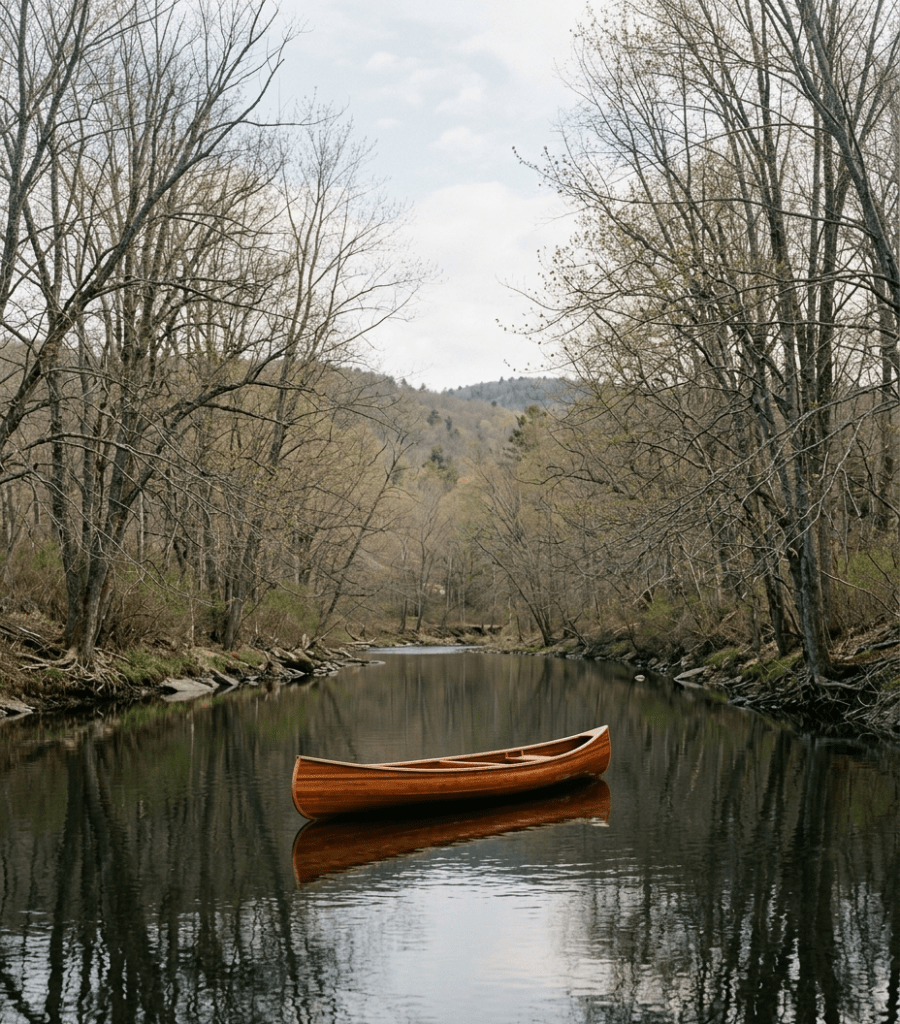
    canoe floating in Vermont river

    The Mad River

    The Mad River runs through the Mad River Valley, which is already one of Vermont’s most beloved pockets. In the spring, the river earns its name. Water levels are high, the current is strong, and several stretches offer genuine whitewater for intermediate and advanced paddlers.

    The section near Waitsfield is a local favorite. It is accessible, has good put-in and take-out points, and gives you enough of a challenge to feel it in your shoulders by the time you are done. The valley walls are steep and forested, so even on a gray spring day it feels dramatic.

    If you are newer to rivers, I would recommend waiting until mid-May when levels drop a bit, or sticking to the calmer lower stretch near the confluence with the Winooski. The Mad in April is not a beginner river.

    The Winooski River

    The Winooski is one of Vermont’s great rivers, and it cuts a beautiful path from the Northeast Kingdom through the heart of the state before emptying into Lake Champlain near Burlington. There are dozens of possible put-in points depending on what kind of paddling you want.

    The stretch between Montpelier and Waterbury is particularly good in the spring. You get a mix of flatwater and mild riffles, farmland and wooded gorges, and easy access in and out. It is a great full-day trip for intermediate paddlers who want to cover some distance without any gnarly whitewater.

    Closer to Burlington, the river flattens out and widens as it approaches the delta. Paddling the lower Winooski in May, watching the river grass fill in and the red-winged blackbirds stake out territory in the cattails, is one of those Vermont experiences that quietly becomes a favorite memory.

    The West River

    If you are willing to drive south, the West River in Windham County is one of the great spring whitewater destinations in New England. The Ball Mountain Dam release schedule, managed by the Army Corps of Engineers, creates some of the best predictable whitewater conditions in Vermont.

    The section between Jamaica State Park and Townshend is the classic run. Class II and III rapids, big scenery, and the kind of organized paddling energy you get when a spot has a real local community around it. Jamaica State Park also has camping, which makes a weekend trip easy to plan.

    Check release schedules before you go. Paddling the West without a release is a very different experience than paddling it during one.

    The Best Lakes for Spring Paddling in Vermont

    Lake Champlain

    Lake Champlain is an obvious answer, but it deserves the mention because it is genuinely one of the most spectacular paddling environments in the entire northeastern United States. The lake stretches 120 miles, borders Vermont and New York, and dips into Quebec. There is a lifetime of paddling here.

    In the spring, the lake can be moody and dramatic in the best possible way. The winds are unpredictable, so paddling close to shore and in the protected bays is the smart move, especially in April. The Inland Sea, the shallow northern section between Grand Isle and the mainland, is perfect for spring paddling. It warms up faster than the main lake, the bays offer wind protection, and the views toward the Green Mountains to the east are flat-out beautiful.

    Sand Bar State Park in Milton has one of the best put-in spots on the lake, and the paddle across to Sand Bar Wildlife Area and back is a lovely morning trip. Watch for loons on the water in May. They come back to Lake Champlain to nest every spring and their calls across the water are something you will not forget.

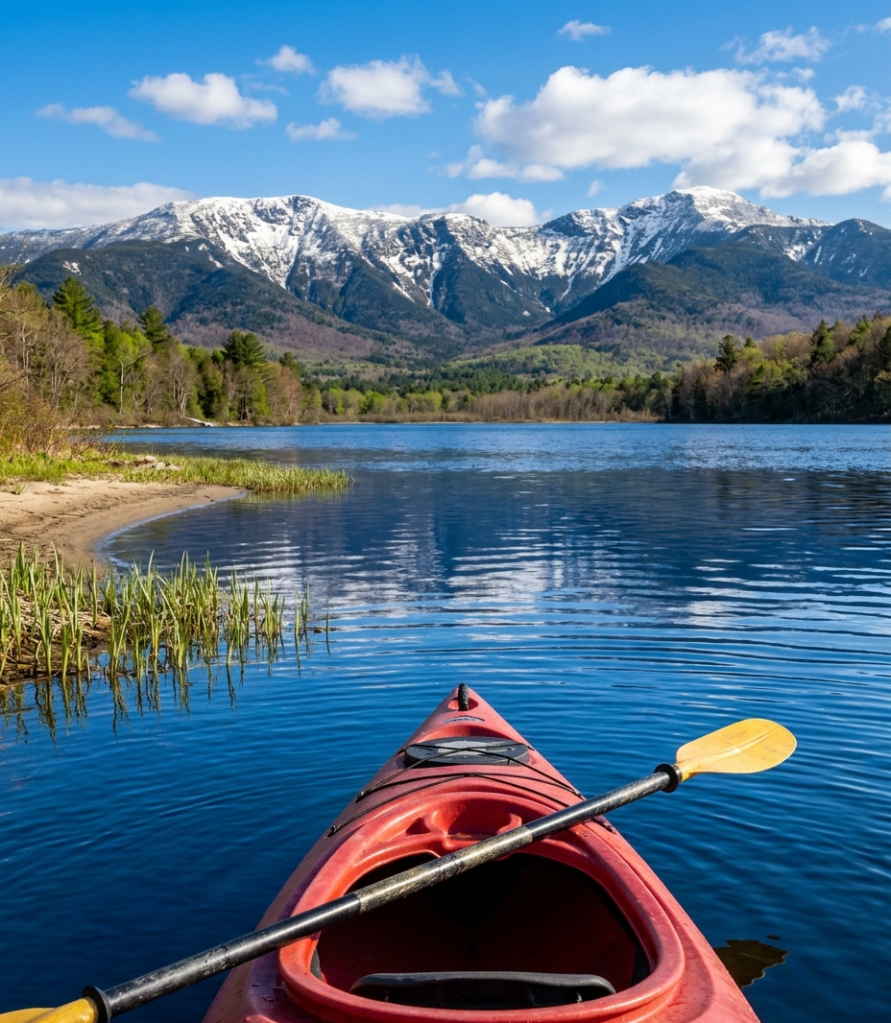
    kayak with snow capped mountains

    Waterbury Reservoir

    Waterbury Reservoir sits between Waterbury and Stowe, surrounded by state forest. It is calm water, reliably pretty, and because it is off the main tourist circuit, you often have it mostly to yourself in the early season.

    The reservoir is long and narrow, which makes it ideal for kayaking and stand-up paddleboarding. You can launch from the public access area at the north end and paddle south into the quiet coves and forested shoreline. On a clear May morning with Camel’s Hump visible above the treeline, it is genuinely hard to believe you are only ten minutes off the highway.

    Water temperatures are cold through most of May, so dress accordingly. But the flat water and the protected setting make this one of the more forgiving spring paddles in the state for newer paddlers who are not ready for rivers yet.

    Lake Elmore

    Lake Elmore in Lamoille County is one of my personal favorites for a spring morning. It is small and manageable, easy to circumnavigate in a couple of hours, and the state park has a good public launch. Mount Elmore rises straight up from the southeastern shore, and the reflections on still water in the early morning are the kind of thing that makes people reach for their cameras.

    Because it is smaller and relatively shallow, Lake Elmore warms up faster than the bigger bodies of water, which means paddling conditions are comfortable a little earlier in the season. It is a great place to take someone who has never been on the water before. Accessible, peaceful, and quietly stunning.

    Groton State Forest Ponds

    Groton State Forest in Caledonia County is one of Vermont’s least visited gems, and the collection of ponds inside the forest (Ricker Pond, Lake Groton, Noyes Pond, and others) are perfect for spring flatwater paddling. Loons nest here. The forest is dense and the shorelines are largely undeveloped. It feels remote in a way that very few places within two hours of Burlington actually feel.

    Lake Groton is the largest of the group and has a public boat launch. Ricker Pond State Park has camping. If you are looking for a spring paddling trip that doubles as a quiet overnight getaway, this is one of the best options in the state.</p

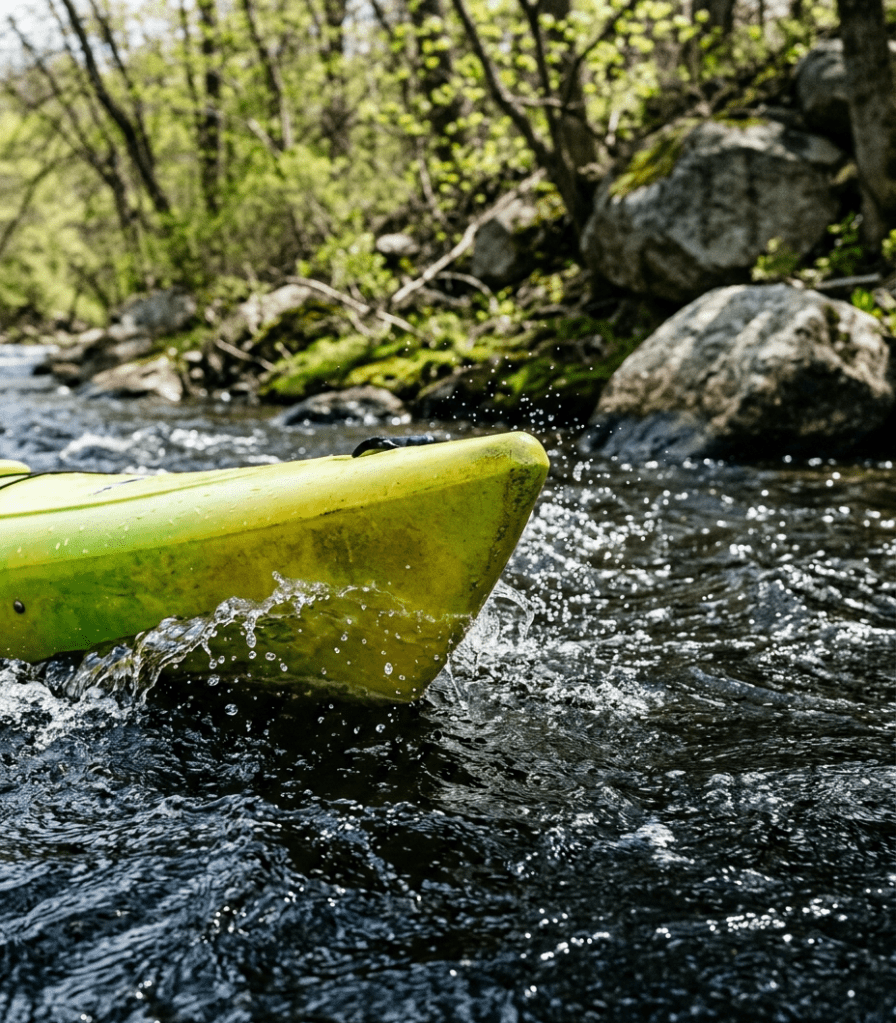
    yellow kayak with water splashing over it

    A Few Practical Things Worth Knowing

    Where to Rent Gear in Vermont

    If you do not own a kayak or canoe, there are good rental options around the state. Umiak Outdoor Outfitters in Stowe has been outfitting Vermont paddlers for decades and they know the local water as well as anyone. Several state park campgrounds also offer canoe and kayak rentals, including those at Groton State Forest and Burton Island State Park on Lake Champlain.

    Stand-up paddleboards have become popular at a lot of Vermont lakes, and you can find SUP rentals near most of the major lakes during the warmer parts of spring.

    Checking Conditions Before You Go

    For rivers, always check current gauge levels at waterdata.usgs.gov before you paddle. American Whitewater (americanwhitewater.org) has Vermont-specific river guides with recommended gauge levels for each run. For lakes, local wind and weather forecasts matter a lot, especially on Lake Champlain where conditions can change quickly.

    Water temperatures on Vermont lakes and rivers in April and early May are typically in the 40 to 52 degree range. Cold water immersion is genuinely dangerous. Wear a wetsuit or drysuit on moving water, always wear a PFD, and paddle with a buddy until conditions warm up in late May and June.

    Leave the Place Better Than You Found It

    Vermont paddlers tend to have a strong ethic around the water. Pack out everything you bring in, stay off sensitive shoreline vegetation, and give nesting birds a wide berth in the spring, especially loons and herons. These places feel wild and clean because people treat them that way.

    Getting Out There

    Spring paddling in Vermont is one of those experiences that stays with you long after the season is over. The cold air, the high water, the way the whole landscape feels like it is just waking up. There is nothing quite like it, and you do not need to be an expert paddler to enjoy it.

    Pick one of the calmer lakes for your first spring outing. Get comfortable with the gear and the conditions. Then work your way toward the rivers when you are ready. Vermont has more good water than most people realize, and most of it is right there waiting.

    Spring does not last long here. It is worth getting out while you can.

    Shop Green Mountain Peaks on Etsy

    Bring a little piece of Vermont into your home with our curated collection of gifts, apparel, and seasonal favorites. From cozy hoodies and crewnecks to Vermont-themed gift boxes and cookbooks, each item is designed to celebrate the Green Mountain spirit.

    • Vermont-inspired designs and gift sets
    • Printed and packaged with care
    • Ships directly to your door
    Visit Our Etsy Shop

    Discover gifts, apparel, and Vermont treasures made to share and enjoy year-round.
  • The Magic of Vermont’s Spring Fire Pit Evenings

    The Magic of Vermont’s Spring Fire Pit Evenings

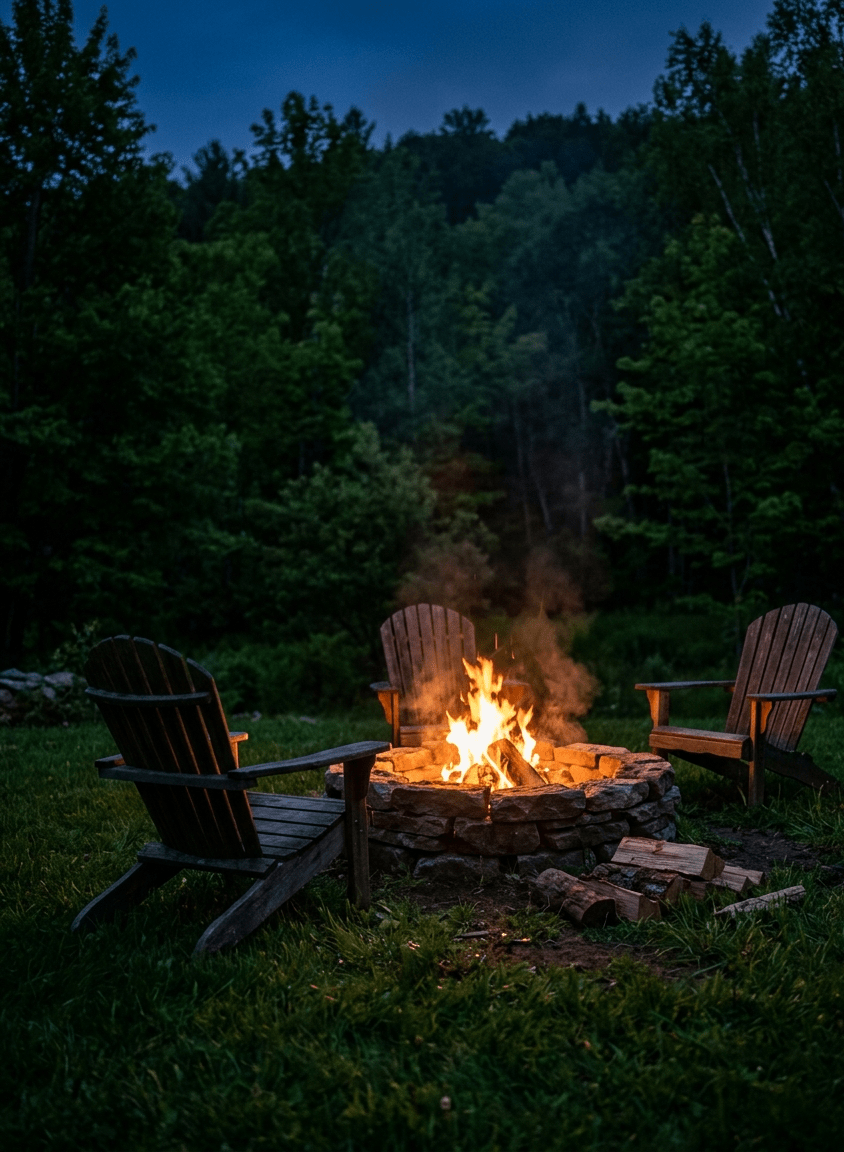
    There is a moment every spring in Vermont when you know the season has actually turned. It is not the calendar date, and it is not the first warm afternoon. It is the evening you finally drag the chairs back out to the fire pit, stack some wood, and light it without feeling like you are rushing the season.

    That moment usually comes somewhere in May, after mud season has done its worst and the ground has firmed up enough to stand on without losing a boot. The air still has a bite to it after the sun goes down. The peepers are going full volume in whatever wet patch is nearest to your yard. And the fire feels like exactly the right response to all of it.

    This is one of my favorite Vermont rituals, and it does not get talked about nearly as much as foliage or maple season. But if you live here, or if you have spent a real stretch of time here in the warmer months, you know exactly what I mean.

    When the Fire Pit Comes Back Out

    Mud season in Vermont is real and it is humbling. From late March through most of April, the ground is saturated, the dirt roads are soft, and everything feels a little suspended. You are not quite in winter anymore but you are not in spring either. You are just waiting.

    When it finally breaks, it breaks fast. The grass starts to green up almost overnight. People are outside again. And the first fire of the season feels less like a choice and more like a necessity, a way of marking the shift and celebrating the fact that the long part is over.

    There is something about that first fire in May that tastes better than any fire in July. Maybe it is the relief. Maybe it is the contrast with what just came before. Either way, it sets the tone for the whole season ahead.

    The People Who Appear

    Fire pits have a gravity to them that I cannot fully explain. Light one in your backyard and people materialize. Not because you planned anything or sent a message, just because there is a fire and that is enough of a reason.

    Neighbors you have waved to all winter end up pulling up a chair. Someone brings something to drink. Someone else shows up with food. By the time it is fully dark you are deep into a conversation that started nowhere in particular and went somewhere good, and nobody is checking their phone because there is no reason to.

    Vermont evenings in late May and June have a particular quality that I think people who visit in the summer sometimes miss because they are here for the daytime version of the state. The evenings are long and cool and quiet in a way that feels specific to this place. There is still a chill after the sun drops, just enough that the fire stops being decorative and starts being genuinely useful.

    That balance, warm enough to be outside, cool enough to want the fire, is the sweet spot. It usually lasts through June and into early July before the actual summer heat settles in.

    What We Cook Over It

    I am going to be honest: once you get comfortable cooking over a real fire, the gas grill starts to feel like a shortcut. Food cooked over open flame is different. There is smoke involved, and patience, and a kind of attention that does not feel like work because you are already sitting outside with a drink and good company.

    I have been cooking over the fire at home using the open fire grill from OakStoke Steelworks. It stakes into the ground, swings over the fire, and handles actual flame without any issues. For anyone who takes the cooking side of this seriously, it is worth looking into. But a simple grate works fine if you are just getting started.

    The ingredients matter more than the equipment anyway. Vermont in spring and early summer has good things to cook. Local farms are starting to have product again. The farmstand down the road is open. You do not need to plan much.

    A Few Things Worth Cooking Over a Real Fire This Time of Year

    • Asparagus in a cast iron skillet with butter and a little salt. Vermont asparagus season is short and it is worth doing this at least once while it lasts.
    • Sausage from a local farm cooked low and slow over the coals. The difference between this and a grocery store product is significant and worth paying for.
    • Foil packet potatoes with onion, olive oil, and whatever herbs you have. Bury them near the coals for forty minutes and let them do their thing.
    • Early corn in the husk laid directly on the grate. It steams in its own leaves and comes off the fire tasting like summer.

    None of this is complicated. The fire does most of the work. You just have to be willing to slow down enough to let it.

    Vermont Evenings in May and June Are Their Own Thing

    Peak foliage gets all the attention when people talk about Vermont seasons, and fair enough. But I would put a clear June evening up against any foliage weekend for the quality of being here. The light lasts until almost nine. The hillsides are that particular shade of green that only shows up for a few weeks before it deepens and settles into summer. The air smells like it just rained even when it did not.

    Early summer in Vermont also comes with sound. Peepers in May give way to the full chorus of June nights, birds going until dark, the occasional distant loon if you are near water. Sitting outside with a fire going while all of that is happening around you is an experience that I think people who only visit Vermont in fall or ski season are genuinely missing.

    There is also something to be said for how uncrowded it is. June in Vermont, outside of graduation weekends and holiday weekends, is quiet. The tourist wave has not really arrived yet. The roads are open. The restaurants have tables. It is the locals’ season, and the fire pit is very much part of it.

    You Do Not Need Much to Make This a Habit

    The tendency to over-engineer the fire pit is real and worth resisting. You do not need a purpose-built outdoor living space or matching furniture or any of the things that get marketed alongside this lifestyle. You need wood, something to contain the fire, a few chairs that are already outside, and enough time to let it burn for a couple of hours.

    In Vermont you can usually find good hardwood within ten minutes of wherever you are. Birch and maple are both common, both burn well, and both smell like exactly what a Vermont fire should smell like. The rest of it is just showing up and letting the evening do what evenings here do.

    Once you do it a few times it becomes a weekly thing without really deciding to make it one. Someone texts to ask if you are having a fire and you realize you were already planning on it. That is when it stops being an activity and starts being just how you live.

    This Is the Part of Vermont Living That Is Hard to Explain

    Vermont has a reputation for being slow and a little resistant to urgency, and I think that reputation is accurate and worth protecting. This is a state that still runs on town meetings and dirt roads and people who grow things and fix things and know their neighbors by name. The backyard fire fits right into that world.

    It is slow. It cannot be rushed without ruining it. It asks you to sit still and stay a while and not have a plan beyond the fire burning down. That is either frustrating or exactly what you needed, and most people who end up loving Vermont eventually figure out that it was the latter.

    If you are visiting Vermont this spring or summer, try to build a fire pit evening into your trip somewhere. If you are thinking about moving here, know that this is part of what the life actually looks like on an ordinary Tuesday in June. It is not dramatic or photogenic in an obvious way. It is just really, really good.

    The chairs are already out. The wood is stacked. Tonight seems like the right night.

  • Spring Wildlife Watching in Northern Vermont

    Spring Wildlife Watching in Northern Vermont

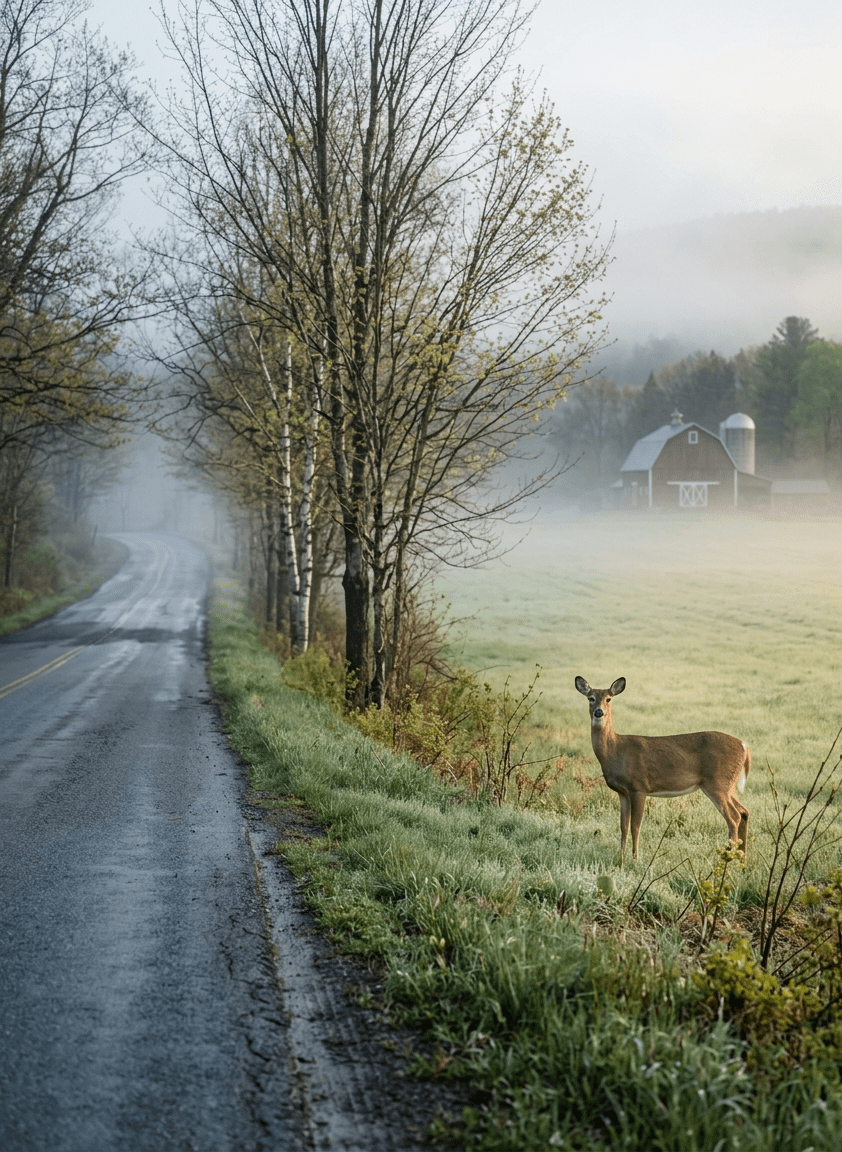
    There is a specific kind of morning in late May in northern Vermont where the light is still low, the fields are wet with dew, and something is standing at the edge of the tree line that was not there a second ago. A white-tailed deer, a wild turkey, sometimes a fox trotting along the fence row with somewhere important to be. If you have never driven a back road in Vermont during spring, this is the version of the state that people who live here know best.

    Spring is not a subtle season here. After a long winter and the slog of mud season, the green-up happens fast and the wildlife moves with it. From late April through early June, the roadsides and fields of northern Vermont turn into some of the most consistently rewarding places in New England to see wild animals going about their lives.

    You do not need a guided tour or a spotting scope. You mostly just need to slow down and pay attention.

    Why Spring Is the Best Season for Vermont Wildlife Watching

    The short answer is that everything is moving at once. Animals that spent the winter deep in the woods or hunkered in low spots are coming out to feed on new growth, find mates, and raise young. The vegetation has not fully leafed out yet, which means sightlines are longer than they will be in July. And the light in May, especially in the early morning and the hour before sunset, is extraordinary.

    This is different from fall foliage season, which draws people to Vermont for the color. Spring wildlife watching is quieter, less crowded, and in some ways more rewarding because you are watching the state wake up rather than wind down. The roadsides that will be packed with leaf-peepers in October are yours in May, and the animals have not yet retreated into the full cover of summer.

    Plan your drives for dawn and dusk if you can. That is when deer, turkeys, foxes, and black bears are most likely to be visible in open areas. Overcast days in May are often surprisingly active, especially around wetlands where herons and shorebirds are feeding in the shallow margins.

    What You Are Likely to See on a Drive Through Northern Vermont

    The honest answer is that it depends on where you go and how slowly you drive, but here is what shows up consistently.

    White-Tailed Deer

    Deer are the most reliable spring sighting in Vermont. They move out of winter cover as the grass comes in, and you will see them in fields and meadows in the early morning and evening hours. A doe with a fawn is possible by late May. Drive any stretch of Route 15 between Morrisville and Johnson at dusk and you are very likely to see deer in the fields along the Lamoille River.

    Wild Turkeys

    Turkeys are having a moment in Vermont. The population has grown considerably over the past two decades and you will see them year-round, but spring is when they are most visible and most interesting. Toms strut and fan their tails in open meadows during mating season, and flocks of hens move through agricultural fields and roadsides with a kind of unhurried confidence. If you have never seen a full-display tom turkey up close, it is genuinely impressive.

    Black Bears

    Bears emerge from their dens in spring hungry and looking for food. They are most often spotted in the early morning near berry-producing shrubs, agricultural areas, and forest edges. Sightings are not rare in northern Vermont, but they require some patience. The Northeast Kingdom and the hill towns east of Morrisville are productive areas. A bear sighting is one of those Vermont experiences that feels significant the first time it happens, especially if you are used to wildlife meaning squirrels and pigeons.

    Red Foxes

    Fox pups are born in late winter, and by May the adults are very active hunting rodents in fields and meadows to feed them. You will sometimes see a fox trotting a fence line or sitting in tall grass watching for movement. Old farm properties with a mix of open field and brushy edge habitat are reliable fox territory throughout northern Vermont.

    The Best Routes for Wildlife Watching in Northern Vermont

    You do not have to go far from the main roads to find good wildlife habitat, but the back roads are where the real encounters happen. Here are the stretches worth building a slow drive around.

    • Route 15 through the Lamoille Valley (Morrisville to Hyde Park to Johnson). This corridor follows the Lamoille River through wide agricultural bottomland. Deer, turkeys, and herons are common. Drive it at dusk with your windows down.
    • Route 100 north from Stowe toward Lowell and Jay. This is one of the most scenic spring drives in the state. The road passes through remote hill country with beaver ponds, wetland edges, and stretches where you might not see another car for twenty minutes. Bear sightings happen here.
    • The roads around Missisquoi National Wildlife Refuge near Swanton. This is one of the best birding spots in Vermont and a reliable area for waterfowl, osprey, and great blue herons during spring migration and nesting season.
    • Route 108 through Smugglers’ Notch (once it reopens, typically in late May). The notch itself is dramatic, but the farmland on the Jeffersonville side in the morning is reliably good for deer and turkeys.
    • Back roads around Lake Carmi State Park in Franklin. Less visited than many Vermont destinations, this is excellent habitat for wading birds and waterfowl, and the surrounding farmland is good for mammals at dawn.

    Birds Worth Watching For (Even If You Are Not a Birder)

    You do not have to be a birder to appreciate what is happening in Vermont’s fields and wetlands in May. A few species are distinctive enough that they tend to catch people off guard, in the best way.

    The bobolink is worth mentioning first because its call is unlike anything else. It sounds mechanical and bubbly at the same time, like something a science fiction prop designer would invent. Bobolinks nest in Vermont hayfields and you will hear them before you see them, hovering and singing over tall grass from late May onward. They are grassland birds that have declined in many places as land use has changed, which makes hearing them in a Vermont field feel genuinely lucky.

    Great blue herons are reliable near any slow-moving water. They stand completely still in the shallows and then move with a speed that seems impossible for a bird that large. Osprey have returned to Vermont in strong numbers and you will often see them hovering over rivers and ponds before diving for fish. The Lamoille River corridor and Lake Carmi are both good spots.

    Red-winged blackbirds are worth mentioning not because they are rare but because their call is the sound of a Vermont spring. The moment the males start singing from cattails and fence posts, you know the season has turned for real.

    The Moose Question

    Everyone asks about moose, and the honest answer is: they are real, they are worth looking for, and they are not guaranteed even in the best habitat. Vermont’s moose population has faced pressure from a warming climate and the winter tick, which has reduced numbers in some areas. But moose are still present, especially in the Northeast Kingdom and in the remote hill country of northern Lamoille County.

    Spring is actually a genuinely good window for moose sightings for one specific reason: they are drawn to roadsides to lick mineral salts that accumulate from road treatment during winter. Wetland edges, willow thickets, and shallow pond margins near the Canadian border region are your best options. Dawn is the most reliable time.

    If you do see a moose near a road, stay in your vehicle. They are enormous (a cow moose can weigh 700 pounds), and they are not as predictable as deer. Give them time and space and they will usually move on their own.

    How to Watch Without Getting in the Way

    The best wildlife watching in Vermont happens when you are quiet and still. Pulling slowly to the side of a back road and turning off your engine will get you farther than driving up a farm lane or stepping out into a field. Animals key on movement and noise, and a parked car is far less threatening to them than a person standing in the open.

    Resist the instinct to get closer. A good photo from a respectful distance is better than a stressed animal that has to flee. This is especially true for bears with cubs and birds on nests, both of which are common in late spring.

    Five minutes of patience in the right spot will often produce more than an hour of driving. Find a wetland edge, a field margin, or a stretch of river valley, stop, and just watch what is already there.

    What This Has to Do With Living Here

    One of the things people who move to northern Vermont mention most often is that the wildlife stops being scenery and starts being neighbors. A fox den under the shed. Turkeys crossing the driveway in November. A bear in the compost pile. A moose standing in the back field at six in the morning.

    This is part of what rural Vermont actually means. The wildlife corridors and the habitat that supports these animals are the same landscape that shapes where towns are, where farms sit, and where people build houses. It is not separate from Vermont life. It is threaded through it.

    If you are thinking about what it would be like to live here year-round, a slow spring drive north is one of the better ways to start understanding what that actually looks like on an ordinary morning.

    You do not need a destination. Just a full tank, a slow pace, and your windows down.

    Shop Green Mountain Peaks on Etsy

    Bring a little piece of Vermont into your home with our curated collection of gifts, apparel, and seasonal favorites. From cozy hoodies and crewnecks to Vermont-themed gift boxes and cookbooks, each item is designed to celebrate the Green Mountain spirit.

    • Vermont-inspired designs and gift sets
    • Printed and packaged with care
    • Ships directly to your door
    Visit Our Etsy Shop

    Discover gifts, apparel, and Vermont treasures made to share and enjoy year-round.
  • Discover Vermont’s Spring: Hills Turn Green and More

    Discover Vermont’s Spring: Hills Turn Green and More

    Spring in Vermont is not a gentle, predictable thing. It doesn’t arrive on cue, and it doesn’t ease you in. One week the hillsides are bare and gray, the kind of gray that makes you wonder if color even exists anymore. Then, sometime in late April or early May, something shifts. The hills go green, and when they do, it happens fast enough to feel like a surprise every single time.

    If you’ve only ever seen Vermont in fall or summer, spring is worth planning a trip around. It’s quieter, stranger, and in some ways more beautiful than any other season. Here’s what you’ll actually find when you come.

    Spring Comes Slowly Here (And That’s the Point)

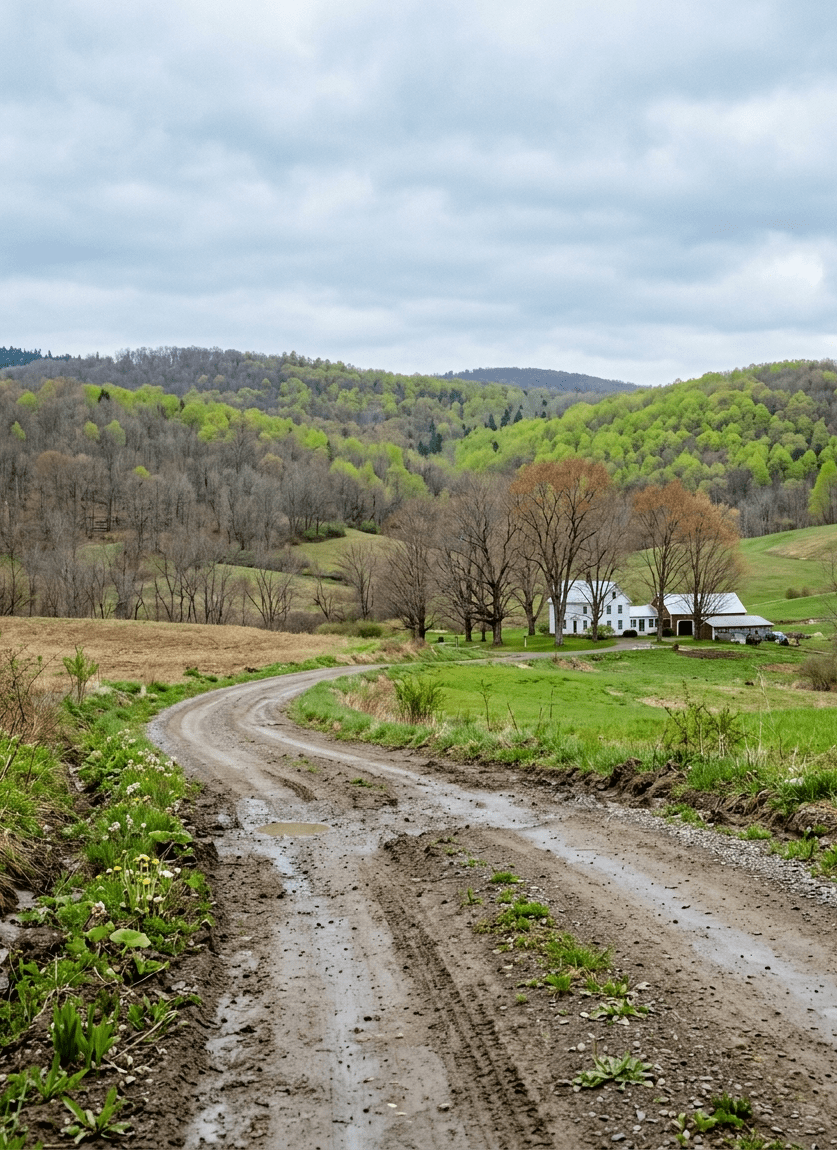
    Vermonters talk about mud season the way people talk about a difficult relative. There’s love there, but it’s complicated. Mud season is real. Unpaved roads turn soft, driveways become obstacles, and boots become essential in ways that feel extreme if you’re coming from somewhere warmer.

    But mud season is also the honest face of spring in Vermont. The snow melts from the top down, the ground thaws unevenly, and everything smells like earth and cold water and something on the verge of waking up. If you lean into it instead of fighting it, mud season has its own charm. Locals tend to get philosophical about it right around the time the first crocuses push through.

    April is the month most people skip on their Vermont travel calendar, and that’s understandable. But it’s also the month when the state feels most like itself: raw, honest, and completely uninterested in performing for anyone.

    The Color Change Nobody Talks About

    Everyone knows about Vermont foliage. The fall color gets talked about endlessly, photographed obsessively, and planned around months in advance. Spring green is less famous, but if you’ve stood on a hillside in early May and watched the color move up from the valley floors toward the ridgelines, you understand why it belongs in the same conversation.

    The green that comes in spring is a specific shade. It’s not the deep, saturated green of July. It’s brighter, almost electric, and it shows up gradually against the gray and brown of bare trees. First the willows go, turning a yellow-green that’s almost luminous near water. Then the hillsides start to show color at lower elevations, and you can watch the treeline slowly change as weeks pass.

    If you’re driving Route 2 through the Northeast Kingdom, or winding south on Route 12 through the hills above Northfield, or heading up Route 100 into the Mad River Valley, pay attention to the way different elevations hold different colors at the same time. You can be looking at green in the valley while the ridgeline above you is still bare. It’s a layered thing, and it only happens in spring.

    What Week to Come If You Want Peak Green

    The window for peak spring green in Vermont is roughly early to mid May, though it shifts depending on where you are in the state and how the winter played out. Southern Vermont and lower elevations tend to green up a week or two ahead of the Northeast Kingdom and higher terrain.

    If you’re aiming for that moment when the hills are fully lit up and the air still has some cold edge to it, target the first two weeks of May. You’ll get the green, the wildflowers (more on those shortly), the waterfalls running high, and the quiet that comes before the summer crowd arrives. It’s a good window.

    Waterfalls and Rivers Running Full

    Vermont has waterfalls worth visiting in any season. But in spring, when snowmelt is coming off the mountains and the ground is still saturated, those waterfalls turn into something else entirely. The volume doubles and triples, the sound carries further than you’d expect, and standing near a Vermont waterfall in April feels genuinely powerful.

    The rivers are worth watching too. The Lamoille, the Winooski, the Mad River, the Black River out of Springfield – they all run high and fast in spring, and the color of the water shifts with the melt. There’s a milky blue-gray tint to snowmelt water that’s different from summer flow, and it looks almost surreal against the bare-branched trees and muddy riverbanks.

    If you’re walking near any high water, use common sense. Spring rivers are cold and faster than they look. Stay on established paths and respect the banks. But do go see them. It’s one of those Vermont experiences that doesn’t make it into the glossy brochures, and it should.

    Wildflowers Before the Canopy Closes

    Here’s something most visitors don’t know: Vermont’s forest floor is at its most beautiful before the leaves come in. For a few weeks in late April and early May, sunlight still reaches the ground, and what grows there is worth stopping for.

    Trout lilies show up along stream banks and in damp, open forest, their mottled leaves followed by small yellow flowers that nod toward the ground. Trillium opens in patches under maples and beeches, white and precise against the leaf litter. Spring beauties carpet entire hillsides in some spots. If you know to look, the show is remarkable.

    The window closes quickly. Once the trees leaf out, the light disappears and the forest floor shifts into a different kind of green. This particular moment, the brief overlap of wildflowers and bare canopy, is one of the things Vermont does that nobody adequately prepares you for.

    Old carriage roads, rail trails, and any forest path that runs along a stream are good places to look. You don’t need to go deep into the backcountry. Some of the best wildflower walks are close to towns, on land that’s been quietly doing this every spring for centuries.

    What’s Actually Open (And What Isn’t Yet)

    Spring is shoulder season in Vermont, which means you get the landscape without the crowds, but you also need to plan around some closures and limited hours. Plenty of restaurants in smaller towns run winter schedules through April, which might mean closed Mondays and Tuesdays or shorter hours on weekdays. It’s worth a quick call before you drive somewhere specifically to eat.

    The things that are open, though, are often better in spring. Farmers markets start coming back online in May. A few begin even earlier in the season, particularly in larger towns. The vendors are happy to see people, the atmosphere is unhurried, and the early-season offerings (maple products, greenhouse starts, storage vegetables, winter preserves) are genuinely interesting.

    Local breweries and small food producers are often more accessible in spring than in July, when they’re slammed. If you’ve ever wanted to actually talk to the person making the thing you’re buying, spring is when that’s easiest.

    The Sugar Season Overlap

    If you come in late March or early April, you may catch the very tail end of maple season. Vermont’s sugaring season is driven by weather, not calendar, so it can run anywhere from February into April depending on the year. Some sugarhouses stay open for visitors through early spring, and if you can get inside one during or just after boiling season, do it.

    The smell of a working sugarhouse is hard to describe. Hot sap, woodsmoke, steam, and sweetness all at once. It’s one of those specifically Vermont things that you don’t forget. Even if the boiling has finished by the time you arrive, many sugarhouses sell direct through spring and are worth visiting for the products alone.

    Small Towns in Spring Feel Different

    Vermont’s small towns are worth visiting any time of year, but spring has a particular energy to it. The tourists haven’t arrived yet in full force, locals are emerging from a long winter, and there’s something like collective exhale happening across every village green and general store parking lot.

    Towns like Johnson, Hardwick, and Morrisville in Lamoille and Caledonia counties have that feeling in spring. The hardware stores get busy again. The diners fill up with contractors and farmers. The library posts a list of local events that actually sounds like things people want to do. It’s a community in the process of reopening, and if you pay attention, it’s one of the most human things Vermont shows you.

    Summer Vermont is beautiful. But spring Vermont is specific and local in a way that feels more real to the people who actually live here.

    A Few Things Worth Knowing Before You Go

    Vermont roads take a beating over winter, and spring is when that shows up. Frost heaves (the bumps and buckles caused by freezing and thawing ground under the pavement) are marked with signs, but the signs don’t cover everything. Drive slower than you think you need to on back roads, especially in April.

    The weather in spring is genuinely unpredictable. A warm, sunny morning can turn into a cold, rainy afternoon without much warning. Pack layers, bring a rain jacket, and don’t make plans that can’t tolerate a weather change. The people who have the best time in Vermont spring are the people who treat the weather as part of the adventure instead of an inconvenience.

    One more thing worth knowing: black flies arrive in late May in Vermont, and they’re serious. If you’re hiking or spending time near water and trees after Memorial Day, bring insect repellent and consider a head net if you’re sensitive to bugs. Early May is usually before they arrive in full force, which is one more reason that early May window is particularly good.

    Spring here is not polished. It’s wet and unpredictable and sometimes still cold enough to see your breath. But the hills go green in a way that genuinely stops you, and the quiet before summer arrives is its own kind of gift. Come with good boots and an open schedule, and Vermont in spring will give you something to come back for.

    Shop Green Mountain Peaks on Etsy

    Bring a little piece of Vermont into your home with our curated collection of gifts, apparel, and seasonal favorites. From cozy hoodies and crewnecks to Vermont-themed gift boxes and cookbooks, each item is designed to celebrate the Green Mountain spirit.

    • Vermont-inspired designs and gift sets
    • Printed and packaged with care
    • Ships directly to your door
    Visit Our Etsy Shop

    Discover gifts, apparel, and Vermont treasures made to share and enjoy year-round.
  • The Significance of Ice-Out in Vermont’s Spring

    The Significance of Ice-Out in Vermont’s Spring

    There is a moment every spring in Vermont that does not make the national news, does not trend on social media, and does not come with a lot of fanfare. It is quiet. It is slow. And if you have lived here long enough, you start watching for it sometime in late March with the same low-grade anticipation you might feel waiting for a train that runs on its own schedule.

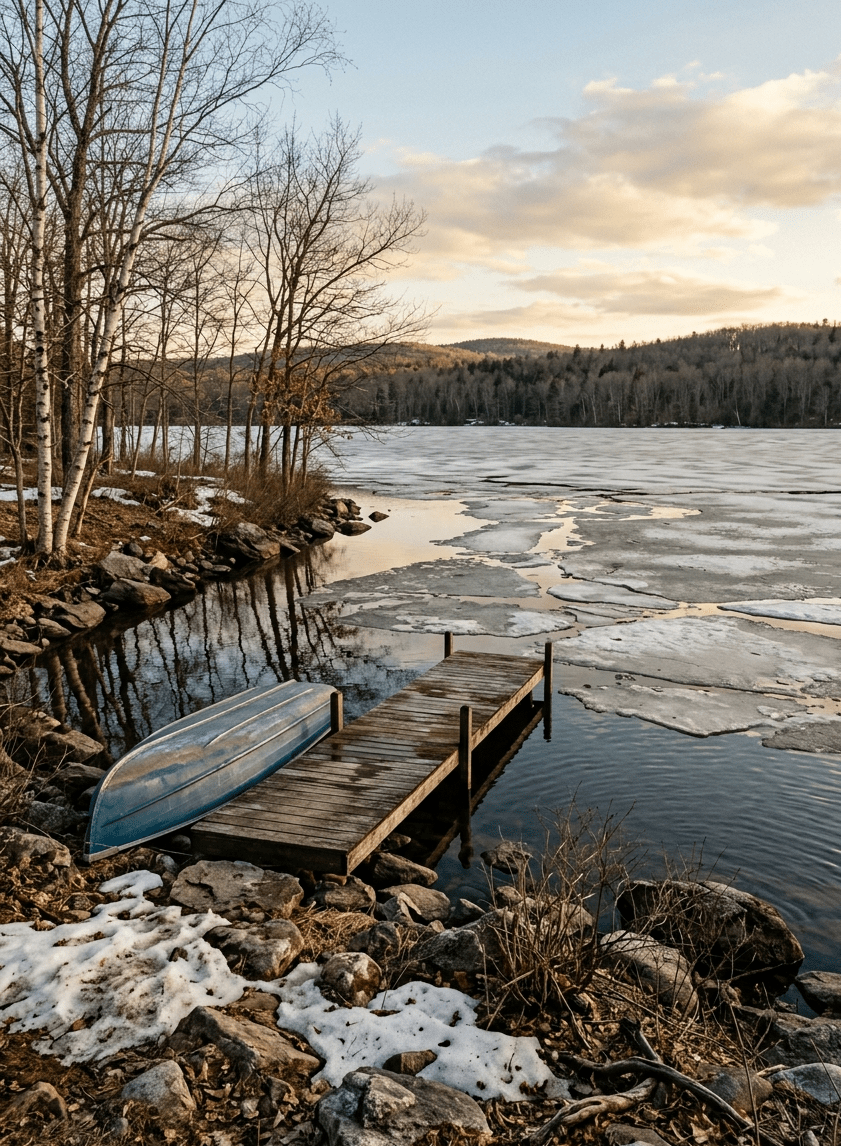
    Ice-out. The lakes are letting go.

    If you are new to Vermont or planning your first spring visit, ice-out season is one of those deeply local experiences that sneaks up on you. One day the lake is still a frozen sheet. A week later the edges are soft and dark. And then one morning you look out and the water is moving, and something in your chest loosens right along with it.

    What Ice-Out Actually Means in Vermont

    Ice-out is not a precise scientific term, though people track it with near-scientific devotion. In the most basic sense, it refers to the point when a lake or pond is clear enough of ice that a boat could navigate freely from one end to the other. That is the traditional definition, and different bodies of water use slightly different standards for when to make the official call.

    On some lakes, a local observer makes the determination. On others, it is more informal, a collective agreement among the people who live on the shoreline. Either way, the declaration carries real weight. Ice-out is Vermont’s unofficial starting pistol for spring.

    After a winter that can stretch from November into April in the Northeast Kingdom, that moment matters. People who have spent five or six months watching a frozen landscape finally get to see water again. Not snowmelt running down a ditch. Not a muddy creek. Open water, catching light, moving the way it is supposed to move.

    The Science Behind the Melt

    Vermont lakes typically freeze from the edges inward, with ice thickening through January and February depending on temperatures and snow cover. A heavy snow year can actually insulate the ice and slow the freeze, while a cold, dry winter with clear skies can push ice depth to two feet or more on the bigger lakes.

    The melt works in reverse, starting at the shoreline where the water is shallower and where dark ground absorbs more solar energy. By late March, the sun angle has changed enough that even cold days start losing the battle. You will notice the ice pulling away from shore first, leaving a ring of dark open water that widens a little each day.

    In the final days before ice-out, the ice goes through a transformation that Vermonters call “candling.” The solid sheet breaks down into vertical crystals that look almost fragile, like a frozen honeycomb. When you tap it, it sounds hollow. When the wind picks up or the rain comes, those crystals collapse in sections and the whole thing disappears faster than you would expect.

    Timing varies wildly. In mild years, some ponds see ice-out by the third week of March. In stubborn years, you might be watching chunks drift on Lake Champlain well into April. Climate trends have been nudging ice-out dates earlier over the decades, but Vermont weather has always had a way of doing exactly what it wants regardless of expectations.

    Vermont’s Most Watched Ice-Out Lakes

    Every lake in Vermont has its own ice-out story, but a few get more attention than others.

    Lake Champlain is the big one. Stretching over 100 miles along Vermont’s western border, Champlain does not freeze completely every year, and when it does, the ice tends to come off in stages. The Burlington waterfront is a great place to watch the transition, especially on a clear March afternoon when the Adirondacks are still buried in snow and the lake is starting to move again.

    Lake Memphremagog straddles the Vermont-Quebec border in the Northeast Kingdom and has its own ice-out culture. Newport, Vermont sits on the southern tip of the lake, and locals there watch the ice closely every spring. The cross-border nature of the lake adds a quirky dimension to the whole thing.

    Joe’s Pond in West Danville is probably the most famous ice-out lake in Vermont, and for good reason. More on that in a moment.

    But honestly, some of the best ice-out watching happens on the smaller Kingdom ponds that most visitors never hear about. A quiet pond with a camp on the shore and a pair of mergansers working the newly open water at dawn is its own reward.

    Joe’s Pond Ice-Out Contest: Vermont’s Unofficial Spring Lottery

    If you want to understand what ice-out means to Vermonters, spend five minutes on the Joe’s Pond Ice-Out Contest website. People enter from all over the country. Vermont expats in Florida and California buy tickets and watch the webcam from their living rooms. The whole thing is wonderfully, authentically Vermont.

    Here is how it works. A wooden tripod is set up on the ice at Joe’s Pond each spring. The tripod is connected to a clock onshore by a wire. When the ice softens enough that the tripod sinks or shifts, the wire trips the clock and locks in the official ice-out time down to the minute. Whoever picked the closest date and time in the contest wins.

    The contest has been running since 1988 and draws thousands of entries every year. The prize money has grown over the decades, but honestly the prize is almost beside the point. What people are really buying into is the ritual of it, the collective watching, the shared anticipation across hundreds of miles.

    You can follow along at joespond.com, and entries are typically available through the winter. If you have never entered, it is worth doing at least once just to have skin in the game when the ice starts to look soft.

    What to Do Around Vermont When Ice-Out Arrives

    Ice-out is not just a thing to watch. It is a thing to get out and be part of.

    Get On the Water

    Fishing season reopens with ice-out, and Vermont anglers do not waste any time. The weeks right after ice-out can be some of the best fishing of the year, especially for trout and perch in smaller lakes. Kayaking and canoe season kicks off too, and the early spring crowds are thin. If you have ever wanted to paddle a Vermont lake with no one else around, the window between ice-out and Memorial Day is your window.

    Visit the Lakeside Towns

    Burlington, St. Albans, Newport, Hardwick. The towns that sit close to water have a different energy in spring. Restaurants and shops that went quiet in the deep winter start reopening their doors. The Church Street Marketplace in Burlington fills back up. The marina in Newport starts prepping boats. There is a slow, optimistic hum to all of it that is genuinely hard not to get caught up in.

    Watch for Birds

    Ice-out brings the loons back. Common loons overwinter along the coast and return to Vermont’s lakes as soon as open water appears, sometimes before all the ice is even gone. Hearing a loon call across a still spring lake at dusk is one of those Vermont experiences that sounds like a cliche until you actually hear it for the first time. Mergansers, buffleheads, and early migrating ducks also show up right at ice-out, making the shoreline worth watching even if you are not a dedicated birder.

    Simply Sit and Watch

    This one is underrated. Find a bench, a dock, or a flat rock on the shore and just watch the water. After months of frozen stillness, seeing a lake in motion again is more satisfying than it sounds. There is something almost meditative about it.

    Ice-Out as a Vermont State of Mind

    If you ask a Vermonter what ice-out means to them, they will probably give you a practical answer first. Fishing opens. You can get the kayak out. The road to the camp is finally passable.

    But there is something underneath all of that. Vermont winters are not just cold. They are long. They are dark. By March, even the people who genuinely love winter are ready for something to change. Ice-out is that change made visible. It is the land and water doing what they have done every year since before anyone was here to watch it, letting go of one season and making room for the next.

    People who move to Vermont from somewhere else often talk about how quickly they adopt ice-out as their own milestone. It takes about one full winter for that to happen. After a single mud season, after a few weeks of frozen roads and brown slush and a sky that seems permanently gray, you will understand exactly why watching a lake wake up feels like a genuine event.

    There is nothing quite like a Vermont spring thaw. Slow, a little messy, and completely worth the wait.

    Shop Green Mountain Peaks on Etsy

    Bring a little piece of Vermont into your home with our curated collection of gifts, apparel, and seasonal favorites. From cozy hoodies and crewnecks to Vermont-themed gift boxes and cookbooks, each item is designed to celebrate the Green Mountain spirit.

    • Vermont-inspired designs and gift sets
    • Printed and packaged with care
    • Ships directly to your door
    Visit Our Etsy Shop

    Discover gifts, apparel, and Vermont treasures made to share and enjoy year-round.
  • Why Spring in Vermont is Your Ideal Weekend Getaway

    Why Spring in Vermont is Your Ideal Weekend Getaway

    Spring in Vermont gets a complicated reputation. Mud season is real, the roads get soft, and the shoulder season between ski season and summer can feel a little in-between. But once you get past mid-April, something genuinely lovely happens. The hills go green almost overnight, the crowds thin out compared to fall, and the small towns that get overrun in October become yours again.

    If you have been waiting for a good excuse to explore Vermont without fighting for a parking spot in Stowe or standing in line for brunch in Woodstock, spring is actually your window. Here are five Vermont small towns worth building a weekend around this season.

    Why Spring Deserves More Credit

    Most people plan Vermont trips around foliage season or ski season, which means spring gets overlooked. That is honestly fine, because it keeps things quiet. Late April through May brings wildflowers along the roadsides, rivers running high and fast from snowmelt, and farm stands starting to wake back up. Maple season is winding down but sugar shacks are still worth visiting, and the landscape has that new-green quality that feels almost electric after a long winter.

    You also get the full Vermont experience without the full Vermont crowd. Restaurants that are booked out weeks in advance in October often have open tables on a Friday night in May. That alone is worth the trip.

    Stowe: Classic Vermont With Room to Breathe

    Stowe is one of those towns that gets overshadowed by its own reputation. Yes, it is famous, yes it gets busy, but in spring it settles back into something more manageable. The ski lifts are quiet, the main street has space, and you can actually have a conversation at a restaurant without shouting.

    The rec path that follows the West Branch River through town is one of the nicest easy walks in Vermont. It is flat, well-maintained, and runs through some genuinely pretty scenery for a few miles out and back. In spring, the trees are just leafing out and the river is moving with energy from snowmelt.

    Von Trapp Brewery is open year-round and the lager garden is one of the better spots in the state for a slow afternoon. The Trapp Family Lodge grounds are also open to visitors and the views of the valley from up there do not require a room reservation.

    Stowe also makes a good base if you want to explore the broader Lamoille Valley or push into the Northeast Kingdom for a day.

    Woodstock: The Living Postcard That Still Feels Real

    Woodstock is probably the most photographed village green in Vermont, and for good reason. The covered bridge, the Federal-style buildings, the hills closing in on all sides. It looks like someone designed it specifically to be beautiful, but it has been this way for 200 years, so you can forgive the postcard quality.

    Billings Farm and Museum reopens in spring with programming around maple, farming history, and seasonal agriculture. It is genuinely worth a few hours, especially if you are traveling with kids or just want to understand what Vermont farming actually looks like. The working dairy is the real thing, not a recreation.

    The stretch of Elm Street downtown has a strong independent food and shopping scene. The Woodstock Farmers Market (the store, not the outdoor market) is excellent for picking up local provisions, and there are a couple of good spots for lunch that do not feel like tourist traps.

    A short drive away, the Quechee Gorge is accessible year-round and the overlook is dramatic in any season. Spring runoff makes the river down below run especially hard, and the short trail along the rim is worth the stop.

    Middlebury: The College Town That Earned Its Reputation

    Middlebury does not always make the top of Vermont travel lists and that is a mistake. It is a working college town with a genuine downtown, which means the food scene and the arts programming exist for locals, not just visitors. That makes a real difference in how a place feels.

    Otter Creek Falls runs right through the center of downtown and in spring it runs hard. There is a small park area where you can watch the water go over the falls from practically street level, and it is one of those small Vermont moments that sticks with you. The sound alone is worth a few minutes standing there.

    The Frog Hollow Vermont Craft Gallery on the main drag is one of the better spots in the state to find work by Vermont makers, from ceramics to woodworking to textiles. If you want to bring something home that actually came from Vermont, this is a more satisfying option than most gift shops.

    Middlebury is also sitting at the edge of the Champlain Valley, so the drive in or out along the lake shore on Route 7 or the more rural Route 22A puts you through some of the most open, agricultural landscape in the state. In late April and May, that drive is genuinely beautiful.

    Montpelier: Small Capital, Big Personality

    Montpelier is the smallest state capital in the United States, and it wears that fact with a certain pride. The whole downtown is maybe six or eight blocks, walkable in an afternoon, but it punches well above its size in terms of food, coffee, and culture.

    The most notable thing about Montpelier’s downtown is that there are no chain restaurants. None. The whole strip is locally owned, from the coffee shops to the Thai place to the pizza spot. That is not an accident, it reflects something about the character of the city, and you feel it when you walk around.

    Bear Pond Books on State Street is a genuine independent bookstore with a strong local section and staff who actually know what they are talking about. The State House grounds are open and worth a walk, especially in spring when the lawn is green and the building is quiet compared to the legislative session months.

    Spring is a particularly good time to visit because the summer festival season has not kicked in yet, but the city has fully shaken off winter. The farmers market comes back in May and the local arts calendar starts filling up again.

    Grafton: The One Most People Miss

    If you want Vermont with absolutely none of the crowds, Grafton is your answer. It sits in the hills of southern Vermont in Windham County, far enough from the main tourist corridors that most people drive past it without stopping. That is their loss.

    The Grafton Village Cheese Company alone makes the drive worthwhile. They have been making raw milk cheddar here since 1892, and the tasting room lets you work through their lineup at your own pace. The cheddar aged three or four years is the one to start with. Pick up a wedge for the drive home and you will thank yourself later.

    Grafton itself is one of those Vermont villages that looks essentially unchanged from 150 years ago, not because it is frozen in amber but because people here have actively kept it that way. The Old Tavern at Grafton has been operating in some form since 1801. The architecture along the main road is classic New England without any of the commercial creep that edges into more visited towns.

    Grafton Ponds Outdoor Center runs mountain biking and trail programming when the snow is gone, and the trail system there is a good spring option once the ground firms up. It is quiet, well-maintained, and gives you a real taste of Vermont woodland without a three-hour drive to the Northeast Kingdom.

    A Few Notes on Planning a Spring Vermont Weekend

    Mud season runs roughly from mid-March through mid-April, sometimes into early May in higher elevations and on unpaved roads. The timing varies year to year. If you are planning to hike trails or explore backroads, check local trail and road conditions before you go. Town websites and local Instagram accounts are more reliable for real-time conditions than national travel sites.

    Even in spring, smaller Vermont inns and bed-and-breakfasts fill up on weekends faster than people expect. If you are planning a trip for May, booking accommodations a few weeks out is not overkill.

    Layering is not optional. Spring days can swing twenty degrees between morning and afternoon, and an overcast day in the hills feels genuinely cold even in late April. Bring a fleece and a rain layer regardless of what the forecast says.

    The best version of a Vermont spring weekend is an unhurried one. Pick one or two towns, give yourself time to walk around and eat well and take a wrong turn or two on the back roads. That is when Vermont actually reveals itself.

    Spring here is worth more than it gets credit for. You just have to show up for it.

    Shop Green Mountain Peaks on Etsy

    Bring a little piece of Vermont into your home with our curated collection of gifts, apparel, and seasonal favorites. From cozy hoodies and crewnecks to Vermont-themed gift boxes and cookbooks, each item is designed to celebrate the Green Mountain spirit.

    • Vermont-inspired designs and gift sets
    • Printed and packaged with care
    • Ships directly to your door
    Visit Our Etsy Shop

    Discover gifts, apparel, and Vermont treasures made to share and enjoy year-round.
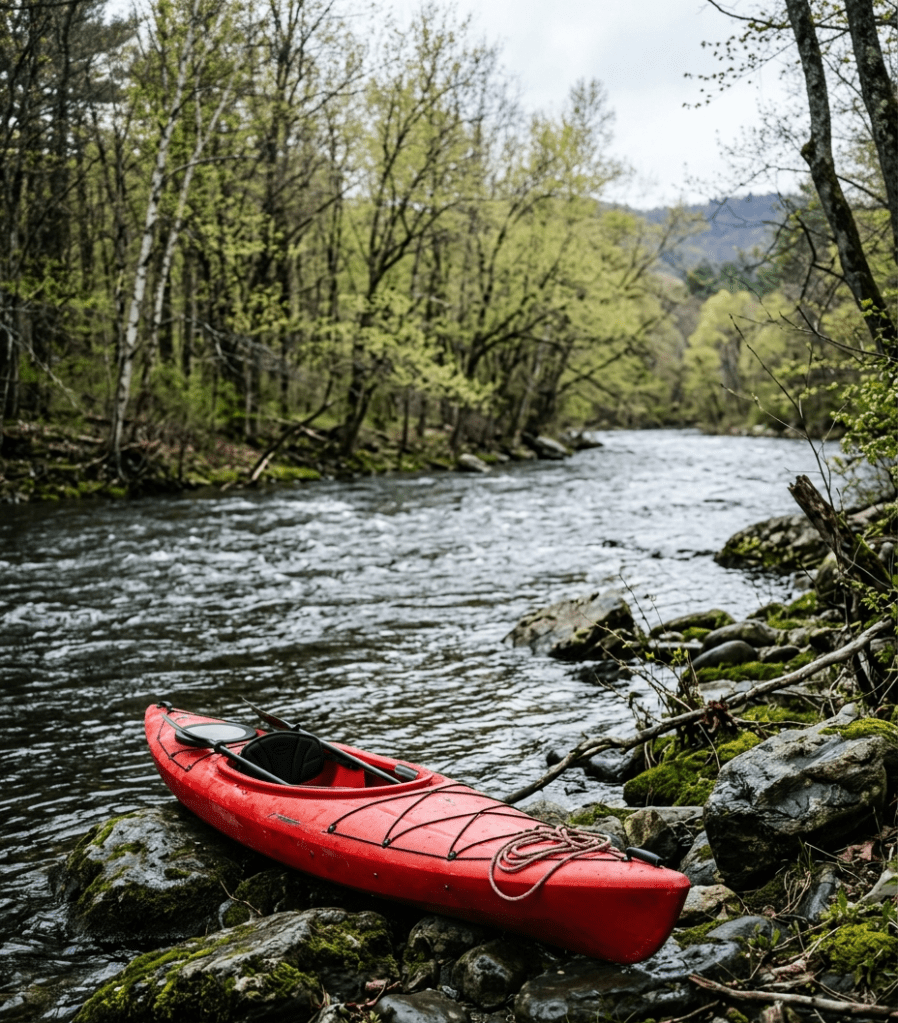
  • Experience Vermont’s Maple Season Before It Ends

    Experience Vermont’s Maple Season Before It Ends

    Every year it happens the same way. You look up from whatever you have been doing, notice the mud on your boots, and realize that maple season is nearly over. The sugarhouses that have been running full steam since late February are slowing down. The nights are not cold enough anymore. The sap has started to taste off. And just like that, one of the most quietly magical times of year in Vermont is almost gone.

    If you have been meaning to get out there and experience it, now is the time. Not next weekend. Now.

    Why Maple Season Feels Different When You Know It’s Almost Over

    Maple sugaring in Vermont depends on a very specific kind of weather. Freezing nights and warm days create the pressure changes that get the sap moving through the trees. Once the nights stop dropping below freezing consistently, that’s it. The season ends not on a calendar date but on nature’s terms, and it rarely gives much warning.

    Most years, peak sugaring happens somewhere between late February and early April. But a warm stretch can close things down faster than anyone expects. Sugarhouses that were boiling day and night just a couple of weeks ago might already be cleaning up their equipment and calling the season done.

    There is something bittersweet about that. Maple season has this quality of feeling both eternal and fleeting at the same time. When you are in it, steam rising from the sugarhouse and the smell of boiling sap hanging in the cold air, it feels like it will always be there. Then one morning it is just over.

    Visit a Vermont Sugarhouse Before They Close for the Season

    This is the one thing worth making a real effort to do. A lot of sugarhouses in Vermont welcome visitors during the sugaring season, and many of them are not open to the public at any other time of year. Once the season wraps up, the doors close and they go back to being quiet corners of someone’s family farm.

    Visiting a sugarhouse is not like visiting a brewery or a winery. It is louder, steamier, and a lot more honest. You walk in and the heat hits you immediately. The evaporator is running. Sap is boiling down into syrup at a ratio of roughly forty gallons to one. The whole place smells incredible in a way that is almost impossible to describe until you have been there.

    Small family operations are where you get the real experience. These are places where the person boiling the sap is the same person who tapped the trees and will be the one handing you a sample on a tiny plastic spoon. They are not performing Vermont for you. This is just what they do every spring.

    The Vermont Maple Sugar Makers’ Association maintains a directory of sugarhouses and maple producers across the state. It is the easiest way to find operations near you that are open to visitors. Many towns also have their own local sugarhouse open houses around this time of year, so it is worth checking community boards and local Facebook groups as well.

    Discover Vermont’s Maple Creemees

    Stock Up on Real Vermont Maple Syrup Now

    Here is something that does not get talked about enough. The syrup produced at the end of the season, when the weather is warmer and the sap has been running longer, is darker and more intensely flavored than what comes out at the start. If you love cooking with maple or want something with real depth, end-of-season syrup is worth seeking out.

    Vermont grades its maple syrup by color and flavor. Golden and Amber grades are delicate and sweet, great for drizzling on pancakes or yogurt. Dark and Very Dark grades are where things get interesting. They have a robust, almost caramel-like complexity that holds up in braises, marinades, and baked goods in a way the lighter grades cannot.

    Buying direct from a sugarhouse or a local producer is the best option whenever possible. The syrup is fresher, the price is usually better than what you will find in a gift shop, and you know exactly where it came from. A lot of producers also sell online through their own sites or through platforms like Etsy, which is worth exploring if you want to continue supporting Vermont makers after the season ends.

    Five Scenic Drives to Take This Spring

    What Grade Should You Buy?

    If you are new to Vermont maple syrup, the grade system can feel a little confusing. Here is the short version.

    • Golden (Delicate Taste): Light, mild, and subtle. Great for beverages and anything where you want just a hint of maple flavor.
    • Amber (Rich Taste): The classic Vermont maple flavor most people know. Works well on almost everything.
    • Dark (Robust Taste): Deeper and more complex. Excellent for baking, glazes, and savory cooking.
    • Very Dark (Strong Taste): Intense and earthy. An underrated option for anyone who wants maple to be the loudest thing in a dish.

    If you can only grab one bottle before the season ends, go for Dark or Very Dark. It is what late-season Vermont tastes like, and you will not regret it.

    Eat and Drink Your Way Through the Last of Maple Season

    Vermont does not just produce maple syrup. It eats and drinks it in every form imaginable this time of year. If you want the full experience, here are a few things worth tracking down before the season shifts.

    Sugar on snow is the one you hear about most, and for good reason. Hot syrup poured over a tray of clean packed snow hardens into a chewy, candy-like treat that you eat with a fork or on a stick. It is simple, a little ridiculous, and completely delicious. Some sugarhouses offer it during the season. A few maple festivals make it a centerpiece. Do not pass it up if you get the chance.

    Maple creemees (Vermont’s soft-serve ice cream, for anyone who needs that explained) start showing up at farm stands and local spots around this time. The maple ones are worth going out of your way for. The season for those is just getting started as maple sugaring winds down, which feels like a very fair trade.

    Local cafes and breakfast spots across Vermont lean into maple season with specials that come and go quickly. Maple lattes, maple donuts, maple french toast with fresh local syrup. These are not year-round menu items. Check in with your favorite spots and ask what they are running while they still have it.

    Get Outside for the Last Muddy, Magical Days of Early Spring

    Late maple season in Vermont is also mud season, and that is not nothing. The snow is mostly gone from the lower elevations. The ground is soft and wet and starting to wake up. The light has changed in that way it does in April, longer and warmer and full of actual promise.

    It is not the most glamorous time to hike in Vermont. Some trails are genuinely a mess. But getting outside in this in-between season has its own rewards. The sugar maple stands are quiet and beautiful in a leafless, structural way. You can hear the birds coming back. The woods smell like earth and cold water and the very beginning of something.

    Stick to lower-elevation trails and gravel roads if you want to avoid the worst of the mud. The Missisquoi Valley Rail Trail, flatter walking paths through farmland, and many rail trails across the state hold up reasonably well at this time of year. Save the ridge hikes for May when things dry out.

    Why Everyone Feels Welcome in Vermont

    A Few Things Locals Do to Mark the End of Maple Season

    If you want to experience maple season the way people who actually live here do, here are a few things worth knowing about.

    • Maple festivals and open houses: Towns across Vermont host maple-focused events every year in late March and early April. Some are big productions with vendors and demos. Others are small and low-key. Either way, they are a good reason to get out and explore a part of Vermont you might not have visited before.
    • Making something at home: A lot of locals pick up a jar of fresh maple cream or maple butter at the end of the season and spend a quiet Sunday baking with it. If you are in Vermont right now, grabbing a jar before the supply runs out is a good move.
    • One last sugarhouse morning: There is a specific kind of peacefulness to sitting outside a sugarhouse on a cold early morning with a cup of coffee, watching the steam come off the evaporator stack. Locals who have been doing this their whole lives still show up for it every year. It does not require an explanation.

    Maple season closing down is also the mental signal for a lot of Vermonters that spring is actually on its way. The mud is proof. The longer days are proof. And the sugarhouses going quiet is the last piece of it. By the time the trees start to bud out, the whole rhythm of the year will have shifted again.

    Don’t Wait Too Long

    The honest truth about maple season is that it does not wait. A stretch of warm nights can end a season in days. Sugarhouses that planned to stay open another week sometimes close early because the sap just stopped running. The window is real and it is narrow.

    If you are in Vermont right now, or if you can get here in the next week or two, go find a sugarhouse. Buy a jar of dark syrup. Get a maple creemee if you can. Stand outside in the mud for a minute and just breathe in the smell of the season.

    It only comes around once a year, and there is no catching up once it is gone.

    Shop Green Mountain Peaks on Etsy

    Bring a little piece of Vermont into your home with our curated collection of gifts, apparel, and seasonal favorites. From cozy hoodies and crewnecks to Vermont-themed gift boxes and cookbooks, each item is designed to celebrate the Green Mountain spirit.

    • Vermont-inspired designs and gift sets
    • Printed and packaged with care
    • Ships directly to your door
    Visit Our Etsy Shop

    Discover gifts, apparel, and Vermont treasures made to share and enjoy year-round.