
When Trains Ruled the Green Mountains
There was a time when you could stand almost anywhere in Vermont and hear a train. The low rumble of a steam engine working its way through a mountain pass, the sharp whistle cutting through a cold morning, the bustle of a small-town depot where people gathered like it was the center of the universe. Because for a long time, it was.
Vermont’s railroad story is one of the most dramatic in the state’s history. It goes from ambition and industry to abandonment and overgrown trails, with a lot of local legend packed in between. If you’ve ever walked a rail trail or spotted an old stone depot on the edge of a village, you’ve already touched a piece of it.
Laying the Tracks: Railroads Come to Vermont
In the early 1800s, Vermont was mostly forests, farms, and rough dirt roads. Getting goods anywhere took forever and cost plenty. The railroads changed all of that almost overnight.
The Vermont Central Railroad, incorporated in 1843, was the first major player. Its original line connected Burlington to Windsor, and it opened up central Vermont towns that had been largely cut off from outside markets. The Rutland and Burlington Railroad followed close behind, linking the Champlain Valley to southern New England.
Building those lines was brutal work. Vermont’s terrain pushed back hard. Rocky soil, steep grades, brutal winters. But by the 1860s, dozens of rail lines crisscrossed the state, and Vermont was connected to the rest of the country in a way it had never been before.
The Golden Age of Rail: Commerce, Tourism, and Small-Town Life
From roughly the 1870s through the 1920s, the railroads were Vermont.

Logging camps deep in the Northeast Kingdom sent timber south on spur lines. Barre’s granite quarries loaded monument stone onto freight cars and shipped it across the country. Vermont dairy products made it to Boston and New York still fresh, thanks to refrigerated cars that made the whole thing possible.
For regular people, the railroads meant freedom of movement. Vermonters could travel to see family, find work, or attend school in ways that simply hadn’t existed before. Immigrants settling new parts of the state arrived by rail. The stationmaster was often the most informed person in town, getting news before anyone else and knowing who was coming and going.
The railroads also sparked Vermont’s first real tourism boom. Wealthy families from Boston and New York would board sleeping cars and head north to escape the summer heat, landing in resort towns like Woodstock and Stowe, checking into grand hotels that existed almost entirely because of the train lines running past their front doors.
Competition and Consolidation: When the Railroads Changed Hands
As the network grew, smaller lines struggled to stay afloat. Larger railroads began absorbing them. The Central Vermont Railway eventually came under the control of the Grand Trunk Railway of Canada. The Rutland Railroad expanded its reach to connect Montreal, Boston, and New York. The Boston and Maine operated key routes in the southeast corner of the state.
By the early 1900s, most of Vermont’s rail system was controlled by just a handful of companies. That consolidation brought some efficiency to major freight routes, but it also meant local branch lines started getting cut. The cracks were showing.
The Great Decline: Cars, Highways, and a Changing Economy
Starting in the 1930s, Vermont’s rail empire began to quietly fall apart.
Cars gave people independence in a way trains never could. Roads improved, bus lines emerged, and passenger rail lost its grip on everyday travel. Trucks offered door-to-door freight delivery that undercut the railroads on rural routes. Airplanes took over long-distance travel for anyone heading beyond New England.
Meanwhile, aging infrastructure and low ridership made the branch lines nearly impossible to justify financially. Small stations shuttered. Passenger service got cut to almost nothing. The state began pulling up unused tracks and bridges.
The final, dramatic blow came in 1963, when a labor strike at the Rutland Railroad triggered the collapse of the entire line. It was a moment that felt sudden, but in reality had been coming for decades.
What Remains Today: Traces of a Railroad Past
Vermont still carries traces of its railroad past, and some of them are genuinely worth seeking out.
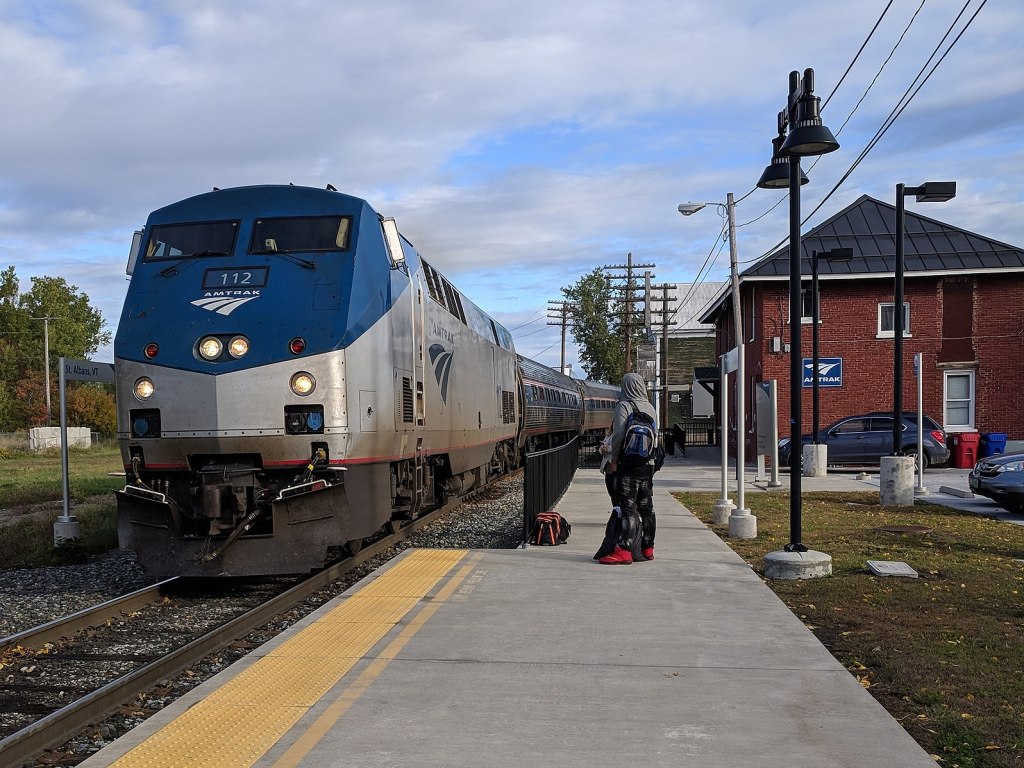
Amtrak’s Vermonter runs daily between St. Albans and Washington, D.C., passing through Essex Junction, Montpelier, and White River Junction. The Ethan Allen Express, restored in 2022 after years of advocacy, now connects Burlington to New York City via Rutland and Albany. The Green Mountain Railroad runs seasonal scenic excursions out of Chester, with special trips during fall foliage and the holidays.
The rail trails might be the most accessible legacy of all. The Lamoille Valley Rail Trail follows the old St. Johnsbury and Lamoille County Railroad corridor, eventually stretching from St. Johnsbury all the way to Swanton. The Missisquoi Valley Rail Trail connects Richford to St. Albans through quiet farmland. The Delaware and Hudson Rail Trail runs through western Bennington County and crosses into New York along what was once a busy freight corridor.

Original depots are scattered across the state too, many of them repurposed as museums, town offices, or local businesses. Granite Junction in Barre and the Bellows Falls tunnel are standout landmarks from Vermont’s freight era, and historical societies across the state work hard to keep the stories from fading.
Stories from the Rails: Local Legends and Railroad Lore
Ask a Vermonter over 70 about the railroad and you’ll get a story. Sometimes several.
During Prohibition, rumor has it that remote flag stops and whistle signals were used for something other than scheduled service. Illicit alcohol allegedly moved through those quiet back-country stations more than once.
In towns like Island Pond and Randolph, locals still tell stories about trains buried under snowdrifts for days, requiring massive plow engines and whole work crews to dig them out. Some of those storms were legendary even by Vermont standards.
Then there are the ghost stories. The abandoned tunnel in Northfield and the old Rutland roundhouse have both collected their share of legends over the years. Haunted depots, strange lights, unexplained sounds. Whether you believe any of it or not, the atmosphere is hard to argue with.
A Future on the Tracks? Rail in Vermont Today and Tomorrow
Vermont’s rail network will probably never return to what it once was. But there are signs of life.
Amtrak continues to serve the state, and recent infrastructure funding has supported upgrades and service restorations. Freight rail still quietly operates in places like Bellows Falls and along Burlington’s waterfront. Rail trails are growing in popularity every year, drawing cyclists, hikers, and snowshoers who may not even realize they’re following corridors that once carried steam engines through the same scenery.
There’s growing interest in passenger rail as a climate-friendly alternative to highways, and Vermont has the geography and the existing infrastructure to make more of that possible.
The tracks may be overgrown in a lot of places, but the story they tell about Vermont is still very much alive.

Leave a Reply